


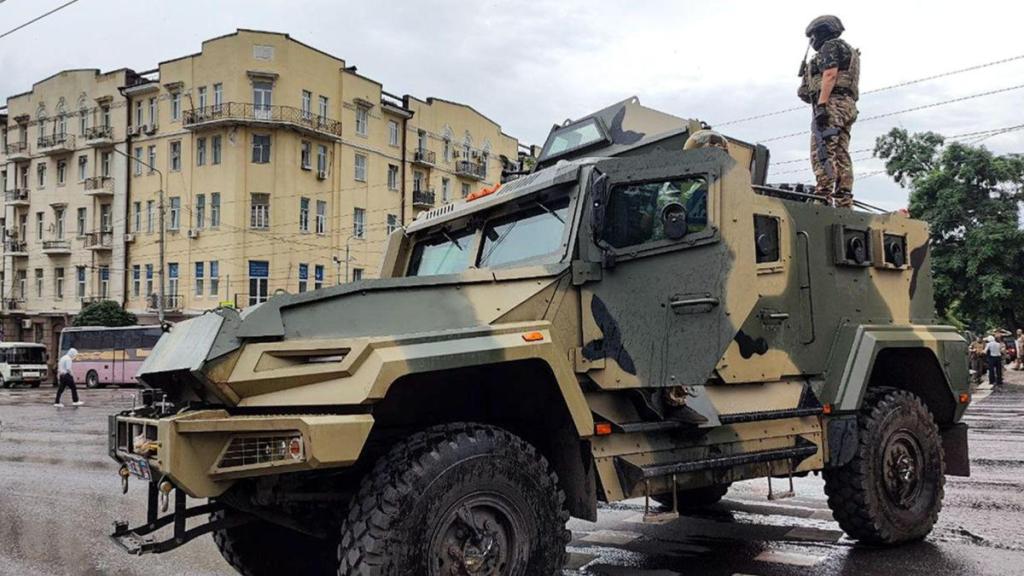

The city of Moscow and its neighbouring region have plunged into a state of crisis as a counter-terrorism operation is underway to combat the advancing mutinous Russian mercenary fighters. In response, Moscow Mayor Sergei Sobyanin has issued an urgent plea to residents, urging them to stay at home, minimise travel, and refrain from using their cars.
This development comes after the Wagner mercenary group seized a southern city overnight and set their sights on the Russian capital. President Vladimir Putin, facing his most significant challenge to his 23-year rule, has vowed to crush this armed mutiny, drawing comparisons to Russia’s Civil War a century ago. However, Yevgeny Prigozhin, the defiant chief of the Wagner group, has made it clear that he and his men have no intention of surrendering.

At present, Prigozhin has declared his presence in Rostov-on-Don, a city in southern Russia near the Ukraine border. He claims that his forces have taken control of military facilities and the local airfield. In a show of strength, Prigozhin has vowed to blockade Rostov and proceed towards Moscow unless Russia’s Defense Minister and top general agree to meet with him in the city. Additionally, the Wagner group has announced that it has gained control over Russian military facilities in Voronezh, a southwestern city in Russia.
The roots of this escalating conflict can be traced back to the deepening animosity between Moscow’s military leadership and Yevgeny Prigozhin, the head of the private mercenary group Wagner. The simmering tension erupted into a full-blown insurrection on Saturday when Prigozhin accused Russia’s military leadership of launching a devastating strike on a Wagner camp, resulting in the loss of a significant number of his mercenaries. Vowing retribution, Prigozhin and his forces have triggered a massive response from security forces across western Russia. Regional governors have urged residents to avoid traveling and imposed a “counterterrorist operation regime” in Moscow to address the escalating crisis.
The implications of this armed mutiny extend beyond the immediate turmoil in Moscow. As Wagner mercenaries barrel towards the heart of the Russian capital, it raises questions about the advantage it may offer Kiev. With Russia’s resources and attention focused on internal strife, it could potentially create an opening for Kiev to assert itself in the ongoing conflict with Russia, potentially shifting the balance of power in the region.
As the standoff intensifies, the fate of Moscow hangs in the balance. President Putin’s determination to crush the mutiny clashes with Prigozhin’s defiant stance, setting the stage for a critical showdown that could redefine the political landscape in Russia. The coming days will undoubtedly be pivotal in determining whether the armed mutiny can be quelled or if it will evolve into a protracted and destabilising conflict with far-reaching consequences.
Is it an advantage for Kiev?
Yes, certainly, opines a former diplomat.
Sharing his initial view on the ongoing coup attempt, former Ambassador Anil Trigunayat tells Financial Express Online: “This is a very serious challenge for President Putin as Wagner group Chairman Prigozhin challenges the Russian military and its top brass including accusing Defence Minister Shoigu for lack of ammunition supplies and even direct attacks.”
“This is being termed as mutiny from a very powerful group that was perhaps not expected to reach at this level of conflict. Prigozhin was close to Putin and perhaps expects support from him which is not forthcoming. Next 48 hours are very critical especially as this conflict between Russian entities will adversely affect Russian war and operations in Ukraine,” he adds.
This could be advantageous to Kiev at the expense of the Kremlin.