



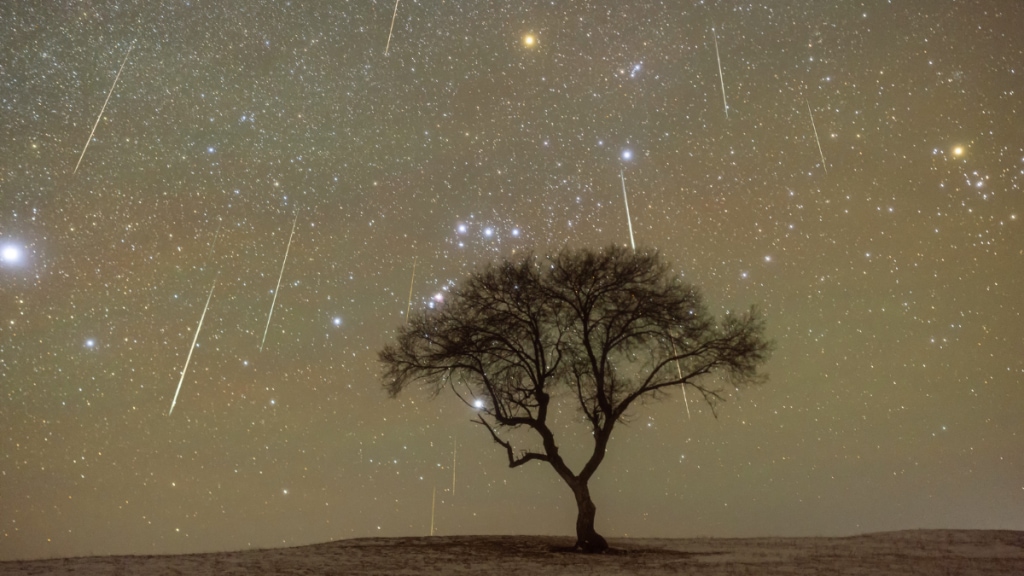
The Geminids meteor shower is set to return this week, lighting up December skies during what is widely considered one of the strongest annual celestial displays. The shower is expected to peak during the night of December 13–14, a period that traditionally delivers some of the highest meteor counts of the year, with rates capable of crossing 120 meteors per hour under ideal viewing conditions.
While the event promises intense activity, not everyone will be able to witness it directly from the ground due to weather, light pollution or location. As a result, online livestreams are emerging as a key option for skywatchers hoping to follow the meteor shower in real time.
Peak viewing window and best timing
According to reports, the Geminids begin appearing by late evening, but the most active viewing window falls between 2 am and 4 am IST on December 14. During this period, Earth moves directly through the densest part of the debris stream, and the radiant point in the Gemini constellation rises high enough to improve visibility.
Even observers in urban areas may spot brighter fireballs during the peak hours, though darker skies significantly enhance the experience. Astronomers note that meteor activity often appears more consistent as the night progresses and viewing conditions improve.
Livestreams and sky conditions boost visibility
For those unable to venture outdoors, several astronomy platforms will provide live coverage of the event. The Virtual Telescope Project is scheduled to stream the meteor shower from Italy using wide-field instruments capable of detecting faint streaks across the sky. In addition, platforms linked to NASA and the International Meteor Organization may also host parallel livestreams closer to the peak.
Experts say minimal preparation is needed for online viewing. Reducing indoor lighting and adjusting screen brightness can help improve the experience, allowing viewers to rely on sensitive camera feeds tracking the meteors throughout the night.
The Geminids originate from the asteroid 3200 Phaethon rather than a comet, a rare characteristic that results in a denser debris trail and steadier meteor rates. In 2025, sky conditions are expected to remain favourable, with the Moon appearing as a waning crescent and rising after 3 am, leaving most of the peak unaffected, according to the American Meteor Society.
With strong activity forecasts and limited moonlight interference, the Geminids once again stand out as December’s most dependable meteor shower, offering skywatchers a vivid display whether viewed outdoors or through a screen.