



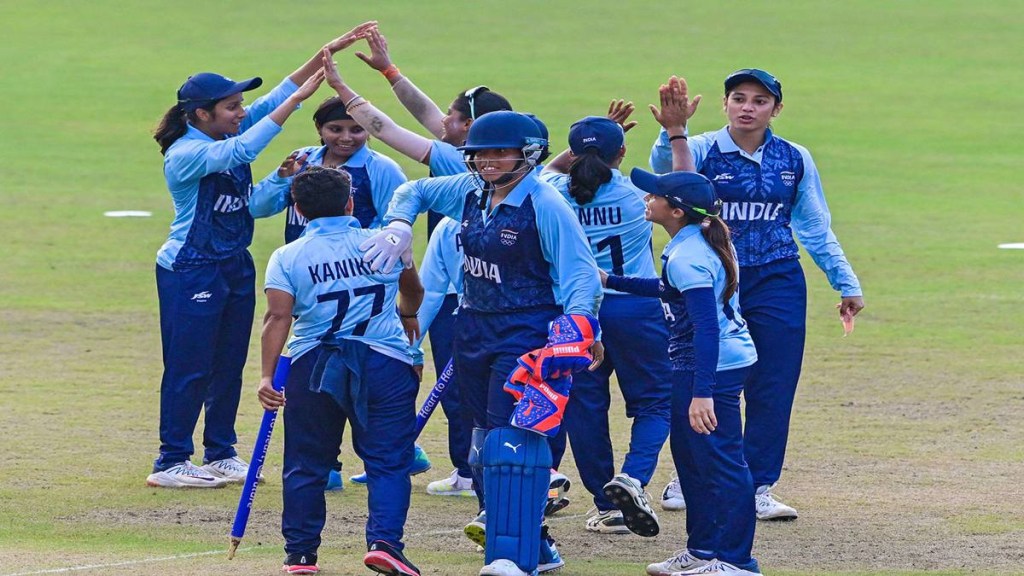
The BCCI has approved a major increase in match fees for women’s domestic cricketers, with payments for senior players in the playing XI increasing from Rs 20,000 to 50,000 per day. The move comes after India’s 2025 ICC Women’s ODI World CUP win. The decision has added momentum to demands for stronger financial assistance at the domestic level.
The decision was taken at a BCCI Apex Council meeting on Monday evening. The board also put in place a uniform structure where senior players in the starting XI will get Rs 50,000 per day while those named in the reserve/bench will get Rs 25,000 per day, up from the earlier Rs 10,000 for reserve players, as per a report by the Indian Express.
Senior, reserves and T20: New slabs kick in
ANI noted that the hike in the fee is not restricted to the playing XI, with reserves also getting a notable raise that boosts security for a wider set of players.
The revised slabs are also applicable to T20s where players in the XI will now earn Rs 25,000 and the bench players will get 12,500.
Age group fees raised; umpire’s decision is pending
At the age-group level, another sharp revision has been made; now players in the XI will get Rs 25,000 per day, whereas reserves will be paid Rs 12,500 per day. Earlier, juniors on the XI used to get Rs 10,000, with Rs 5000 for bench players. The Indian Express report stated that this will effectively lift season income that earlier used to be around Rs 2 lakh (if a player played in all league matches) and is now likely to be roughly doubled.
The BCCI has earlier taken decisions to expand women’s cricket, including the push for pay equality at the international match-fee level and the launch of the Women’s Premier League. These measures have widened exposure and opportunities for players, as reported by ANI.
The Apex Council have also discussed pay-related issues for umpires, but a final decision on raising match fees has not been taken. The umpires’ committee has put forward a suggestion of scrapping the current grouping system for umpires. It has also been argued that it has not improved performance standards and can result in uneven pay outcomes for the same work.