



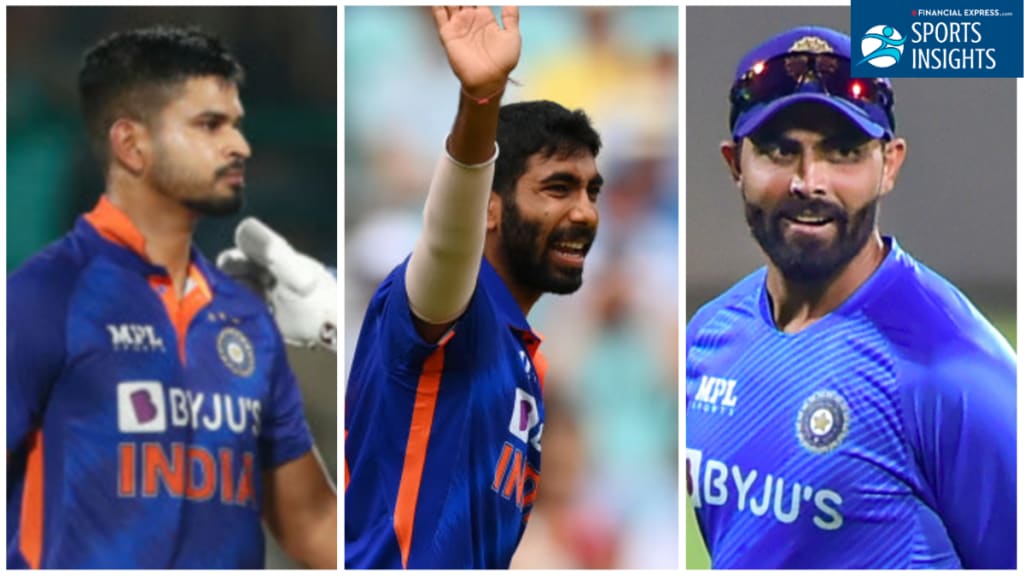
Some dates in cricket history feel loud. They carry big wins, heartbreaks, trophies. Then you have December six. Just another winter day, but somehow it keeps giving India these special cricketers. Five of them, all different as chalk and cheese. One fast bowler whose action makes you look twice. One spin all-rounder who just won’t quit. One city boy who bats like a dream. One left-arm swing bowler who had his day in the sun. And one guy everybody wrote off, but he said no, not yet.
The boy with the awkward run-up who became India’s fast-bowling hope
Jasprit Bumrah didn’t enter cricket like a usual fast bowler. People first noticed the action. That short run. The stiff arm. The release point that looked almost too late. Many thought it wouldn’t last. Then came the yorkers. Then came the pace. Then came the nights in the IPL where he bowled the final overs as if he were solving a puzzle only he could crack.
By the time MS Dhoni called him the “find of the tour” in Australia in 2016, the world had already seen enough to know he was different. When he finally got the red ball in hand for India, the start felt unreal – almost dreamlike. Matches won in Johannesburg and Melbourne, and that feeling that India finally had a fast bowler who could scare people everywhere, not just at home.
Across Australia, England, South Africa – places where Indian pacers once struggled – Bumrah kept finding ways to hit the seam, to bend the ball, to outthink batters. In 2024, he even led India to huge wins in Cape Town and Perth. Same year, he matched Kapil Dev’s record for most five-wicket hauls outside Asia by an Indian. For a boy once judged for an odd action, this is quite a life.
The cricketer who could do almost everything: Ravindra Jadeja
Ravindra Jadeja’s story? It’s just him being stubborn, really good, and believing in himself when no one else did. They called him an all-rounder from day one, but he had to prove it the hard way. His early ODI days had flashes but nothing steady. Then came his home Test debut in 2012, where he wasn’t asked to star – just support the others. But he ended up giving India a weapon they didn’t know they needed.
Across series after series on Indian soil, Jadeja became a nightmare for batters. He could spin the ball fast, straight, sharp. He fielded like someone who lived on pure reflex. And when the team needed runs from the lower order, he chipped in quietly.
When the team needed runs from the bottom half, he would just get on with it. No fuss. 2018, he gets his first Test hundred at Rajkot. Made sense, that’s where he learned his cricket. And in 2025 he crossed a rare mark – 300 wickets and 4000 runs in Tests. He made it look simple, even though the journey never was.
The kid with flair who grew into a top-order fighter: Shreyas Iyer
Shreyas Iyer entered the scene in a more modern way – through big IPL bids and highlight reels. Delhi threw big money at him in 2015. Suddenly all eyes were on this boy. He batted with this free-flowing style, looked easy but his head was always working. From 2018 to 2020, he was Delhi’s go-to man. Over 400 runs every single season. Clean strokes. Calm mind. When he got his India call, it didn’t surprise anyone who had followed domestic cricket – he had already piled up 4000 first-class runs at a strike rate most Test batters wouldn’t even imagine.
In Kanpur in 2021, during his Test debut, he showed why he belonged. A century in the first innings. A fifty in the second. Almost dragged India to a win.
And then came the captaincy phase. Many didn’t realise it then, but Iyer was quietly building a rare record. He took Delhi to the IPL final. Later, he walked into two different dressing rooms; Kolkata and Punjab – and carried them to finals too. Three teams, three finals. No one else had done that before. It said something about him. That he could walk into a new space, understand the rhythm of a group, and make them believe they could win.
The left-arm swing bowler who burned bright: RP Singh
RP Singh came from Uttar Pradesh with that smooth run-up and a gift for making the ball move. He was something to watch when it all clicked. His Test debut in Faisalabad in 2006 earned him a Man-of-the-Match award – five wickets on a pitch that looked asleep.
Then came Lord’s in 2007. Cloudy skies. The ball moving a little. RP landing it in the right spots again and again. Seven wickets. India escaped with a draw, and RP walked off knowing he had bowled one of the spells of his life.
His contributions in the Perth Test win in 2008 and in the first T20 World Cup were huge. But after a while the form slipped. Fitness dipped. The comeback in 2011 came too suddenly – he was on holiday in Miami when he was called up. He wasn’t ready, and it showed. That Test at The Oval ended without a wicket. Cricket can be kind one year and unforgiving the next.
The triple-centurion who refused to fade away: Karun Nair
Karun Nair’s journey might be the most human of them all – full of promise, success, silence, and stubborn hope. He burst into domestic cricket with three straight hundreds in his first Ranji season. Then a 328 in the final next year. Then a Test debut in 2016. Then, out of nowhere, an unbeaten 303 against England in Chennai.
Everything looked set for a long career. But after three average Tests, the doors closed. India moved on. Karnataka moved on. By 2022, he wasn’t even getting picked for his state team.
Most players would have taken the hint. Karun didn’t. He moved to Vidarbha. Scored everywhere. Ranji Trophy. Vijay Hazare. Five centuries in eight innings in one season. Six times unbeaten.
He earned an India A call. Then scored a double hundred in England. Eight years after his last Test, he found himself back in the India squad in 2025. The comeback wasn’t magical – a few low scores, dropped again. But the fight he showed might be remembered far longer than a single innings.
A date that somehow keeps shaping Indian cricket
When you look at all these stories together – Bumrah, Jadeja, Iyer, RP Singh, Nair – you start noticing something almost poetic. All born on 6 December. All different. All carrying a part of India’s cricketing journey in their own way.
One became the face of modern Indian fast bowling.
One became an allrounder who holds the team together.
One fights at the top order with confidence.
One swung the ball at Lord’s like a dream.
One showed how a career can fall apart and rise again.
Same date. Same country. Same sport. So many paths.
It makes you wonder how many more 6 December stories are waiting somewhere in India right now – in dusty grounds, tiny academies, taped-ball matches under yellow bulbs – ready to rise when the time comes.