



Almost all exports from India to Oman will be at zero duty after the free trade agreement signed on Thursday between the two countries comes into force with farm goods, textiles, engineering, electronics, chemicals and auto sectors being the major beneficiaries.
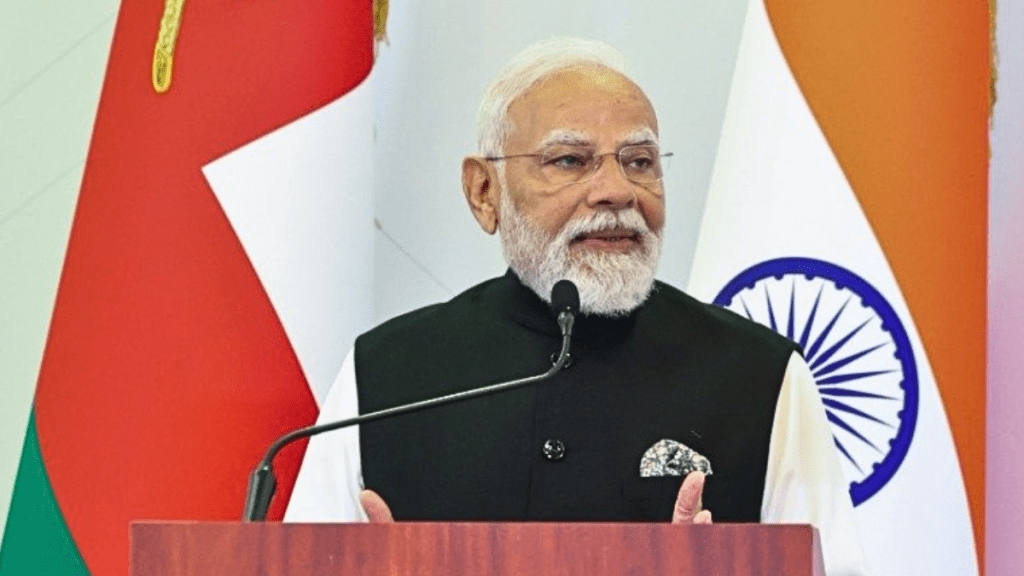
The Comprehensive Economic Partnership Agreement signed by Commerce and Industry Minister Piyush Goyal and Oman’s Minister of of Commerce, Industry and Investment Promotion of Oman Qais Al Yousef in the presence of Prime Minister Narendra Modi and Sultan of Oman Haitham bin Tariq opens up the opportunity to increase India’s exports to Oman by 50% in next two to three years. In 2024-25 India’s exports to Oman stood at $ 4.0 billion.
The CEPA opens up zero-duty access on 98.08% of tariff lines, covering 99.38% of India’s exports to Oman. In return, India will open up 77% of its tariff lines for Oman that will cover 94% of its total exports to India. While on most products the tariffs will straight away drop in zero, in petrochemicals the reduction will be in a phased manner.
Sectoral Impact
“Products like marble blocks, dates and petrochemicals will also be subject to quotas by India,” officials said. As per the CEPA, the annual quota for duty free dates will be 2,000 tonnes, polyethylene 150 kilo tonnes and polypropylene 75 kilo tonnes. The imports beyond the quota will be taxed at normal rates.
In petrochemicals and some other products the duty relaxations will be spread over a period of time ranging from 5 to 10 years.
Taking lessons from the India-United Arab Emirates Comprehensive Economic Partnership Agreement (CEPA) gold and silver bullion and jewellery have been kept out of the agreement. Other sensitive sectors that India has obtained exclusion are agriculture products including dairy, tea, coffee, rubber, tobacco and labour intensive products like footwear, sports goods and scrap of base metals.
Presently only 15.33% products from India pay nil duties in Oman while most others – valued around $ 3.64 billion – are subject to 5% duties.
The biggest gainer will be the farm sector where duties will come down to zero from 100%. These include animal products like milk and milk products, fish, meat, honey, vegetables, processed food and animal and vegetable fats and oils. The total exports of these products from Oman currently stands at around $ 165 million but with zero duties there is a potential to increase it to $ 1.2 billion, the official said.
The opportunity to scale up exports dramatically also exists in sectors where duties are coming down to zero from 5%. In textiles exports can go up to $ 438 million from $ 109 million. In minerals including petroleum and coal exports can go up to $ 7.2 billion from $ 1.8 billion. Machinery exports can increase to $ 3.6 billion from $ 262 million, plastics and rubber to $ 1.19 billion from $ 85 million. In the auto sector the exports can go up to $ 1.9 billion from $ 57 million while in electronics Oman’s total imports are $ 3 billion of which India accounts for $ 123 million leaving enough headroom for growth, the official added.
Professional Mobility and Services Breakthrough
In services Oman has offered substantial commitments across a broad spectrum of sectors including computer related services, business and professional services, audio-visual services, research and development, education and health services.
A major highlight of the CEPA is the enhanced mobility framework for Indian professionals, including a notable increase in the quota for Intra-Corporate Transferees from 20 per cent to 50 per cent. This will enable Indian companies to have 50% staff from India as against the limit of 20%.
The duration of stay for Contractual Service Suppliers has been extended from the existing 90 days to two years with the possibility of a further two-year extension. The agreement also provides for more liberal entry and stay conditions for skilled professionals in key sectors such as accountancy, taxation, architecture, medical and allied services, supporting deeper and more seamless professional engagement.
The CEPA further provides for 100 per cent Foreign Direct Investment by Indian companies in major services sectors in Oman through commercial presence, opening a wide avenue for India’s services industry to expand operations in the region. In addition, both sides have agreed to hold future discussions on social security coordination once Oman’s contributory social security system is implemented.