



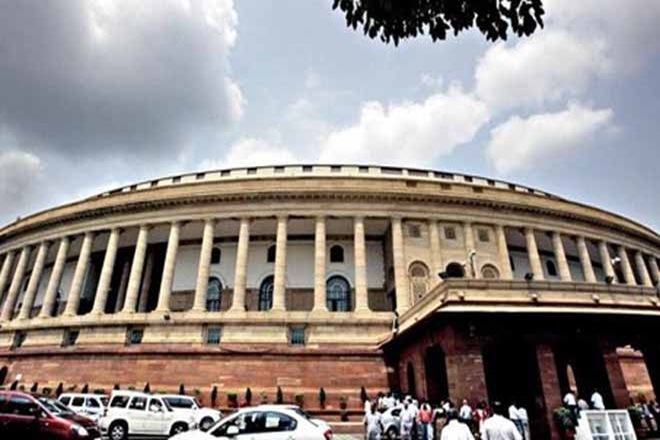
The 13-day winter session of Parliament, which concluded on Friday, was the shortest since 2009 but it still managed to get both Houses’ nod for 10 Bills including one to bar wilful defaulters from bidding for stressed assets going under the hammer via a key amendment to the Insolvency and Bankruptcy Code. The Financial Resolution and Deposit Insurance (FRDI) Bill, 2017, which was introduced in the Lok Sabha during the monsoon session, was referred to the joint parliamentary committee for examination and it has been asked to report back by the last day of Budget session. The bail-in clause in the Bill has been proposed as one of the resolution tools in case of an insolvency in a bank wherein the depositors will have to bear a part of the cost of the resolution by a corresponding reduction in their claims. The government has allayed fears among depositors over the controversial clause causing massive losses to them in case of bank insolvency by stating that it unlikely to be applicable to over 98% of depositors.
While the Opposition opined that the exclusion criteria included in insolvency code would lead to a situation where most companies that go through the resolution process will pass from an Indian to a foreign management, finance minister Arun Jaitley stressed that the aim was to exclude wilful defaulters (including promoters) from taking over the management of companies after banks had taken losses on loans. At the beginning of the session, 25 Bills were listed for consideration and passage, and 14 were listed for introduction. Six were passed by at least one House including the Muslim Women (Protection of Rights on Marriage) Bill, 2017, which was introduced and passed on the same day in the Lok Sabha.
During the session, the Lok Sabha worked for 78% of its scheduled time, while the Rajya Sabha worked for 54%, according to PRS Legislative. Time was lost due to disruptions over triple talaq legislation to ban instant divorce of Muslim women, remarks made by Prime Minister Narendra Modi during the recent state election campaign and the Bhima-Koregaon violence in Maharashtra.
Besides the 10 Bills, two appropriation Bills on the supplementary demands for grants were approved by both Houses. Among other Bills, both Houses approved the Goods and Services Tax (Compensation to States) Amendment Bill, 2017, to increase the cap on cess rates on motor vehicles. Parliament also gave its nod to the Companies (Amendment) Bill, 2016, which amends various provisions of the 2013 Act in relation to subsidiaries, remuneration of management and independent directors.
Of the key pending Bills, the Prevention of Corruption (Amendment) Bill, 2013, was aimed at making giving a bribe an offence and also to modify the definition of taking a bribe. There will be one amendment by which investigating agencies will need prior sanction of the appropriate authority in government to investigate officials including retired officers. The proposed changes has assumed importance in the light of the recent conviction of former coal secretary HC Gupta in a coal block allotment case.
The parliamentary standing committee examining the Code on Wages, 2017, was granted time up to the first week of Budget session, 2018, for its report. The Bill provides that the central government may notify a national minimum wage for the country.