



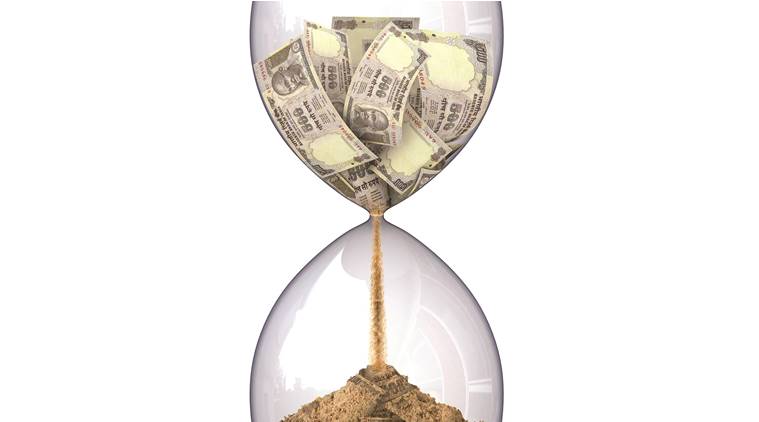
It’s been more than a year since Narendra Modi had famously announced the demonetisation reform, and many top experts have tried to decode its efficacy and impact on the economy. Decoding the costs and benefits associated with the reform, Sajjid Z Chinoy of JP Morgan Chase says that note-ban had a short-term cost but there will be medium-term benefits. In an interview to The Indian Express, Sajjid Z Chinoy, Chief India Economist at JP Morgan Chase said, “Whenever you have large interventions in the economy, there is a tradeoff: there is always an immediate, short-term cost, and there are medium-term benefits.” Decoding the impact of demonetisation on GDP growth, Sajjid Chinoy noted, “Firstly, we must appreciate that GDP growth was slowing well before demonetisation, so this notion that the entire slowdown is only because of demonetisation or GST is not borne out by the data.”
The expert said that India benefitted a lot from a global reduction in oil prices last year leading to growth in GDP, and with an increase in the same, growth was bound to slow down. “India benefitted from the huge terms-of-trade shock from lower oil prices — that was a one-time windfall for the economy in 2015-16, so despite it being a drought year, growth picked up from 7% to 8%. But when oil prices stabilised, it was inevitable that GDP growth would begin to slow,” he said. In his own assessment, demonetisation would have slowed growth by 0.8% and 1% in the year.
However, there have been short-term repercussions says the economist. “The second manifestation of demonetisation was the fact that the current account deficit quadrupled — in the quarter in which growth slowed, the current account deficit went from 0.6% of GDP to 2.4%, 80% of which was manufacturing imports. For me, those are the two near-term costs,” Sajjid Z Chinoy pointed out.
Speaking about the benefits of the new indirect tax regime, Sajjid Chinoy says that the concept of one nation-one tax is indeed commendable. “For me, GST is less about tax collections and the rate, it is more about the fact that GST is the signing of India’s free-trade agreement with itself. We were 30 disparate markets, which is now one market — that, for me, is the true benefit. Look at the efficiency that will come about in the common market, ultimately it is that growth, that buoyancy, that will matter even more,” noted Sajjid Chinoy.