



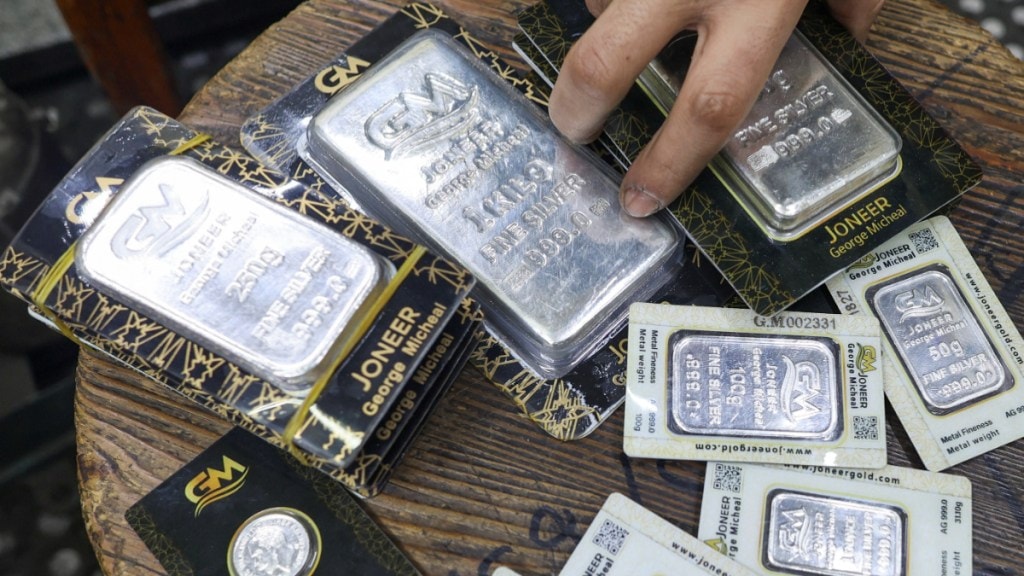
Silver prices kept climbing in global markets, with futures rising above $71 an ounce. This has taken silver’s gains this year to almost 150%, making it world’s third most valuable asset, moving ahead of Apple Inc, the CNBC reported. The top two spots of most valued assets globally are now held by Gold and Nvidia.
Silver market capitalisation reaches $4.4 trillion
Silver’s market value has reached about $4.04 trillion, slightly higher than Apple’s $4.02 trillion at the close of trading on Wall Street on Tuesday.
According to CNBC TV18, many traders believe the US Federal Reserve will keep cutting interest rates into 2026, even though the Fed’s own projections suggest only one more cut for now. This optimism remains despite strong economic growth in the third quarter, which shows the US economy is still doing well.
The report added that the markets are also encouraged by the expectation that the next Fed Chair may favour lower interest rates more than Jerome Powell and could support US President Donald Trump’s push for cheaper borrowing costs.
Silver in ‘overbought’ territory
Silver plays an important role in global supply chains, as it is used in electronics, solar panels and even coatings for medical equipment.
After a sharp short squeeze in October, its prices are rising again. The report suggests that it is the strong demand from industries and heavy inflows into exchange-traded funds (ETFs) that are keeping prices high.
Volatility in the iShares Silver Trust, the world’s largest silver ETF, has also jumped. Its three-month implied volatility is now at the highest level since early 2021. However, one key sign of market optimism has weakened. The ratio of three-month call to put volatility has dropped to its lowest point since mid-October.
Technical indicators also show signs of overheating. Silver’s Relative Strength Index (RSI) is at 80, placing it in the “overbought” zone. An RSI reading above 70 suggests the asset is “overbought”.
Meanwhile, silver stocks in warehouses linked to the Shanghai Futures Exchange fell last month to their lowest level since 2015.