Whether it is logistics, public safety or inspection of critical infrastructure – drones and their applications are gaining ground in India. However, in many underdeveloped rural regions and crowded urban areas in the metro cities, drones often encounter connectivity problems. Israeli drone firm Elsight and its Halo connectivity platform are seeking to address this issue and keep drone flights connected by blending all available networks. This results in fewer mission aborts and more completed routes, even across difficult terrain.
Elsight’s Halo platform enables drones to utilise all available spectrum (4G, 5G, RF and satcom) and route drone traffic over the aggregated channels for optimal connectivity. The result is carrier-agnostic, multi-path resilient communications designed for beyond visual line-of-sight (BVLOS) missions with precision data collection for telemetry and video transmission missions.
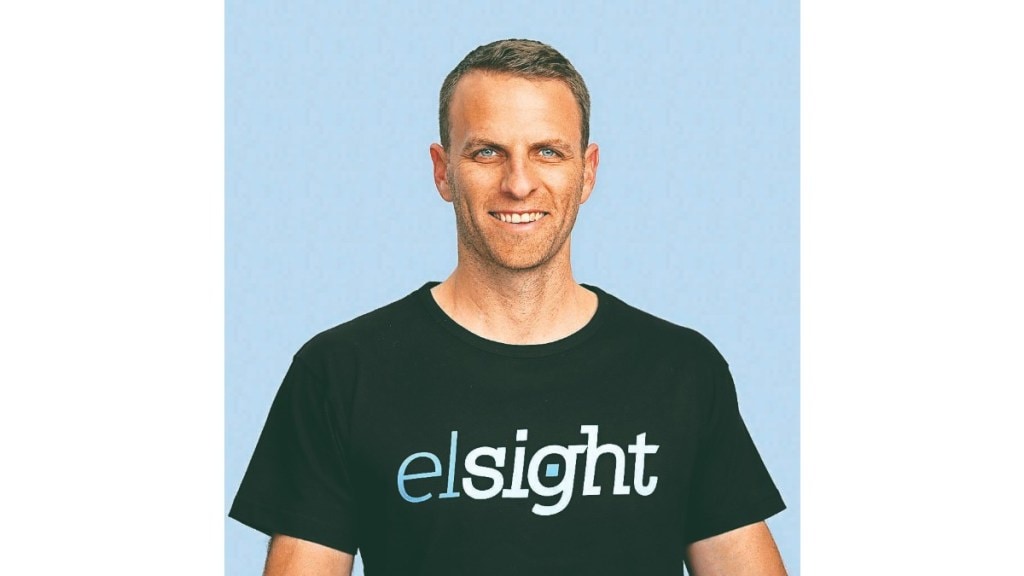
“We believe that India holds tremendous potential for drone applications and services. The country is one of the fastest-growing drone markets in the world with a large geographic area, diverse terrain, and a strong push with governmental support to digitise logistics, public services, and infrastructure,” said Yoav Amitai, CEO of Elsight. “We view India as a scaling market for reliable BVLOS connectivity using Halo’s advanced technology because operators need to fly farther, more often, and with better economics.”
Halo’s multi-link aggregation technology supports India’s ambitious BVLOS roadmap by giving drones a consistent data link that meets both safety and performance standards set by the Directorate General of Civil Aviation (DGCA). This reliability is helping Indian drone startups and service providers prove the viability of long-range operations in logistics, agriculture, mining, and emergency response.
Within the logistics segment, drones hold huge potential to redefine last-mile and even mid-mile delivery. They can bypass India’s congested road networks to transport medical supplies to remote clinics, deliver e-commerce packages, and expedite industrial parts shipment.
For public safety, drones are already becoming an important asset. Police forces use them for crowd monitoring and traffic management, providing a bird’s-eye view of large gatherings. In disaster management, they conduct rapid aerial surveys of flood or earthquake-affected areas, identifying survivors and assessing damage much quicker than ground teams, thereby improving crucial response time.
When it comes to the inspection sector, drones equipped with high-resolution and thermal cameras are inspecting critical infrastructure like oil and gas pipelines, power transmission lines, and railway tracks. They can identify faults, cracks, or heat leaks without the need for dangerous manual climbs or shutdowns, enhancing worker safety and slashing inspection times from weeks to days.
“Our early commercial operations are already underway for logistics and delivery segments, and we have a partner in India, Amber Wings, a division of ePlane,” said Amitai. “India’s large land parcels and seasonal windows demand reliable and cost effective UAV (unmanned aerial vehicles) services. With our BVLOS connectivity this can be achieved in a seamless manner.”
Keeping in mind the emerging opportunities, Elsight is expanding its local partnerships with Indian drone manufacturers and service providers, working with its partners such as Amber Wings/ePlane to accelerate drone-focused vertical solutions for logistics/delivery, public safety, and inspection.
The company is also driving deeper integrations in various sectors, such as public safety and defense to further drive drone deployment in India.
“Ultimately, Halo is not just improving individual missions; it is creating the digital backbone for India’s growing drone economy by bridging infrastructure gaps, fostering innovation, and unlocking the potential for safe, large-scale UAV deployment,” concluded Amitai.