Long before artificial intelligence became Silicon Valley’s favourite buzzword, the blueprint for this moment was already taking shape inside a modest startup. Archival footage from 2000 reveals that Google co-founder Larry Page was articulating an AI-first vision nearly 25 years ago. Back then, he imagined a search engine that could understand the web and deliver exactly what users were looking for. This idea now sits at the very core of modern generative AI.
Larry Page on the Ultimate Search Engine
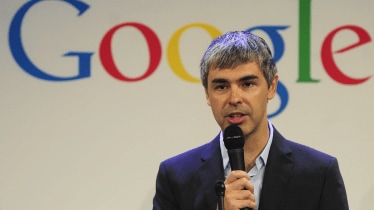
A rare video from 2000, just two years after Google’s founding, features Page describing what he envisioned as the “ultimate search engine”. “If we had the ultimate search engine, it would understand everything on the web,” Page said. “It would understand exactly what you wanted and it would give you the right thing. That’s obviously artificial intelligence—to be able to answer any question basically because almost everything is on the web.”
Page’s concept mirrors today’s generative AI, which goes beyond listing links by synthesising information to provide direct answers. At the time, he admitted the company was “nowhere near” achieving true AI, but emphasised steady progress: “We’re no where near doing that now however we can get incrementally closer to that and that’s basically what we work on.”
Leveraging Data and Computation
In the video, Page also highlighted the scale of resources Google had even in its early years. “We all this data. If you printed out our index it would be 70 miles high. We have all this computation, we have 6000 computers. So we have a lot of resources available. We have enough space to store 100 copies of the whole web,” he said.
He added, “So if you have a really interesting confluence of a lot of different things, right? Lot of computation, lot of data. That didn’t used to be available. And from an engineering and scientific standpoint, building things to make use of this is a very interesting intellectual exercise.”
Page’s early statements underline Google’s long-standing commitment to building AI-driven tools, a vision that now informs products like Gemini and the company’s broader AI strategy.