



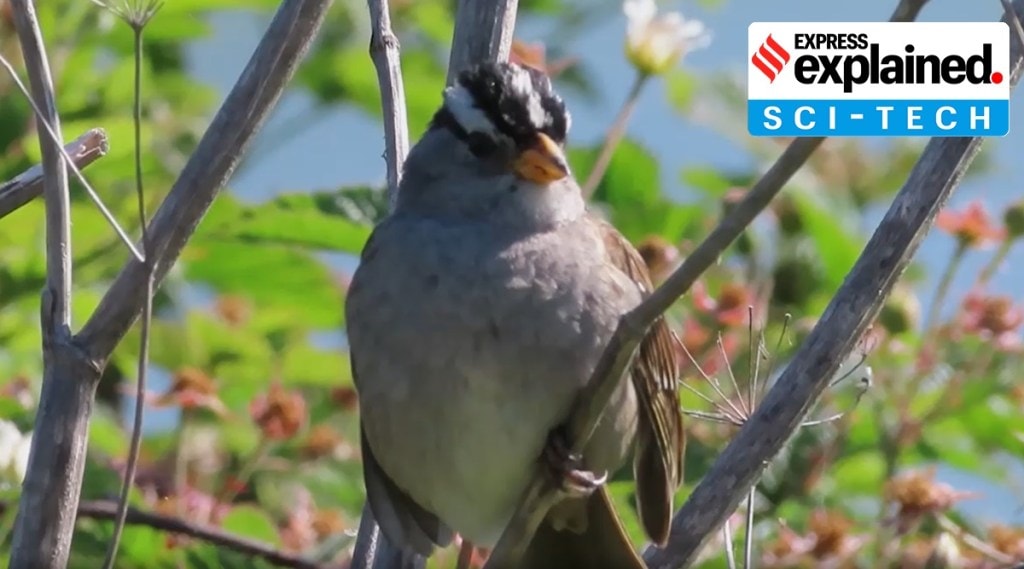
While lockdowns across countries due to Coronavirus pandemic surely impacted the daily routine/ work for people, it turned out to be good for the environment. One such aspect is the reduced noise pollution during the period. This enhanced the singing of birds effortlessly as well as effectively than it was before. This was noted in a study published in the journal Science which talked about songbirds. The study said that with noise pollution songbirds have to sing louder to attract mates or defend their territories. However, due to the lockdown, the noise pollution reduced and resulted in bringing down the auditory pressures on songbirds.
The study focused on the soundscapes and songs of the white-crowned sparrow found in San Francisco Bay Area, California and the observations from before and during the lockdown were compared. According to the study, the sparrows, on an average, sang 30 per cent softer. Moreover, it was found that the bandwidth of their songs were similar to those that were recorded in the 1970s. Notably, the white-crowned sparrows used to produce songs at lower amplitudes but with the increasing traffic and noise, they adapted to maximise communication distance.
Not only it led to softening of the birds singing, the lockdown also made their hearing more effective. The researchers explained that male birds were able to hear the other birds from twice the distance as before resulting in their hearing becoming four times more efficient. People were also able to enjoy the birds singing, the study said.
Meanwhile in India, as skies became clear and pollution (air/ noise) reduced, more birds were visible during lockdown. Around 80-83 species of migratory birds were spotted in the Indian state- Tamil Nadu, according to the Tamil Nadu Forest department. Some bird species visible in India included Purple Swamphen, Pheasant-tailed Jacana, Common Moorhen, Black-Winged Stilt, Purple Heron, Indian Spot-Billed Duck, Common Coot, Spot-Billed Pelican, and Pied Kingfisher.