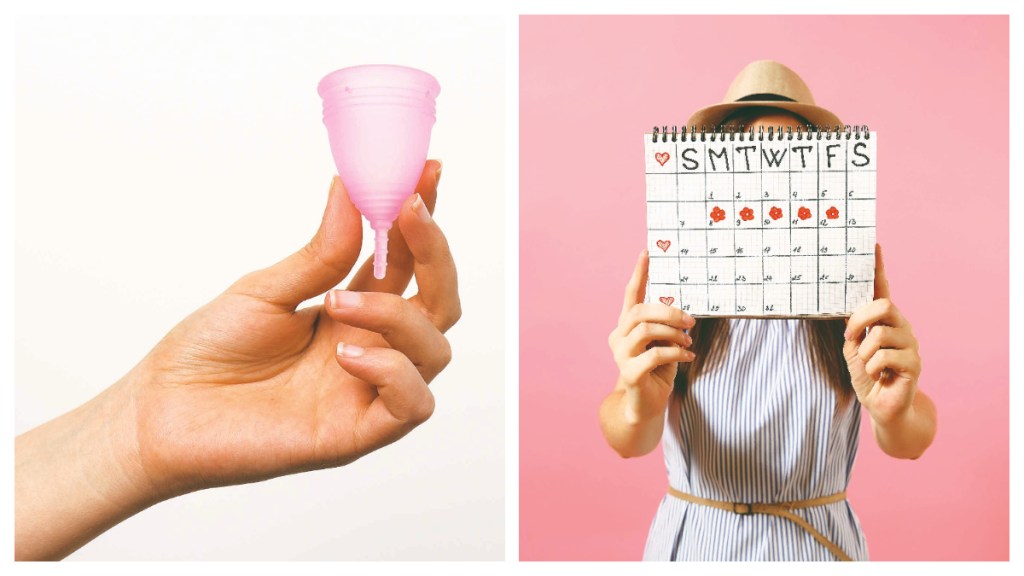
India comprises about one-fifth of the world’s adolescent girls’ population, according to a study published in BioMed Central, a United Kingdom-based for-profit open access publisher. Of these, at least 58% do not have access to proper menstrual hygiene products, and do not get to live through their menstrual cycles in a healthy way. The causes and results of this phenomenon are multipronged and varied in themselves – from affordability and access to menstrual hygiene products, to the lack of them leading to early high school dropouts. In this atmosphere, a new product is taking the Indian feminine products’ market by storm — the menstrual cup. As more and more women adopt this product, doctors shed light on the qualities of the cup and what it can do for women.
Increasing acceptance
“From a medical point of view, menstrual cups are considered very safe and effective when used properly,” says Dr Neelam Suri, senior consultant, obstetrics and gynaecology, robotic surgery, Indraprastha Apollo Hospitals, New Delhi.
Dr Suri says, such cups are made of medical-grade silicone which does not react with the skin and is hypoallergenic. “They also do not disturb the natural vaginal pH, which helps maintain a healthier environment,” she says, adding, “A major benefit is that cups can be worn for 8 to 12 hours, making them convenient for working women, students, and travellers. They also hold more fluid than pads or tampons, which is useful for women with heavy flow.” Dr Suri herself has recommended menstrual cups to her patients, “especially those who struggle with rashes, heavy flow, or concerns about chemicals in disposable products”.
“Awareness about menstrual cups in India has grown significantly, with current estimates suggesting that nearly 80% of women now know about the product,” offers Dr Bharani Vijayargavan, consultant, obstetrics and gynaecology, Motherhood Hospital, Chennai. Over the past couple of years, several government initiatives and NGOs have also undertaken distribution programmes in certain areas, she adds. In her experience, she has noted a higher acceptance rate among younger (20-30 years), urban, educated women, including healthcare workers, students, and married professionals as well. “Menstrual cups are advisable since they are reusable, environment friendly, effectively low cost because one doesn’t have to keep buying them every cycle, and reduce risk of infection and irritation caused by pads,” says Dr Vijayaragavan.
Myths & misconceptions
Although acceptance of menstrual cups is increasing in India, there are still significant concerns that hold women back from giving them a try. Despite the apparent high-level awareness, “actual usage remains low, with multiple India studies reporting that less than 5% of women currently use menstrual cups”, as per Dr Vijayaragavan.
Speaking of the myths surrounding the menstrual cup, Dr Anjali Jain, senior consultant, gynae-oncologist, robotic surgeon, Medanta Hospital, Gurugram, says, “Common myths include beliefs that menstrual cups cause infections, infertility, or are uncomfortable. Some women also feel hesitant due to cultural stigma around vaginal insertion.” “Stigma around menstrual cups and discs persists due to cultural taboos on vaginal products and misinformation. Pads are more normalised because they are external and easier to use without education. Removing stigma requires public education campaigns, open conversations, and normalising menstruation discussions in media and schools,” Dr Jain adds.
Elaborating on these misconceptions, Dr Vijayaragavan says, “One of the most common myths surrounding menstrual cups is the belief that the cup can ‘get lost’ inside the body. This is not true. At times, the cup may feel difficult to remove if the size is incorrect, but in such cases, a doctor can easily remove it during a simple outpatient visit.” She adds that another misconception is about menstrual cups causing infertility, which too has no basis in science. “A third myth suggests that menstrual cups lead to infections; in reality, they are safe to use as long as they are removed, emptied and cleaned every 3-4 hours,” she explains, as prolonged retention of any menstrual product can increase the risk of toxic shock syndrome. “The final myth is that only ‘non-virgins’ can use a menstrual cup, which is untrue. Smaller cup sizes are specifically designed for those who have not been sexually active.”
“Cultural beliefs around touching the genitals, concerns about virginity, and misconceptions about reproductive health play a strong role in shaping these attitudes,” observes Dr Suri from Apollo Hospitals in New Delhi. “Fear of leakage, discomfort during removal, and uncertainty about proper placement are common reasons for people preferring the regular sanitary pads over cups,” she adds.
Dr Suri expounds on this hesitation, “Women in metropolitan and tier-1 cities are more open to innovation in menstrual hygiene. On the other hand, older women or those who are uncomfortable with insertion-based products show lower acceptance… So the adoption pattern is strongly influenced by age, lifestyle, and access to reliable information as well,” she says. “Overall, when used correctly, menstrual cups are often more comfortable for many women,” she adds.
Cost of comfort
Feminine hygiene products, have always been inappropriately unfair on the consumer’s pockets. Is it any different with the cups? “Menstrual cups may seem costly at first, especially when compared to a packet of pads. However, they last for several years, which makes them highly cost-effective in the long run,” says Dr Suri. A single cup can replace hundreds of pads and reduce monthly expenses significantly. “For women with steady incomes, the price is usually reasonable for the value it offers,” she adds.
As per Dr Vijayragavan, menstrual cups of medical grade quality are available across price ranges, “with budget options costing Rs 250 – Rs 600 and premium medical-grade cups priced between Rs 700 and Rs 1,500”. “Many brands also provide sterilising cups, pouches and complete starter kits,” she says, however, adding that despite the long-term cost-effectiveness, the initial cost and concerns about product quality can still act as barriers for the first-time users.
Ashima Sharma, research and development lead at Pee Safe, a company that manufactures and sells menstrual wellness products, shares, “Sanitary pads still lead the menstrual hygiene market in India, holding over 90% of the share, mainly due to their recurring purchase model. In contrast, menstrual cups are a long-term investment, which naturally means fewer repeat purchases. But that hasn’t slowed their popularity,” she states.
“In fact, they’re becoming the go-to choice for Gen Z and millennials who value sustainability, comfort, and cost-effectiveness.” “We’ve seen the strongest adoption of menstrual cups among Gen Z and millennial users aged 18-35, particularly urban working professionals and students. This demographic is more open to exploring sustainable, long-term solutions and is driven by awareness around both personal health and environmental impact,” explains Sharma.
Awareness & adoption
“In rural communities, several factors like access to information, online platforms and healthcare guidance, delay adoption,” says Dr Suri. However, she also says that despite challenges like limited knowledge and awareness about reproductive anatomy and lack of proper sanitation facilities, menstrual cups could be especially beneficial in rural communities.
“They are long-lasting, reduce monthly expenses, and produce far less waste compared to disposable products. With proper education, demonstrations, and involvement of frontline health workers, women in rural areas can learn how to use cups safely.”
Dr Vijayaragavan adds, “Barriers in rural areas include access to clean water for reprocessing, private sanitation or space for insertion or emptying, menstrual taboos.” “Rural acceptance can be as high as 90% after proper information, education and supportive instruction for usage,” she adds. Explaining how she usually encourages usage of menstrual cups, Dr Vijayaragavan says, “I present cups as a safe option to women and provide advice based on patient preference, resource availability and hygiene conditions. I emphasise training on insertion and cleaning. Usual patient reaction ranges from curiosity and quick adoption to hesitation. Hands-on demonstration or testimony from friends significantly improves acceptance,” she shares.
Deep Bajaj, co-founder of Sirona, another feminine hygiene and wellness company, while sharing his opinion from his experiences with the company, says, “Women today are more health- and environment-conscious. They are looking for sustainable and convenient options. A single menstrual cup can replace over 2,000 sanitary pads over its lifetime – saving both cost and landfill waste.” “Today, nearly 40% of our cup buyers come from tier 2 and tier 3 cities, compared to less than 10% five years ago. This shows how comfort and curiosity are spreading across India,” adds Bajaj.
Bajaj too agrees that menstrual cups are in fact more useful to rural women, and will be the next natural progression for the rural market. “They (menstrual cups) are cost-effective, reusable, and require no waste disposal system which is a major challenge with pads,” he adds.
BOX 1 – HOW TO USE SAFELY
- Empty cup every 8-12 hours
- Sterilise before, after every cycle
- Wash with mild soap
- Do not leave cup in for too long
- Inspect cup regularly for cracks, changes in colour or texture
BOX 2 – WHY IS IT BETTER
- Lowers risk of rashes, infections
- Lasts 8-12 hours depending on flow and size of cup
- Easy to dispose of in a hygienic manner
- Reusable, can last up to 10 years
- Eco-friendly
- Reduces risk of toxic shock
- Ease of movement and activity