



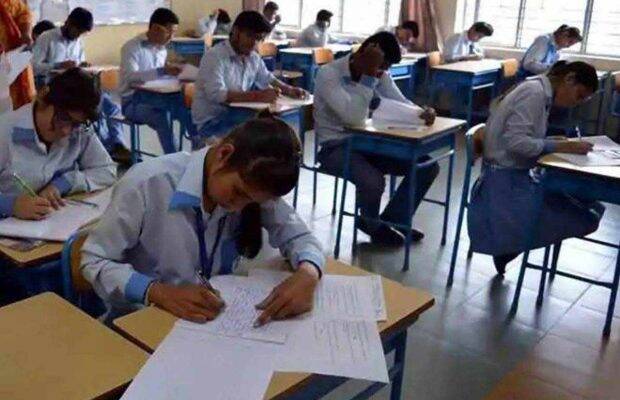
“The unprecedented scale and spread of anti-Muslim violence in Gujarat in 2002 took place under which government?” This was a question in the CBSE class 12 sociology paper held on Wednesday. The options offered to answer this multiple-choice question were “Congress”, “BJP”, “Democratic” and “Republican”.
Hours later, the Board apologised for the question in the exam paper, calling it “inappropriate” and against its guidelines. It also said strict action would be taken against “responsible persons”.
“A question has been asked in today’s class 12 sociology Term 1 exam which is inappropriate and in violation of the CBSE guidelines for external subject experts for setting question papers. CBSE acknowledges the error made and will take strict action against the responsible persons,” the board said in an official statement.
It said the CBSE guidelines for paper-setters clearly state that they have to ensure the questions should be academic oriented only and should be class-, religion-neutral and “should not touch upon domains that could harm sentiments of people based on social and political choices”.
A question has been asked in today's class 12 sociology Term 1 exam which is inappropriate and in violation of the CBSE guidelines for external subject experts for setting question papers.CBSE acknowledges the error made and will take strict action against the responsible persons
— CBSE HQ (@cbseindia29) December 1, 2021
The CBSE guidelines for paper setters clearly state that they have to ensure the questions should be academic oriented only and should be class, religion neutral and should not touch upon domains that could harm sentiments of people based on social and political choices.
— CBSE HQ (@cbseindia29) December 1, 2021
The question appears to have been picked from a paragraph under the chapter, ‘The Challenges of Cultural Diversity’, in the NCERT Class 12 Sociology textbook, ‘Indian Society’.
The paragraph, on page 134 under the sub-section, ‘The Nation-State and Religion-Related Issues and Identities’, reads: “No region has been wholly exempt from communal violence of one kind or another. Every religious community has faced this violence in greater or lesser degree, although the proportionate impact is far more traumatic for minority communities. To the extent that governments can be held responsible for communal riots, no government or ruling party can claim to be blameless in this regard. In fact, the two most traumatic contemporary instances of communal violence occurred under each of the major political parties. The anti-Sikh riots of Delhi in 1984 took place under a Congress regime. The unprecedented scale and spread of anti-Muslim violence in Gujarat in 2002 took place under a BJP government.”
The riots broke out in the state in 2002 after the burning of two coaches of the Sabarmati Express train near Godhra railway station in which 59 Hindu ‘karsevaks’ were killed. The riots left over a thousand dead.