



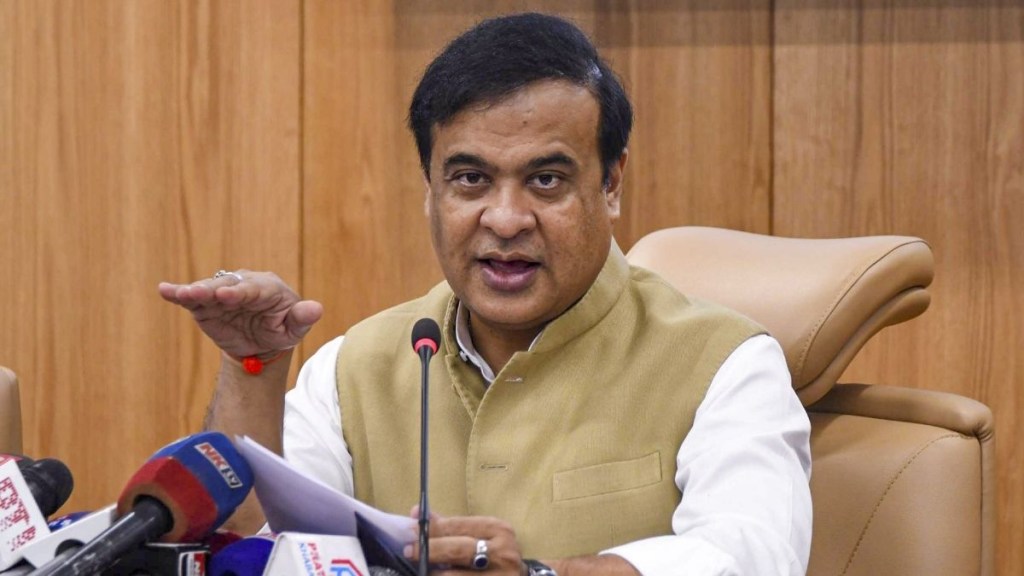
An ideology of a voter – not the government schemes or financial incentives – drives voting patterns in Assam, Chief Minister Himanta Biswa Sarma asserted at an event, as he explained why a Muslim voter would never choose him as their candidate. Speaking at the Agenda Aaj Tak 2025, the BJP leader added that the Muslim voters “appreciated my work and were even willing to donate a kidney if I needed it. But he would never vote for me.”
“Even if I give Rs 1 lakh, a large section of the community would not vote for me,” Sarma said.
People in Assam vote for an idea, not just benefits
The BJP leader made the remarks when asked whether he had any scheme similar to Bihar Chief Minister Nitish Kumar’s Mahila Rozgar Yojana, which transfers Rs 10,000 each to 21 lakh women to attract voters ahead of the 2026 Assam Assembly elections.
Asked to specify the community, the Chief Minister replied, “The ones we call the Miya Musalmans.”
Sarma added that people vote for an idea, and not just for the benefits in the state.
“I don’t blame anyone. It’s overly simplistic to assume that offering schemes will automatically secure votes. While implementing schemes for the public is essential when in government, believing that this alone will win votes is a miscalculation,” Sarma added, according to India Today.
‘Assamese population could be “wiped out” if Muslim population exceeds 50 per cent’
During the interaction, Himanta Sarma warned of “demographic invasion” in Assam, claiming that the indigenous Assamese population could be “wiped out” if the Muslim population exceeds 50 per cent.
He said the unchecked migration has resulted in a surge in the Muslim population in the state.
Citing statistical projections, he noted that the Muslim population, which is estimated at around 38 per cent in 2021, could rise to 40 per cent by 2027, following a consistent decadal growth rate of 4–5 per cent since 1961, India Today report said.
Despite his strong remarks, Sarma maintained that he shares “very good relations with Miya Muslims and women in the state.”