



Employer and employee, two words that surround the entire corporate work culture in India, and across the world. The two have been talked about at length in recent times due to debate over working hours and leisure time. The labour movements in the 19th century had slogans like “Eight hours for work, eight hours for rest, and eight hours for what you will”, which has essentially taken the shape of entire working cycle today.
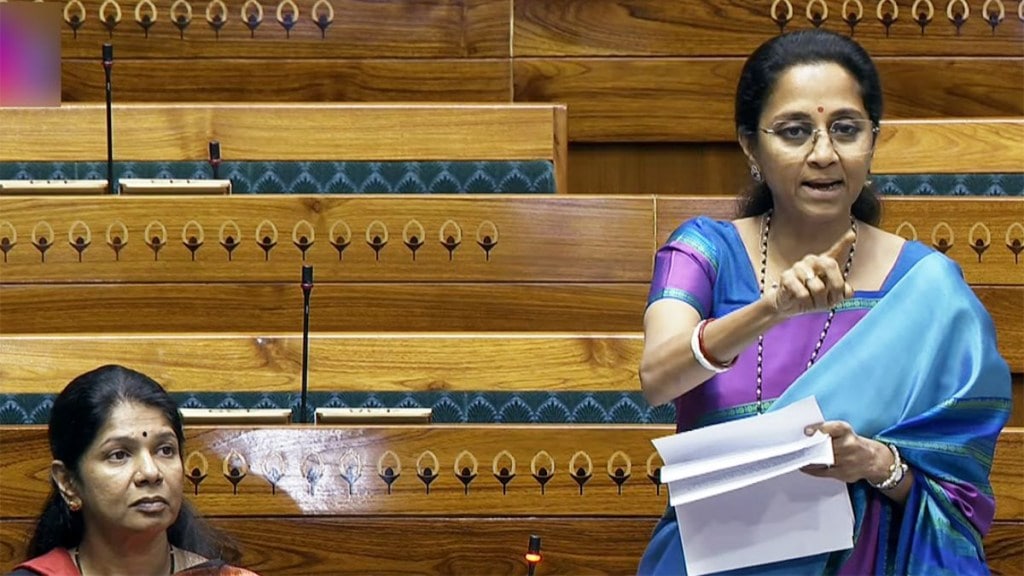
India follows one of the rigorous ones which is 48 hours a week. The closely linked global world continues to influence the approach of handling the working hours. On Friday, a big advocate of maintaining work-life balance, NCP-SP MP Supriya Sule introduced a Private Members’ Bill in the Lok Sabha, which proposes that employees should be allowed not to entertain work-related calls and emails outside work hours, reported Indian Express.
This is the second time Sule introduced this Bill, the last time she tabled it was in 2019.
Tharoor’s Bill backs Supriya Sule
Another Private Members’ Bill on the same line was introduced by Congress MP Shashi Tharoor. He tabled the Occupational Safety, Health and Working Conditions Code (Amendment) Bill, 2025, seeking to limit work hours, secure the right to disconnect, and establish grievance redress and mental-health support systems.
The Right to Disconnect Bill, 2025, of Supriya Sule proposes that the workers should have the right to disconnect as a way to reduce stress and ease tension between an employee’s personal and professional lives.
Making a reference to a World Economic Forum report, the ‘Objects and Reasons’ of the Bill introduced by the Baramati MP says, “Studies have found that if an employee is expected to be available round the clock, they tend to exhibit risks of overwork like sleep deprivation, developing stress, and being emotionally exhausted. This persistent urge to respond to calls and e-mails (termed as ‘telepressure’), constant checking of e-mails throughout the day, and even on weekends and holidays, is reported to have destroyed to work-life balance of employees.”
“According to a study,” she said, “the constant monitoring of work-related messages and e-mails may overtax employees’ brains, leading to a condition called ‘info-obesity’.”
What does the Bill demand?
The MP’s Bill seeks the employer may contact the worker after work hours, but the employee is not obliged to reply and shall have the right to refuse to answer such calls. For doing so, an employee cannot be subject to any disciplinary actions mentioned below:
- An Employees’ Welfare Authority must be set up to confer every employee with the right to disconnect from work-related telephone calls and emails beyond work hours and on holidays.
- The Authority must conduct a baseline study to collect comprehensive data about workers’ usage of digital and communication tools outside work hours.
- The Authority shall direct every company with more than 10 workers to negotiate with them, unions, or their representatives to decide the terms and conditions for working outside the work hours and they should be entitled to overtime at the normal wage rate.
- The government, in consultation with companies, must provide counselling services to employees to help them maintain work-life balance and should also set up digital detox centres.
- Penalty — 1% of employees’ total remuneration — to be paid by companies for non-compliance.
The Private Members’ Bills are taken up on Fridays when Parliament is in session. However, they are quite difficult to pass, with only 14 having become law to date, the report added. Six of the 14 Bills became law in 1956 and the last one to receive parliamentary approval was the Supreme Court (Enlargement of Criminal Appellate Jurisdiction) Bill, 1968, on August 9, 1970.