



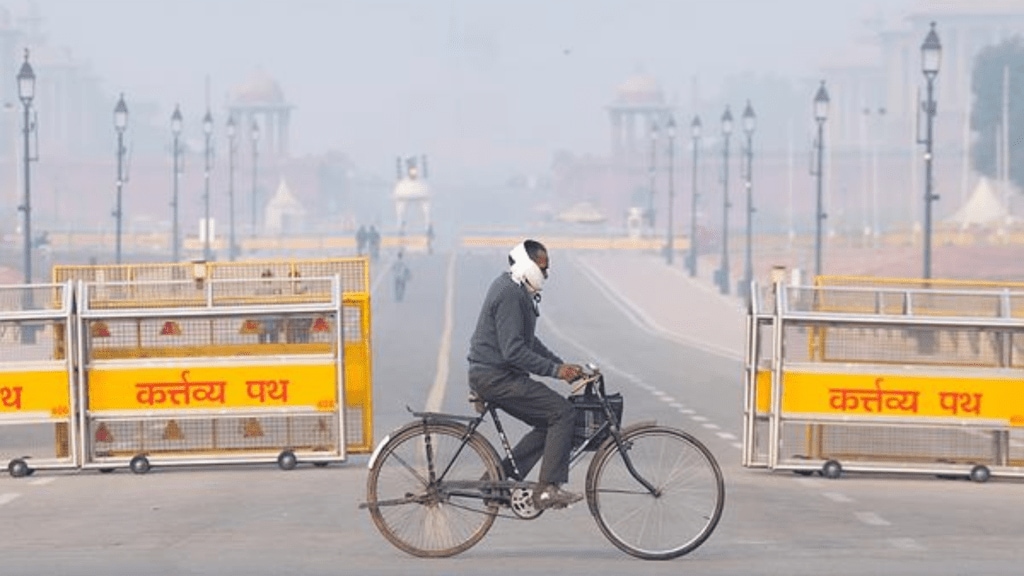
The Delhi administration has asked all offices to enforce a 50% work from home rule amid growing concerns over air pollution. Both government and private establishments in the national capital will now function at half strength while the rest work remotely. The change comes in tandem with enforcement of GRAP III across the city.
The order was issued in the name of Lieutenant Governor V K Saxena and came into force with immediate effect. This is the first time that the Delhi government has made implementation of remote work “mandatory” for the private sector — having issued only advisories to that effect in the past. The directive was issued under Section 5 of the Environment (Protection) Act and compliance will be ensured by local authorities.
Who is eligible?
According to the order issued on Monday, all administrative secretaries and heads of departments will be required to attend office regularly. Government departments cannot have more than 50% of staff strength physically present in the office while the remainder work from home. Similar rules will also apply for all private offices functioning within Delhi — with 50% of the staff working “mandatorily” from home. Essential services such as hospitals, private health establishments, fire services, public transport, water and sanitation are exempted from the restriction.
All private offices functioning within Delhi have also been asked to implement staggered working hours wherever feasible — ensuring strict compliance with work-from-home norms and minimising vehicular movement associated with the office commute. The government has directed district magistrates, deputy commissioner of police and local bodies to ensure compliance with the order by all private offices in the national capital.
Which areas are exempt?
The order was passed by the government of Delhi and applies to the national capital territory. No guidance has been issued so far for the adjoining NCR cities — but advisories remain in place urging remote work and other restrictions. The Commission for Air Quality Management had revised and tightened its Graded Response Action Plan earlier this week as the air quality soared to hazardous levels.
“Violation of the directions issued under Section 5 of the Environment (Protection) Act, 1986, or the rules made thereunder shall be punishable under Section 15 and 16 of the Environment (Protection) Act, 1986 and other applicable laws,” the environment department said in its order.
Delhi AQI sparks alarm
The air quality remained grim on Monday — hovering close to the ‘severe’ threshold as the overall AQI for Delhi settled at 382. Data from the Central Pollution Control Board indicated that 15 monitoring stations had logged readings beyond the 400-mark. The 24-hour average Air Quality Index settled at 382 on Monday, in the ‘very poor’ category for the 11th consecutive day. The environment department said that since the vehicles contribute to the city’s pollution levels extensively, it is felt that there is a need for more curbs on vehicular movement.