



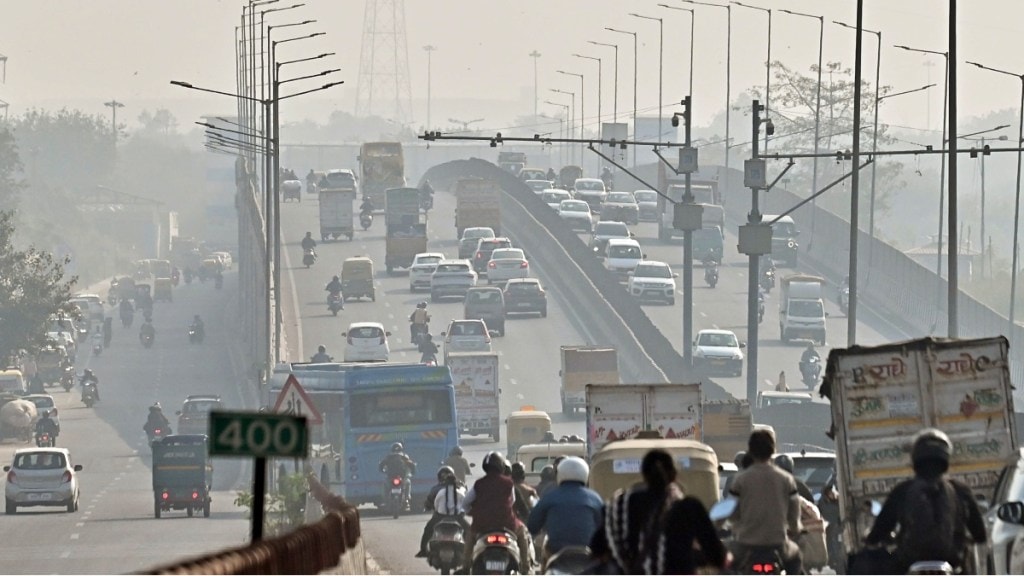
The national capital woke up to a thick layer of toxic smog on Friday morning, with the average Air Quality Index (AQI) touching 329 at 7 am – a level classified as “very poor” by the Central Pollution Control Board (CPCB). Even though air quality had seen slight improvement in recent weeks, much of the city remained covered in heavy, hazardous smog.
Area-wise AQI levels
Areas like Ghazipur and Anand Vihar reported dense haze and extremely low visibility. Anand Vihar and Ghazipur recorded an alarming AQI of 386, while Sonia Vihar stood at 338 and Wazirpur at 382. Bawana logged the highest early-morning AQI at 365, placing it firmly in the ‘very poor’ zone.
In comparison, NSIT Dwarka reported an AQI of 269, which falls under the ‘poor’ category. Dhaula Kuan also remained choked under thick smog, with an AQI of 337.
The neighbouring state of Haryana faced similar conditions, as dense fog covered several regions, disrupting morning travel. Karnal recorded a minimum temperature of 7°C, marking a particularly cold start to the day, according to the India Meteorological Department (IMD).
Health risks rise as AQI levels worsen
The AQI scale, which ranges from 0 to 500, is divided into six categories – ‘good’ (0-50), ‘satisfactory’ (51-100), ‘moderate’ (101-200), ‘poor’ (201-300), ‘very poor’ (301-400) and ‘severe’ (401-500). While air in the ‘good’ range has minimal health impact, pollution levels begin to affect sensitive groups once they enter the ‘satisfactory’ range. In the ‘moderate’ category, people with asthma, lung disease, or heart issues may experience breathing difficulties.
During winter, dangerous AQI spikes have become increasingly common across Delhi. Air quality in the ‘very poor’ zone can trigger respiratory problems even in healthy individuals, especially with prolonged exposure.