


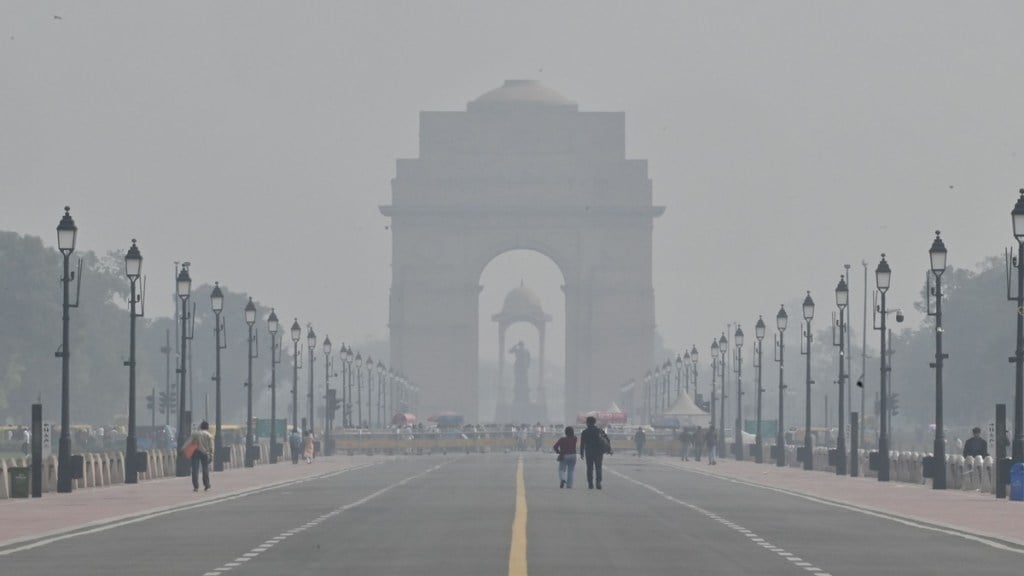

The overall air quality in the national capital remained in the ‘very poor’ category as the Air Quality Index (AQI) stood at 323 on Tuesday morning, as per SAFAR-India data.
At various locations, the recorded AQI figures were as follows: IIT Delhi (321), Airport Terminal 3 area (336), and Pusa (337), all falling in the ‘very poor’ category, ANI reported.

Also Read:Delhi air quality drops again to ‘very poor’ category after a day’s respite, AQI at 310
According to the Central Pollution Control Board (CPCB) data at 7.41 am, AQI at Anand Vihar stood at 374, in Jahangirpuri at 399, New Moti Bagh at 370, whereas at Lodhi Road, it was at 315.
On Saturday, a slight improvement in the air quality prompted the CAQM (Commission for Air Quality Management) to lift the restrictions placed under the GRAP-4 action plan. This allowed buses to enter the city, except for BS-3 and BS-4 petrol and diesel vehicles. Additionally, restrictions on ongoing construction activities were also lifted.
What is the Air Quality Index (AQI)?
The Air Quality Index (AQI) is a vital tool for effectively communicating air quality status to the public in an easily understandable manner. It consists of six AQI categories: Good, Satisfactory, Moderately Polluted, Poor, Very Poor, and Severe.
Each category is determined based on the levels of ambient concentrations of air pollutants and their potential health impacts, known as health breakpoints. According to the AQI scale, air quality falls into the following ranges: 0 to 50 is ‘good,’ 51 to 100 is ‘satisfactory,’ 101 to 200 is ‘moderate,’ 201 to 300 is ‘poor,’ 301 to 400 is ‘very poor,’ and 401 to 450 is ‘severe.”
(With ANI Inputs)