



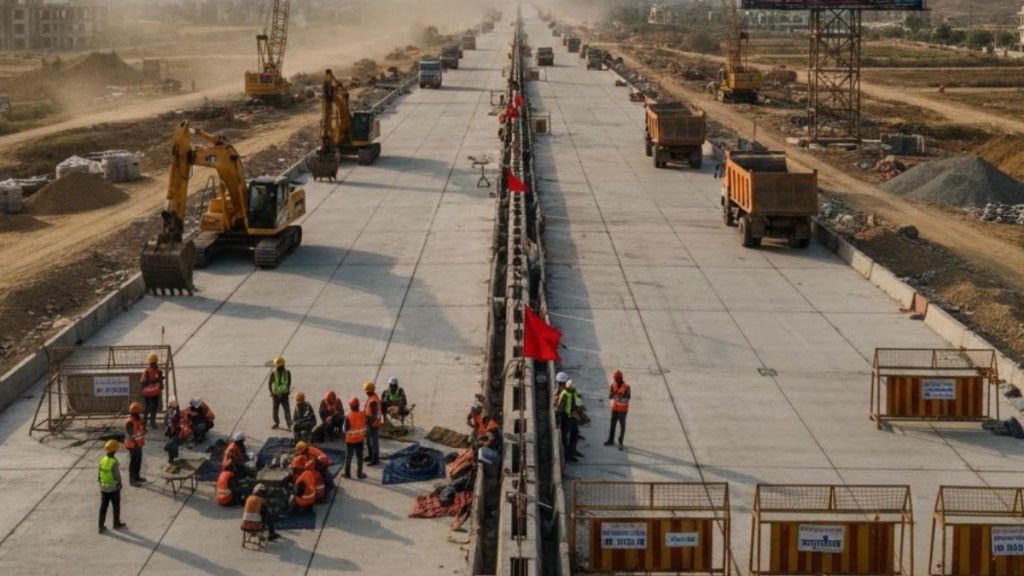
Three small stretches in Gujarat, together just 87 km long, have ended up holding back the massive 1,386-km Delhi-Mumbai Expressway project, which is being built at a cost of Rs 1.04 lakh crore. These stretches were awarded to a Pune-based contractor, according to a report by The Indian Express.
The contractor, Roadway Solutions India Infra Ltd (RSIIL), was first given all three stretches in 2021. Due to delays, two of these contracts were cancelled in March 2023. However, the same company got them back in November 2023 after submitting the lowest bid in a fresh tender.
Nearly four years later, less than 20 per cent of the 87 km work has been completed. This has raised serious concerns in the Ministry of Road Transport and Highways. Upset with the slow pace of work, NHAI is now considering issuing notices to RSIIL, which could even lead to the contract being cancelled.
Why is there a delay?
When contacted, RSIIL Director Navjeet Gadhoke blamed the delay on “non-provision of land by NHAI”. NHAI officials, however, said the delays were due to RSIIL’s poor performance, along with contractual disputes and court cases, which have slowed down the work.
The Delhi-Mumbai Expressway passes through Delhi, Haryana, Rajasthan, Madhya Pradesh, Gujarat and Maharashtra, and is divided into 53 packages.
The three packages in question – Package 8 (Jujuwa-Gandeva), Package 9 (Karvad-Jujuwa) and Package 10 (Talsari-Karvad) – are part of the Vadodara-Virar section in Gujarat. These were awarded to RSIIL in May, July and March 2021, respectively. While most of the Expressway in Gujarat is almost complete, work on these three stretches has barely moved.
Questions raised over re-awarding of contracts
NHAI cancelled the contracts for Jujuwa-Gandeva and Karvad-Jujuwa in March 2023 due to delays and floated fresh tenders. RSIIL again took part in the bidding and won the contracts in November 2023 by quoting the lowest price.
A MoRTH official said RSIIL should not have been given the contracts again.
“We cannot stop them from participating in the tender. The company quoted the lowest amount and was declared L1. The rule is L1 should be declared winner,” a senior NHAI official told IE.
RSIIL, meanwhile, said the cancellation of the two packages was “illegal”. “After rebidding the same works again, NHAI had no option but to give these to RSIIL as there was no default by the contractor,” Gadhoke said.
NHAI officials explained that when a contractor keeps delaying work, the authority can issue a “cure period” notice before taking tougher steps like debarring or blacklisting the firm. A cure period is a fixed time given to the contractor to fix the problems before a termination notice is issued.
Once fully completed, the Delhi-Mumbai Expressway is expected to cut the distance between Delhi and Jawaharlal Nehru Port in Mumbai by 180 km. It is also likely to reduce travel time to connected destinations by up to 50 per cent. Of the total project cost of Rs 1,03,636 crore, Rs 71,718 crore has already been spent. Some sections, including Delhi-Lalsot and parts of Gujarat and Rajasthan, are already operational.