



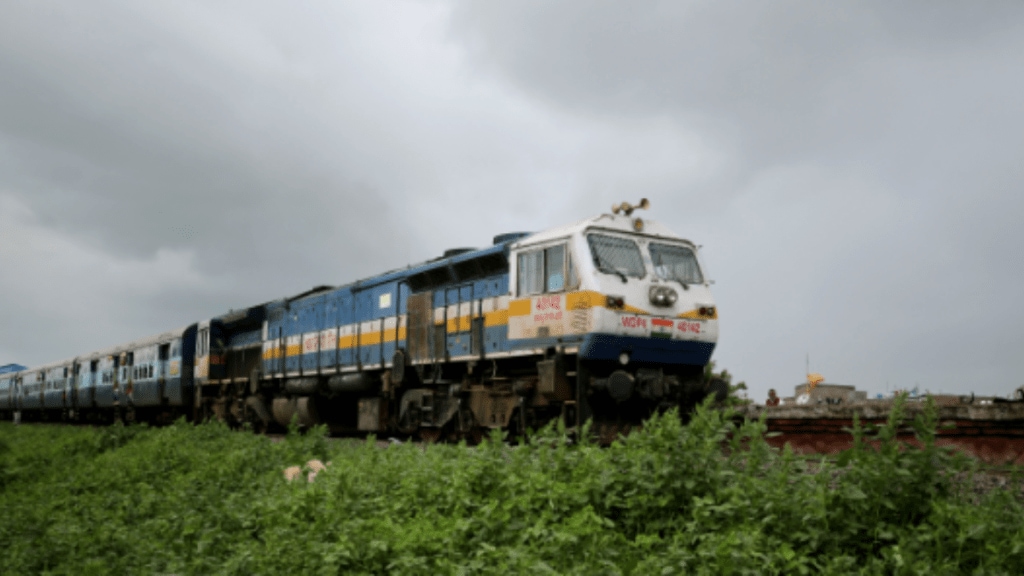
Southern Railway is closing in on complete electrification of its rail network, marking a major milestone in its long-running transition towards cleaner and more energy-efficient operations. The zone has electrified more than 97% of its total network, significantly reducing dependence on fossil fuels and improving operational efficiency across southern India.
Railway electrification under Southern Railway dates back to 1931, when the Chennai suburban section became the first to be electrified. Since then, the pace of electrification has accelerated, with several key routes across Tamil Nadu, Kerala, Puducherry and Karnataka commissioned in recent years as part of Indian Railways’ broader sustainability push.
Over 97% Electrification Achieved Across Network
As of December 15, 2025, Southern Railway has completed electrification of 4,995 route kilometres (RKM) out of its total network of 5,116 RKM, translating to 97.63% coverage. With only a small portion left, the zone is now on the verge of becoming almost fully electrified.
A total of 53 RKM have been identified as technically unfeasible for electrification. These include the Mettupalayam–Udagamandalam hill section, a UNESCO-listed heritage mountain railway, and a short stretch between Ernakulam and Kochi Harbour Terminus near the Naval Air Base. After excluding these sections, the total electrifiable network stands at 5,075 RKM.
Balance Sections Targeted for Completion by 2026–27
Of the electrifiable network, only 132 RKM remain pending. The remaining works include the Tiruturaipundi–Pattukkottai–Karaikkudi section covering 120 RKM and the Chinna Salem–Porpadakurichi stretch of 12 RKM. These sections are scheduled to be electrified by 2026–27.
Among Southern Railway’s six divisions, Chennai, Madurai, Palakkad and Thiruvananthapuram have already achieved 100% electrification. Salem division has completed 98% electrification, while Tiruchchirappalli has reached 88%. Once the remaining stretches are completed, Southern Railway will further strengthen the railways’ move towards sustainable, energy-efficient and environmentally friendly transportation.