



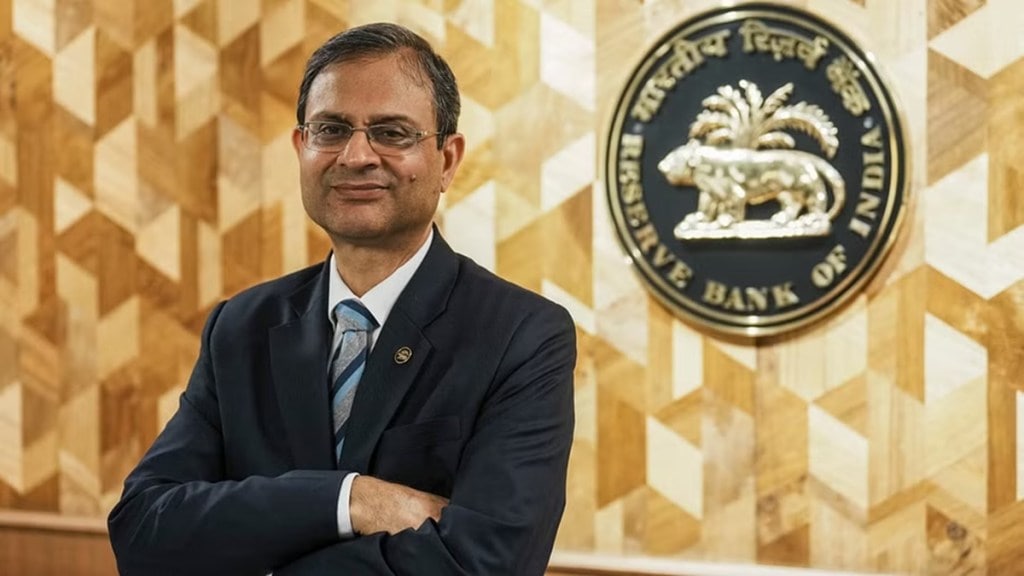
Sanjay Malhotra didn’t have to fight a once-in-a-century pandemic or the collapse of IL&FS like his predecessor Shaktikanta Das, but the Reserve Bank of India (RBI) governor’s main challenge was initially growth, and then uncertainty.
The RBI, under his stewardship, had to be nimble and proactive. He has dealt with the issues quite well and without much fuss. In fact, the RBI planning to loosen guidelines further for banks is a good indication of the comfort that the regulator has with the system.
An RBI veteran said, “For years, the RBI was working towards ensuring ‘roti, kapda, makaan (stabilising balance sheets) for banks, now it is working towards ‘quality of life’. That is good news, both for banks and the economy.”
While Malhotra inherited healthy banks with a decadal-low non-performing assets and a much-controlled inflation elephant, his main challenge was spurring growth.
GDP growth
The GDP growth in the second quarter of FY24 at 5.4 % – the lowest in seven quarters – was a huge worry. The fact that the RBI did not cut repo rate in the December 2024 policy was a surprise for many, and there was significant criticism that it was being too cautious.
Malhotra made his position as a growth warrior clear soon enough. He struck a measured tone in his first policy speech, reaffirming the central bank’s commitment to the inflation target while being mindful of growth risks. Growth inflation dynamics “opens up policy space for the MPC to support growth”, the governor said. The RBI will “remain unambiguously focused on a durable alignment of inflation with the target while supporting growth”, he said.
The result: In his very first policy, there was a 25 basis point (bps) rate cut. This was quickly followed by three more, including the bumper 50 bps in the June policy. In total, the RBI has cut 125 bps in less than a year. And he has clearly indicated that there is room for more rate cuts, if required. Growth has also zoomed back to 8.25% in the second quarter of FY26 – the highest in six quarters.
An impressive transmission
What is more impressive is the transmission. There has been sufficient liquidity provided to ensure that the transmission of rate cuts, which usually take over six months to reflect, has happened faster this time around – something that Malhotra often points out in press conferences or interviews.
But even before the rate cut in the February policy, the RBI was caught in a cleft due to twin problems – pressure on the rupee and liquidity crisis. Supporting the rupee meant selling dollars and that was sucking out liquidity from the banking system – which reached a shortfall of as high as Rs 3.15 trillion in January. At the same time, the rupee could not be allowed to slide endlessly without any intervention.
On January 16, the RBI announced bold plans to conduct daily VRR auctions, open market operations and dollar-rupee buy/sell swap auctions. Months later, when the banking liquidity was at a record surplus of Rs 4.09 trillion in August, VRRR auctions were announced to suck out excess liquidity.
What has been refreshing about the banking regulator under Malhotra is the willingness to change, and more importantly, clear communication.
At the very outset, Malhotra made it clear that the three key guidelines – liquidity coverage ratio (LCR), project financing norms and expected credit loss framework – will be re-evaluated and the implementation will be deferred.
Further, there have been several relaxations in the final guidelines, after bankers expressed their worries. For example, the reduction in the run-off factor for digital deposits in LCR from 5% to 2.5%, to be implemented from April1, 2026. Also, the big one – provision of 5% on project finance loans during the construction period was slashed to 1-1.25% from October 1, 2025. All banks would have heaved a sigh of relief.
What has been interesting is the position on the depreciating rupee. Malhotra has repeatedly said that the RBI is not targeting any level, but interventions are only intended to smoothen “excessive and disruptive volatility, rather than targeting any specific exchange rate level”.
But the RBI does deliver a sucker punch to speculators once-in-a-while. During mid-October, when speculators were pushing the rupee towards 89/$ aggressively, the RBI sold around $5 billion in spot and non-deliverable forward markets to support the rupee. At the same time, there have been times when it has chosen to not intervene, allowing the rupee to depreciate. Currently, it has crossed 90/$, largely due to worries about the US-India trade deal. Malhotra, however, seems confident that things will improve.
Among others, allowing Indian banks to do acquisition financing, restoring weights on banking lending to non-banking financial companies, planning to issue urban cooperative bank licensing after two decades, enhancing limits to lend against shares and consolidation of 9,445 circular into 244 master circulars is a clear signal that the RBI is willing to change, and change meaningfully.
In 2012, then Finance Minister P Chidambaram’s famous “We will walk alone” statement came after RBI Governor D Subbarao did not support growth with a rate cut. As Malhotra completes his first year as the RBI governor on December 10, Finance Minister Nirmala Sitharaman would have little to complain about on that front.