



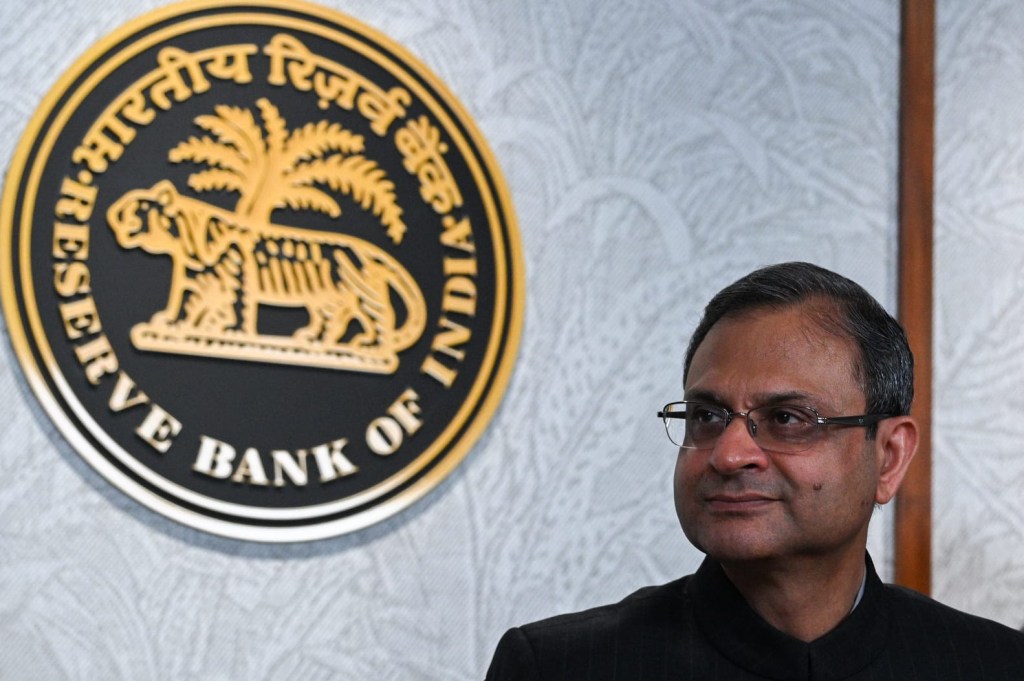
It was a googly that caught markets off guard. After the sharp slide in the rupee, speculation had mounted that the central bank was nearing the end of its rate-easing cycle. But the six-member Monetary Policy Committee (MPC) had other ideas, voting unanimously on Friday to cut the repo rate by 25 basis points to 5.25%.
The MPC also left the door open for further easing, while announcing measures to inject up to ₹1.45 lakh crore of liquidity into the banking system. RBI Governor Sanjay Malhotra described the current phase as a “Goldilocks period” for the economy, with inflation at a benign 2.2% and growth at 8% in the first half of FY26.
What did Malhotra say?
Explaining the rationale for the rate cut, Malhotra said the favourable inflation backdrop provided “policy space to support growth momentum.” At a later press briefing, he added that with inflation expected to remain benign, interest rates were more likely to stay “low rather than high”.
The RBI has also revised its macro projections. It raised its FY26 growth forecast to 7.3% from 6.8% and cut its inflation projection sharply to 2% from 2.6%.
Markets welcomed the move. The Sensex, which had opened lower, ended the day 447 points higher at 85,712.37. The rupee closed flat at 89.99 to the dollar, while bond yields eased, with the benchmark 10-year yield slipping to 6.494%.
What do other economists say?
According to Pranjul Bhandari, India economist at HSBC, the RBI’s dovish turn is driven by two factors. First, a credible inflation-targeting regime requires action when inflation sustains well below the midpoint of the target band. Second, while growth remains strong for now, it is likely to slow by March due to fiscal tightening, softer exports and fading GST-related base effects.
“We believe that weaker growth down the line, low-for-long inflation and tighter fiscal conditions may require growth-supportive monetary policy in 2026 as well,” Bhandari said.
State Bank of India chairman C.S. Shetty said the measures “reinforce the structural drivers of a higher-for-longer growth trajectory through investment, credit and consumption.” Liquidity management, he added, would anchor money-market rates and help lower borrowing costs, while the neutral stance preserved price and financial stability.
Standard Chartered’s India and South Asia CEO P.D. Singh praised the RBI’s “unequivocal assurance on ample rupee liquidity”, noting that lower rates, improved policy transmission and currency-led export competitiveness would help India counter global headwinds.
What particularly reassured markets was the commitment to liquidity. The RBI announced open market purchases of government bonds worth ₹1 trillion and a three-year dollar-rupee buy-sell swap of $5 billion, amounting to a total infusion of about ₹1.45 lakh crore this month.
Kotak Mahindra AMC MD Nilesh Shah said the pro-growth stance met the expectations of a divided market, but added that OMOs would need to extend to the long end of the yield curve to convince bond investors. “Communication beyond the policy statement will be key in ensuring yields reflect the rate cut,” he said.
On the rupee, Malhotra sought to calm nerves, stating that the central bank was well-positioned on the external front and that volatility was a feature of markets. He reiterated that the RBI allows market-determined exchange rates and does not target any specific currency level.
He noted that a 5% depreciation typically adds about 35 basis points to retail inflation but added that services exports were expected to remain resilient even as merchandise exports faced headwinds. “External uncertainties pose downside risks, but the early conclusion of trade and investment negotiations could provide upside,” he said.