



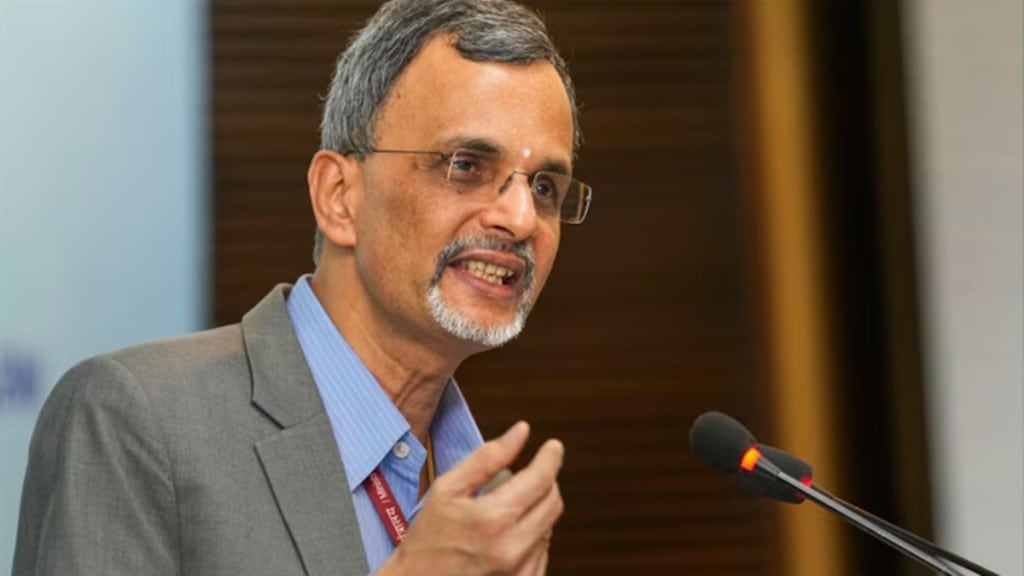
India’s ability to convert its vast demographic advantage into a sustained growth accelerator over the next two decades will depend critically on the quality, relevance and adaptability of its higher education system, Chief Economic Adviser V Anantha Nageswaran said on Wednesday.
Speaking at the CII Global Higher Education Summit, Nageswaran said India is at a “demographic and economic inflection point”, with millions of young people set to enter the workforce in the coming years. “Whether this demographic dividend becomes a growth accelerator or a social strain will depend in large measure on the quality, relevance and adaptability of our higher education system,” he said, calling on states to lead the next phase of reforms.
Emphasising that education is largely a state subject, Nageswaran said states hold the key to translating policy intent into outcomes. He highlighted the urgent need to address teacher shortages, including through flexible mechanisms such as professors of practice, while simultaneously improving teaching quality and institutional capacity.
From Control to Stewardship
Outlining priorities for states, the CEA called for a shift from control to stewardship in regulation, a move away from input-based norms towards outcome-based assessment, and a more entrepreneurial approach in public administration. He also stressed the need to finance higher education institutions based on differentiated roles and outcomes rather than a one-size-fits-all model.
“Not every institution must be a research university,” Nageswaran said. “Some should focus on teaching excellence, some on applied research and others on regional development. Differentiation is not hierarchy; it is efficiency with purpose.”
He noted that the policy groundwork has already been laid through the National Education Policy (NEP), which has opened doors for reform, alongside evolving regulatory thinking. “What is now required is execution, institutional courage and cooperative federalism,” he said, adding that reforms should build on existing momentum rather than disrupt unprepared systems.
Strategic Differentiation
Nageswaran also called for deeper industry engagement in curriculum design, research and governance. Industry, he said, can co-design curricula, offer credit-bearing internships, support applied research and share infrastructure. He highlighted the growing role of technology in dismantling traditional barriers to access and advocated a shift towards lifelong learning and lifelong earning.
With Asia emerging as a global centre for learning and innovation, Nageswaran said India has a rare opportunity to move from being a supplier of students to a destination for global learners, scholars and ideas.