



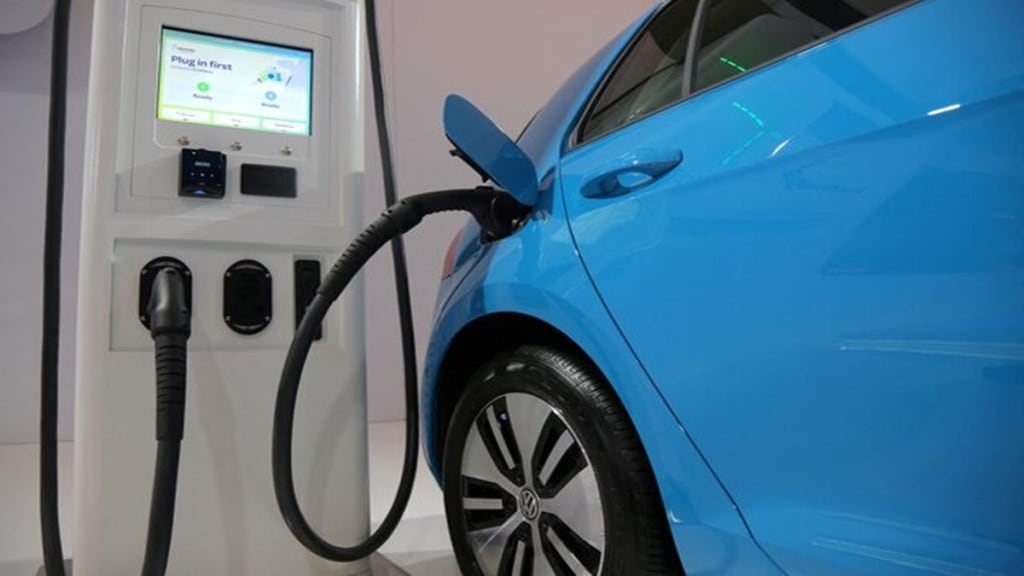
The long-running dispute within the auto industry over electric vehicles versus hybrids has now spilled into the policy advisory space, with a parliamentary committee recommending that government incentives and subsidies be restricted to zero-emission vehicles and not extended to hybrids. If accepted, the recommendation would reinforce the position of EV-focused players such as Tata Motors and Mahindra & Mahindra, while dealing a setback to hybrid-heavy portfolios of Maruti Suzuki and Toyota Kirloskar Motor.
The Parliamentary Standing Committee on Science and Technology, Environment, Forests and Climate Change, in its latest report, has said that hybrid electric vehicles continue to rely on fossil fuels and emit tailpipe pollutants, and therefore do not qualify as zero-emission technologies. It has said that public support, including production-linked incentives, purchase subsidies and tax concessions, should be aligned tightly with long-term decarbonisation goals and directed only at battery electric vehicles and hydrogen fuel cell vehicles.
Fossil Fuel Dependency
The panel’s view comes amid intense lobbying by rival groups of automakers. Japanese carmakers, led by Maruti Suzuki and Toyota, have been pushing for tax relief and incentives for hybrids, positioning them as a practical transition technology given concerns over charging infrastructure and the coal-heavy power mix. Domestic manufacturers such as Tata Motors and Mahindra and Mahindra, which have invested heavily in EV platforms and ruled out hybrids, have opposed any parity, warning that incentives for hybrids could slow EV adoption.
The committee has acknowledged that plug-in hybrids could be considered a transitional solution because they can run on externally charged batteries for limited distances, but cautioned against allowing interim technologies to dilute policy focus on full electrification. It has also flagged similar risks in over-emphasising ethanol blending, saying such measures should function only as bridges to cleaner mobility and not delay a shift to zero-tailpipe-emission vehicles.
State-Level Precedent
The policy debate has earlier played out at the state level. In Uttar Pradesh, the country’s second-largest car market, concessions on registration and road tax for hybrid vehicles introduced in mid-2024 lapsed in October 2025. The lapse of the benefit, rather than an explicit withdrawal, removed a pricing advantage that had helped hybrid models from Maruti and Toyota. EVs continue to enjoy registration and road tax exemptions in the state.
Under the current indirect tax structure, EVs attract 5% GST with no compensation cess, while hybrids are taxed at rates ranging from 18% to 40%, depending on vehicle size. While a few states offer limited concessions to hybrids, these remain significantly lower than those available for EVs.
Industry bodies have continued to press their case. Assocham recently wrote to the ministry of heavy industries seeking tax parity for range-extended electric vehicles, arguing that such models could ease consumer adoption. The parliamentary panel, however, maintained that fiscal support should remain focused on technologies that meet the zero-emission standard.