



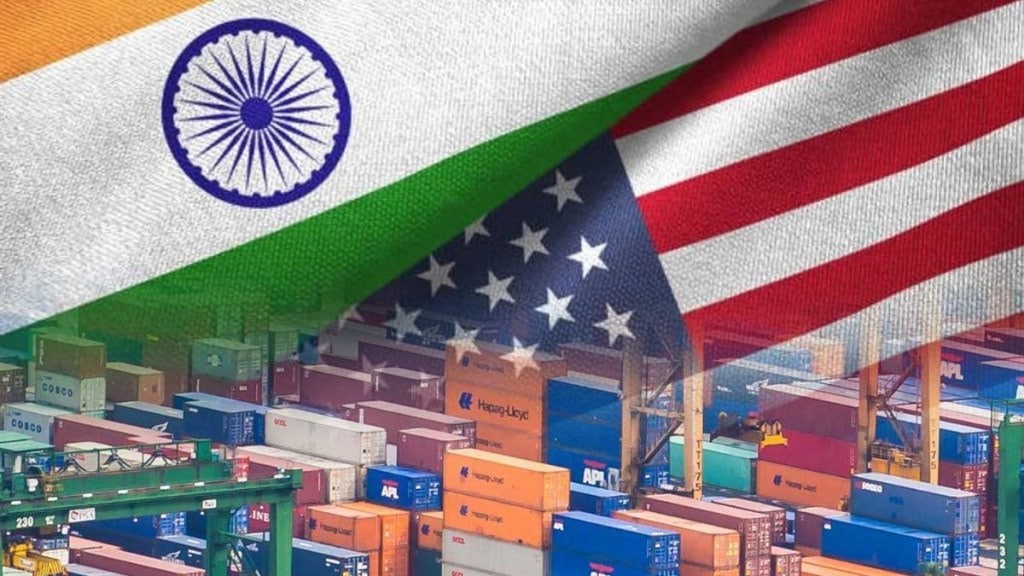
The uncertainty over a US–India trade deal has helped increase the pace of diversification of India’s export markets. Players in export-intensive sectors such as gems & jewellery, textiles & apparels, and marine products are beginning to see the results from a renewed push to diversify into alternative markets, after the hefty additional US tariff came into force.
Significantly, exports to China registered a sharp growth of 90% to $2.2 billion in November, while shipments to Spain jumped 180% and to the United Arab Emirates rose 18%. Exports to Tanzania were up more than 15%, reflecting efforts by sectors most impacted by the steep US tariffs to diversify into newer markets.
Rise in shipments to China
From April to November, shipments to China climbed 33% to $12.2 billion from $9.2 billion in the previous year. Exports of naphtha, a petrochemical feedstock, were up 512% in October and 172% over April–October to $1.4 billion.
In the electronics category, printed circuit board exports to the neighbour surged to $296.5 million in October, an 8,577% year-on-year growth. Mobile phone component exports rose 82% to $362 million.
Similarly, India’s marine exports to the US saw over a 20% contraction in October, but overall exports from the sector rose 15.54% in November. While geography-wise export data for November is yet to be released, industry players attribute the rise to shipments linked to earlier US commitments as well as fresh orders from new markets.
What did KN Raghavan say?
“There are no fresh orders from the US coming in while there has been some diversion of exports to the European Union and Russia,” said KN Raghavan, secretary general of the Seafood Exporters Association of India, adding that Vietnam and China are other markets where Indian marine products have gained ground.
India’s marine product exports rose by over 16% year-on-year to $4.87 billion during April–October, driven by a surge in shipments across several new markets, the commerce ministry said recently. According to the ministry, while exports of marine products declined by over 7% during the first ten months of the current fiscal to the US—the country’s largest export destination due to high tariffs—the loss was “more than compensated” by higher shipments to China, Vietnam, Belgium, Japan, Russia, Canada and the United Kingdom. The growth was primarily led by increased exports of shrimp and prawn, which rose over 17% to $3.1 billion during the April–October period.
Similarly, India’s overall plastics exports rebounded 9.6% to $1.5 billion in November, after two consecutive months of decline marked by a 33% drop in exports to the US in October and a 23% fall in September.
“This performance has been made possible as exporters have started shipping more to Russia, Brazil and other countries in South America, Africa and the members of the Commonwealth of Independent States (CIS),” said Sribash Dasmohapatra, executive director at the Plastics Export Promotion Council. There is good demand for Indian products in these newer markets, which were earlier not prioritised due to the comfort zone built around the US market, he added.
However, not all export-intensive sectors have been able to diversify with equal success. Players in the labour-intensive textile and apparel industry are finding it difficult to replace the US, which accounts for roughly a third of India’s $37-billion textile and apparel exports.
“The demand bowl (in Europe) is the same, but there are more hands now,” said Kumar Duraiswamy, joint secretary of the Tirupur Exporters Association, highlighting intensifying competition among exporters targeting the same markets.
Tiruppur produces textiles worth ₹72,000 crore annually, with over 60% catering to exports. The US accounts for about a fifth of these exports, valued at nearly ₹15,000 crore. Since the imposition of US tariffs on August 27, the region has seen a 30% reduction in production capacity.
“Even European buyers are squeezing margins due to the current situation in the US,” Duraiswamy said, adding that while larger exporters can absorb the costs, smaller units are struggling. “This is not a healthy situation. The industry could see some disruption after the Pongal season,” he warned.
Siva Subramaniam, founder and chairman of Tiruppur-based innerwear exporter Raft Garments, said it takes six months to a year to build a new buyer relationship, starting from sampling through to confirmed orders. “Even then a single US order can be for half a million pieces—other markets cannot match that scale,” he said.
However, Prabhu D, convenor of the Coimbatore-based Indian Texpreneurs Federation (ITF), points out that diversification into Europe is equally constrained, with China and Bangladesh together accounting for nearly 50% of the EU apparel market. Cambodia and Vietnam have also emerged as strong contenders, nearly matching India’s market share this year. Cambodia’s 16% year-on-year growth in the EU underscores the rapidly shifting competitive landscape.
“Without effective FTA execution with the EU, meaningful market-share gains or diversification remain limited,” he added.
Meanwhile, gems and jewellery exports showed signs of recovery, rising 27.8% in November after plunging more than 50% in October following the imposition of US tariffs. Exports to the US jumped to $406 million in November from $214 million in October, though part of the recovery was attributed to the clearance of backlog shipments.
“Strong growth in markets such as the UAE and Hong Kong, along with emerging destinations including Australia, Thailand and Israel, has helped mitigate the impact of higher tariffs,” said Kirit Bhansali, chairman of the Gems and Jewellery Export Promotion Council.
He added that existing free trade agreements with the UAE and Australia have provided crucial support by improving market access and competitiveness. Many exporters are also shifting focus towards studded jewellery to remain afloat, as gold is imported from the US and value addition is carried out domestically through finishing and stone setting. Margins for studded jewellery typically range between 6% and 8%.
“While the US market is expected to revive in the near future, the efforts made by exporters towards new markets in the wake of tariffs would lead to above-trend growth in coming quarters,” a gems and jewellery exporter said.
India’s exports to the US witnessed a surprising 22% rebound in November 2025, temporarily defying the impact of the 50% punitive tariffs imposed in August. Exports to the US stood at $6.98 billion during the month, largely driven by a sharp jump in smartphone shipments and petroleum products. Exporters also rushed to clear a backlog of pending US orders often at zero margins or losses as they absorbed deep discounts to retain buyers.