



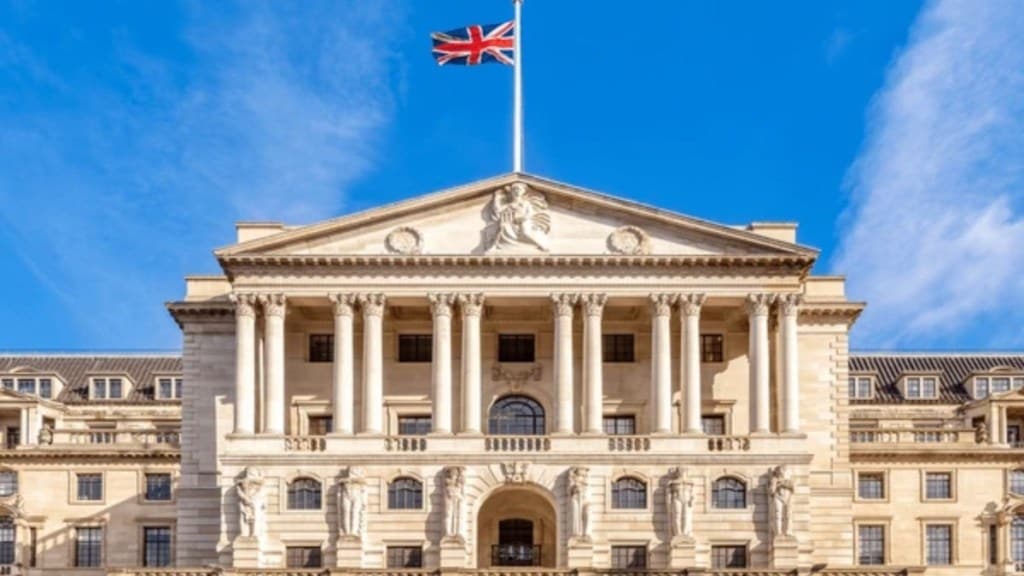
The Bank of England on Thursday cut its key interest rate for the first time in four months, signalling growing confidence that the inflationary pressures weighing on British households and businesses are finally easing, even as economic growth of the country remains fragile.
The UK central bank’s Monetary Policy Committee (MPC) voted narrowly 5–4 to lower the base rate by 25 basis points to 3.75%, marking the lowest policy rate since February 2023. The close split highlights the policymaker’s attempt to strike a delicate balance between taming inflation and supporting a slowing economy.
Context of the rate cut
The move from the Bank of England comes a day after the Office for National Statistics for the UK flagged the slowdown of consumer price inflation (CPI) to 3.2% from 3.6% a month earlier. The figure was below the Bank of England’s forecast of 3.4%. That gave policymakers room to cut interest rates in an effort to bolster Britain’s stagnant economy.
Beyond inflation, broader economic indicators have also pointed towards the case of stagnation of the British economy. Data released earlier this week showed a cooling labour market, with job vacancies continuing to decline and the UK unemployment rate rising to 5.1%, its highest level since January 2021.
According to reports published by the Associated Press, the British consumer prices are also rising faster than in other parts of Europe and North America.
Debate between MPC committee on inflation
While inflation remains well above the central bank’s 2% target, the recent slowdown trend has been interpreted by 4 members of the MPC members as evidence that earlier aggressive rate hikes are working their way through the economy.
Britain’s inflation rate also remains higher than that of many advanced economies. Inflation across the 20 euro-zone countries stood at 2.1% in November, while US inflation was 3.0% in September, the most recent data available due to the ongoing US government shutdown.
Why is this an important development? Global implications?
Globally, central banks generally lower interest rates to help spur economic growth by reducing borrowing costs, which can lead to increased spending by consumers and boost investment by businesses. However one of the speculatory disadvantages of lowering interest rates happens to be that it can also fuel higher prices.