



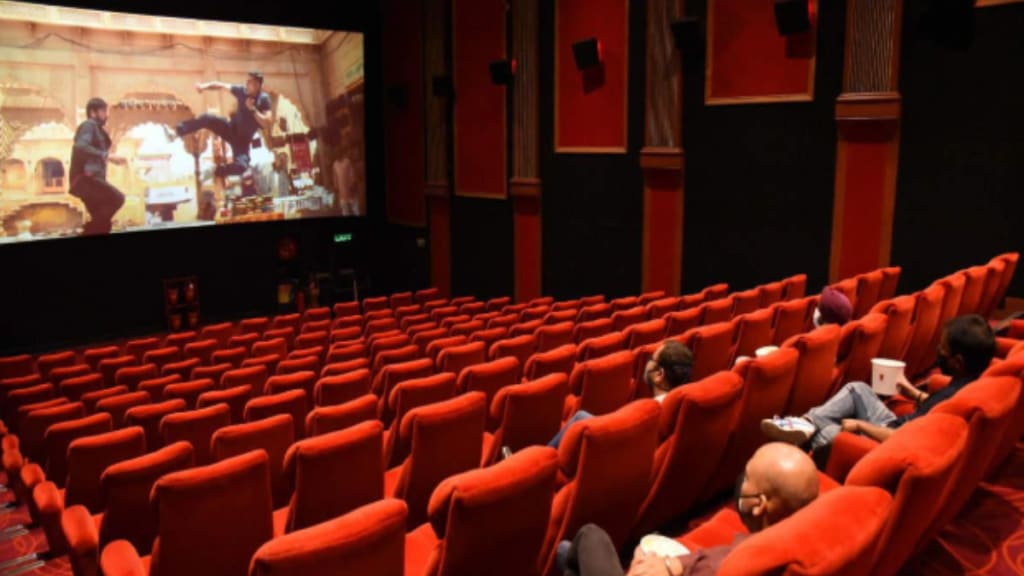
After Dhurandhar hit the theatre screens early this December, the scene inside India’s multiplexes felt oddly reassuring. Lobbies were crowded, weekend shows sold out early, and word-of-mouth began to work its magic. For exhibitors such as PVR INOX, the timing could not have been more symbolic. Just as Dhurandhar settled into an unexpectedly strong run, Avatar: Fire and Ash arrived in cinemas worldwide, bringing with it the promise of scale, spectacle and cross-generational appeal. Together, the releases have reignited hope for an industry reeling under the impact of OTT streaming challenge, high operational costs and content shortage.
But is life genuinely returning to multiplexes or are these films merely riding another short-lived wave of big-ticket marketing?
The market’s answer so far has been cautious. PVR INOX’s stock is still down sharply over the past year, even as industry watchers acknowledge that the December quarter is shaping up better than many had expected. Brokerages tracking box-office trends estimate that industry-wide net box office collections could cross Rs 30 billion in the third quarter, a level breached only a few times since the pandemic. Dhurandhar alone has delivered a meaningful share of that momentum, emerging as what one brokerage described as an unlikely but timely boost to multiplex earnings.
Inside PVR INOX, the answer begins and ends with content. “Content is the single-biggest driver of theatrical success,” says Gautam Dutta, CEO, revenue and operations at the company. Dhurandhar, he notes, was released across about 1,200 screens with more than 3,700 daily shows, opening at Rs 32 crore and crossing Rs 118 crore in its first week. More telling, he adds, was its staying power. Weekly business has held at roughly Rs 32 crore, with footfalls rising from around 28 lakh admissions in its first week to over 31 lakh in the second. “This highlights the film’s strong pull and repeatability,” Dutta says, placing it in a lineage that includes Kantara: A Legend Chapter 1 and Avatar: The Way of Water, films that succeeded in drawing back even infrequent moviegoers.
Uneven nature of recovery
The broader industry numbers offer encouragement but also underline the uneven nature of the recovery. According to PVR INOX, more than 1,500 films were released in 2025, with 29 crossing the Rs 100-crore mark, while the January–November box office stood at Rs 11,657 crore, up 18% year-on-year. The data suggests that audiences are willing to step out, but only when the proposition is compelling enough. “The pre-COVID habit of moviegoers visiting theatres as a routine weekend tradition has significantly diminished,” says Chandrashekar Mantha, partner and media and entertainment leader at Deloitte India. “Today, audiences are far more discerning, with strong narratives serving as the primary driver of footfalls.”
That shift has sharpened the stakes for multiplex operators. Box office performance now carries added importance because it directly feeds high-margin ancillary revenues, particularly food and beverages. At the same time, rising costs and a more fragmented release calendar mean that exhibitors cannot rely on volume alone. Regional cinema, Mantha adds, has played a critical role in reshaping audience behaviour, delivering authentic, rooted stories that travel across languages through dubbed and pan-India releases. The old divide between Bollywood and regional cinema, he says, is steadily dissolving into a content-first ecosystem.
PVR INOX has responded by trying to reduce its dependence on a handful of tentpole films. Dutta outlines a multi-layered strategy built around premium formats such as 4DX, PXL and LUXE, alternative programming including concerts and live events, and aggressive pricing interventions. Weekday tickets starting at Rs 92, bundled food-and-beverage offers and targeted promotions are designed to broaden the audience beyond peak weekends. Re-releases have become a surprisingly important lever. Since 2024, the chain has brought back more than 350 titles, from restored classics such as Sholay in 4K to curated star collections, helping to drive weekday occupancy and incremental footfalls.
Scepticism remains
Yet outside the corporate narrative, scepticism remains about how permanent the shift really is. “If you give them good cinema, they will throng the cinema hall,” says noted film critic Taran Adarsh, pointing to Dhurandhar as proof that even non-event films can break through if they connect. But he resists framing the moment as a fundamental behavioural reset. “If you don’t give them content, the theatres will remain empty,” he says, arguing that audience loyalty has always been conditional on quality rather than habit.
Film critic Saibal Chatterjee is more blunt. In his view, the resurgence is episodic, driven by scale, promotion and spectacle rather than a broad-based return to cinema-going. Multiplex pricing, he argues, has narrowed the audience base to urban, upper-middle-class consumers, making theatre visits an increasingly selective choice. “When you have big films, people will come back,” he says, “but it doesn’t show that this is permanent.” Smaller, critically acclaimed films, he notes, continue to struggle for attention in theatres, even as they find appreciation later on streaming platforms.
For analysts watching the sector, that tension between buzz and predictability is key. Madhur Singhal, managing partner at Praxis Global Alliance, says multiplexes are “buzzing again” not because consumer priorities have shifted, but because audiences continue to reward good content and differentiated experiences. The business, he argues, is evolving towards offering a richer, more fulfilling viewing experience that cannot be replicated at home, even if that also caps the upside during weaker content cycles.
That leaves operators like PVR INOX walking a fine line. On one hand, films such as Dhurandhar, Kantara, Saiyaraa and Avatar reaffirm the cultural pull of the big screen. On the other, the sustainability of that pull depends on a steady pipeline of stories that resonate across languages, budgets and demographics. For now, the crowds are back, but whether they stay will depend less on one successful December, and more on whether multiplexes can turn selective enthusiasm into a repeat habit in a post-OTT world.