



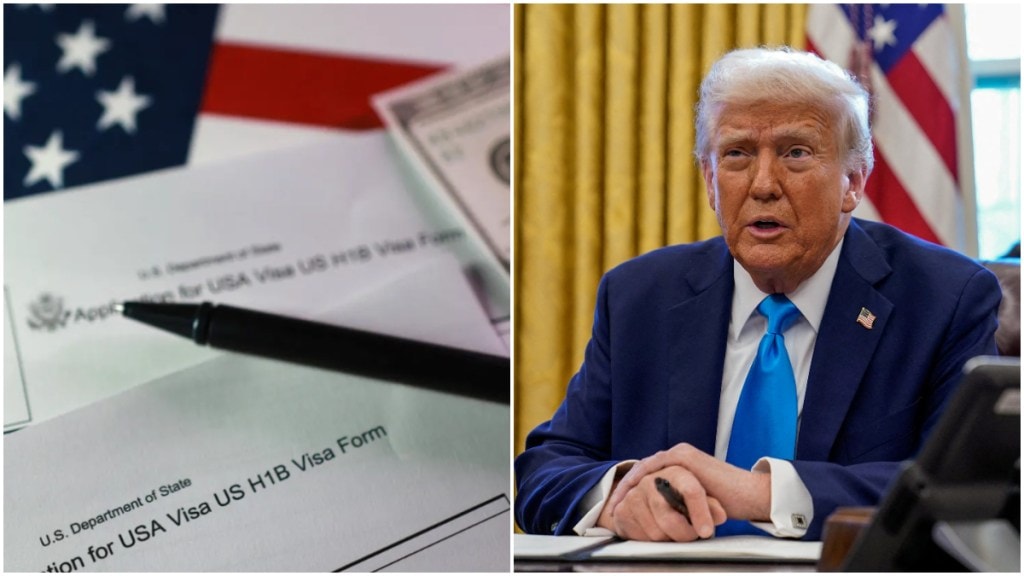
As part of his efforts to double down on the ‘America First’ agenda, the Donald Trump administration has reportedly asked for stricter vetting regime for certain H-1B visa applicants. According to a State Department cable reviewed by Reuters this week, US diplomats have called for LinkedIn profiles to be thoroughly investigated for highly skilled workers eyeing the ‘specialty occupations’ visa in the US.
H-1B visa vetting enhanced: New State Department cable
The reported December 2 cable was sent to all US missions. It ordered consular officers to carry out an in-depth review of H-1B applicants’ LinkedIn profiles and resumes. It also urged officials to look into family members (H-4 applicants) possibly travelling with the said applicants.
The new directive seeks to check out if any of these people have worked in areas that may be linked to red-flagged activities like misinformation, disinformation, content moderation, fact-checking, compliance and online safety. If yes, these applicants may be disregarded for the H-1B visa under an article of the Immigration and Nationality Act.
On top of that, a US State Department press release dated December 3, 2025 (US time), announced expanded screening and vetting for H-1B and their dependents. With students and exchange visitors already subjected to the review, the new rule stated, “To facilitate this vetting, all applicants for H-1B and their dependents (H-4), F, M, and J nonimmigrant visas are instructed to adjust the privacy settings on all of their social media profiles to ‘public.'”
Trump admin targets ‘censorship’ with new H-1B policy
“If you uncover evidence an applicant was responsible for, or complicit in, censorship or attempted censorship of protected expression in the United States, you should pursue a finding that the applicant is ineligible,” the cable said, as quoted by Reuters.
Although all visa applicants will face such severity during the vetting process, as per the cable, potential H-1B holders are particularly the prime focus of the reported directive. This hardline policy targeting highly skilled workers has especially been fuelled by the abundance of such individuals in US tech companies, which particularly rely on bringing in recruits from foreign countries, majorly India and China.
Reuters further reported the cable highlighting that such applicants ties to the technology sectors were frequently linked to “social media or financial services companies involved in the suppression of protected expression.” As a result, the reported cable has directed US consular officers to take a deep dive into the applicants’ “employment histories to ensure no participation in such activities.”
While the US president’s newly introduced $100,000 blanket fee on H-1B visas applies only to applicants associated with the new cycle, the hardened vetting policy targets new as well as repeat applicants.
The latest revelation falls in line with the MAGA leader and his supporters endlessly accusing the former President Joe Biden’s administration of suppressing free speech, which they believe particularly hampers conservative voices on online platform. With Trump having long hit out against his predecessor of government censorship over the years, the White House issued the presidential action titled “Restoring Freedom of Speech and Ending Federal” on the day of his second inauguration earlier this year.
Since having taken office for the second time, the Trump government had already expanded social media vetting of visa applicants in search of “any indications of hostility toward the citizens, culture, government, institutions, or founding principles of the United States.” In late May, the administration even halted student visa appointment to make way for stricter reforms, demanding applicants to make their social media accounts public for consular review.