



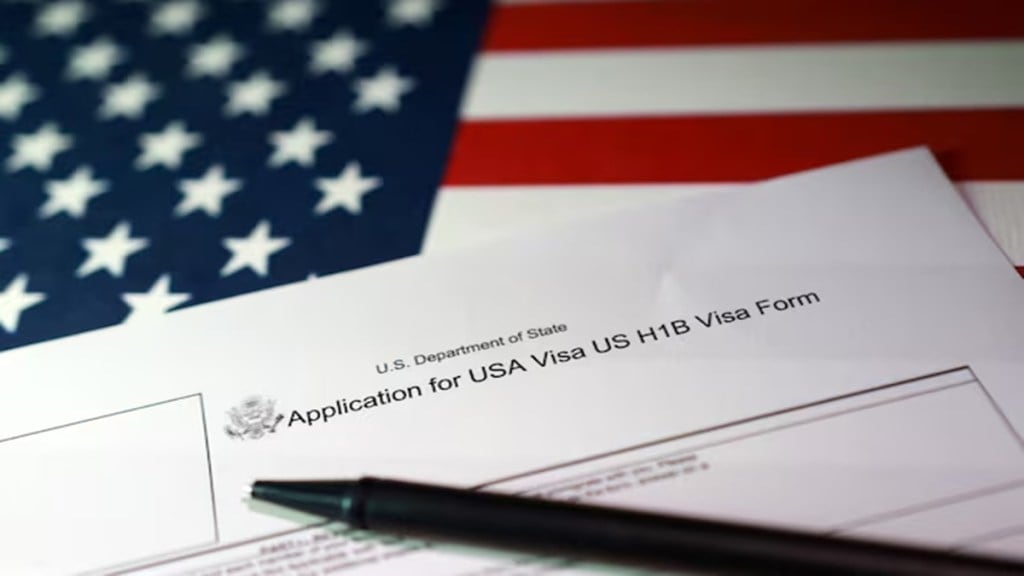
Indian H-1B visa holders are stranded in the country, unable to have their visas stamped at the consulate. Last week, the US Department of State announced that beginning December 15, all H-1B and H-4 visa applicants must complete an ‘online presence review’ to meet application standards.
But, even before it took effect, on December 9, the U.S. Embassy in India announced the cancellation and rescheduling of visa appointments, despite the new social media screening requirement set to take effect on December 15.
New Vetting Rule
As part of the ‘online presence review’, starting December 15, all H-1B applicants will be required to change the privacy settings on all their social media platforms to “public”.
This requirement of an online presence review was already in place for the international students and exchange visitors entering the US. Now, it has been extended to all H-1B applicants and their dependents by the US State Department.
“The US government has expanded screening and vetting measures for H-1B applicants and their H-4 dependents. Applicants must now keep all social media profiles public, as officials will review online activity from December 15 to identify cases deemed inadmissible or posing security risks. Students and exchange visitors were already under similar scrutiny,” says Saurabh Arora, Founder & CEO, University Living.
Trump administration has implemented new, stricter vetting rules across all categories of visa applicants. The new vetting rule requires all applicants for H-1B and their dependents (H-4), as well as F, M, and J nonimmigrant visa holders, to adjust the privacy settings on all their social media profiles to “public.”
The State Department utilizes comprehensive information for visa screening to identify applicants who may pose a threat to U.S. national security or public safety. Effectively, the Trump administration is including ‘digital footprints’ as a crucial component in the vetting process for immigrants’ visa adjudications.
Consular staff will examine profiles for indications of antisemitic behavior, connections to terrorist groups, or anti-American sentiments, following State Department regulations. Various social media platforms, including Twitter, Facebook, Instagram, and TikTok, will be assessed.
Vis Appointments Rescheduled
Even though this new social media screening requirement takes effect from December 15, the U.S. Embassy in India, on December 9, communicated that visa appointments in India are being cancelled and rescheduled for a later date.
Those who had their visa appointments scheduled for mid to late December 2025 have begun to receive notifications regarding the reschedule.
This social media vetting requirement has likely resulted in consulates reducing the number of daily interviews for certain categories, leading to cancellations and rescheduled appointments, while biometrics appointments continue as scheduled.
“The State Department’s new social media policy has already caused disruptions in India, with many H-1B appointments postponed to next year. The US Embassy has advised applicants to follow the revised schedule shared via email,” says Arora.
Why H-1B Holders are Affected the Most
H-1B visas, valid for 3 years with a possible 3-year extension, require applicants to return to their home country for consular stamping. New restrictions primarily affect H-1B workers needing a visa stamp, as well as H-4 dependents who also require consular appointments.
“If someone has a U.S. job at risk, critical travel needs, or medical or humanitarian circumstances, they can request an expedited appointment through the consulate portal. It’s not guaranteed, the U.S. consulate allows such requests only in exceptional, unforeseen circumstances—for example, urgent travel for a close relative’s funeral, emergency medical treatment, or the start of an academic program,” says Dmitry Litvinov, CEO and Founder of Dreem.