



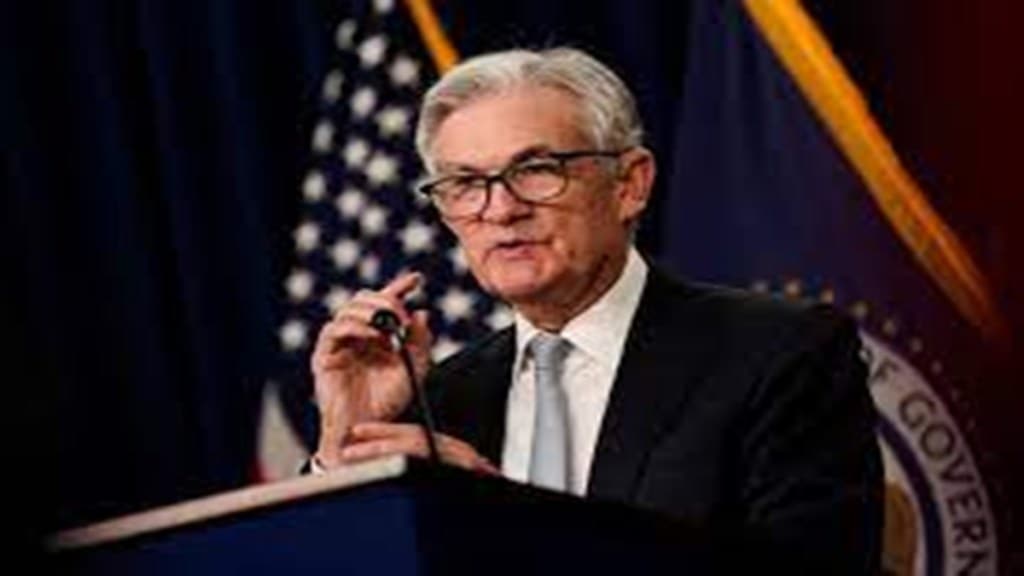
The Federal Open Market Committee (FOMC) of the US Federal Reserve is meeting over two days – June 11 and June 12. Global investors are closely monitoring three things emerging from June’s FOMC meeting. The first is whether the US Federal Reserve will raise or cut interest rates; the second is whether Fed Chair Powell will continue to be hawkish or shift to a more dovish tone; and the third is the ‘dot plot’ in the Summary of Economic Projections, which is also scheduled for release today.
US CPI data for May has been published by the Bureau of Labor Statistics. Bets that the Federal Reserve will lower interest rates many times this year were reinforced by a less-than-expected inflation report. In May, headline inflation in the US decreased to 3.3%, below the 3.4% market estimate, while the core measure unexpectedly dropped to 3.4%. The outcomes erased the spike in yields following a strong jobs report and supported betting that inflation progress will enable the Federal Reserve to cut rates twice this year after starting the cycle in September.
Paul Krugman in a X post tweets – “So core inflation ex shelter — which lags far behind market prices — was 0.0 mom and 1.9 yoy. Inflation has basically been defeated.”
Fed Chair Powell will make the final announcement on Wednesday, June 12 at 2:00 p.m. ET. To be followed by his press conference.
Also Read: US CPI data for May released, focus now on Fed chief Powell in FOMC meeting today
A rate hike, which was talked about a few weeks back, has been ruled out by the market now. As far as the rate cut is concerned, even that is not looking a possibility in June. With inflation remaining sticky, markets expect the Fed to keep the ‘fed funds rate’ target range unchanged at 5.25% – 5.50%.
Here’s how the latest US CPI inflation numbers stack up – In April, the US CPI increased 0.3 percent on monthly count while annual inflation rose by 3.4%, a smaller increase than the 3.5 percent increase for the 12 months ending March. The core-inflation index (all items less food and energy) rose 0.3 percent in April, while the annual core inflation index rose 3.6 percent over the past 12 months.
The Bureau of Labor Statistics releases May 2024 CPI data on June 12, 2024, at 8:30 A.M. Eastern Time. “Investors are awaiting today’s Fed interest rate decision, which will arrive a few hours after May’s CPI. June’s Fed meeting is unique since it will also feature an update to the dots (Summary of Economic Projections) pointing to the number of rate reductions the committee envisions for the remainder of this year. Just because Ottawa and Frankfurt brought out the scissors doesn’t mean Washington will,” says José Torres, Senior Economist at Interactive Brokers.
The dot plot can reveal what Fed officials have been thinking about rate cuts. The dot plot indicates Fed officials’ policy expectations, with investors keen to gauge the number of rate cuts they anticipate, with the most recent plot indicating three quarter-point cuts in 2024.
What to look for in the June Fed meeting: Chris Zaccarelli, Chief Investment Officer for Independent Advisor Alliance
We will be looking at these three things heading into Wednesday’s Fed statement and press conference:
Dot Plot – we know the Fed isn’t going to cut rates at this meeting, but what does the new Dot Plot show going forward? The Fed had indicated a median of 4 rate cuts on the Dot Plot coming into this year (e.g. target dropping from 5.5% to 4.5%), but by March they had indicated only 3 rate cuts. We believe they are going to reduce that by another 1 or 2 cuts and the market is going to look closely to see how much less hawkish the Fed is acting.
Rate Hikes – Chairman Powell (and most of the Fed speakers) has consistently denied that they are planning any rate hikes, and if this changes, you can expect an extremely negative market reaction. The stock market has continued to move higher this year both because the economy and corporate profits have continued to expand, but also because rate hikes have been taken off the table. If this were to change, it would be a game-changer for the markets (in a bad way).
Inflation – how does the Fed, and Chair Powell, speak about inflation? He started out the year describing the sticker-than-expected inflation as a bump in the road or an outlier, but by the 3rd disappointing report, he changed his tune and explained that the Fed is going to need to see a lot more data coming down in order to feel “confident” about starting to cut rates.
Clearly, the stock market has been able to rally in the absence of cuts, but sooner or later lower rates will be necessary for the market to maintain its current multiples; the real economy is also going to be impacted – over time – by higher-for-longer interest rates, specifically in the housing market, but also in the auto market and even across consumer spending in general (e.g. for those purchasing items on credit cards with a balance).
Meanwhile, equity market investors are having a field day. Backed by robust corporate earnings and the weightage of tech stocks in the indices, the S&P 500 and Nasdaq Composite are sitting pretty at all-time high levels. In 2024, the tech-heavy Nasdaq has risen over 14%, while the S&P 500 has gained over 12%. The more cyclical Dow has gained only 2.9% so far this year.
The equity valuations appear to be strained but equities may have some more space to run with the upcoming US elections and rate cut sessions in a few weeks. According to FactSet, the S&P 500’s price-to-earnings ratio for the upcoming 12 months is 20.7, which is higher than the 10- and five-year averages of 17.8 and 19.2, respectively.
As of now, the biggest threat to equity returns from underperformance is the increase in Treasury yields. Rising Treasury yields can cause stock unrest, potentially increasing borrowing costs and making equities less attractive than bonds due to higher yields.