



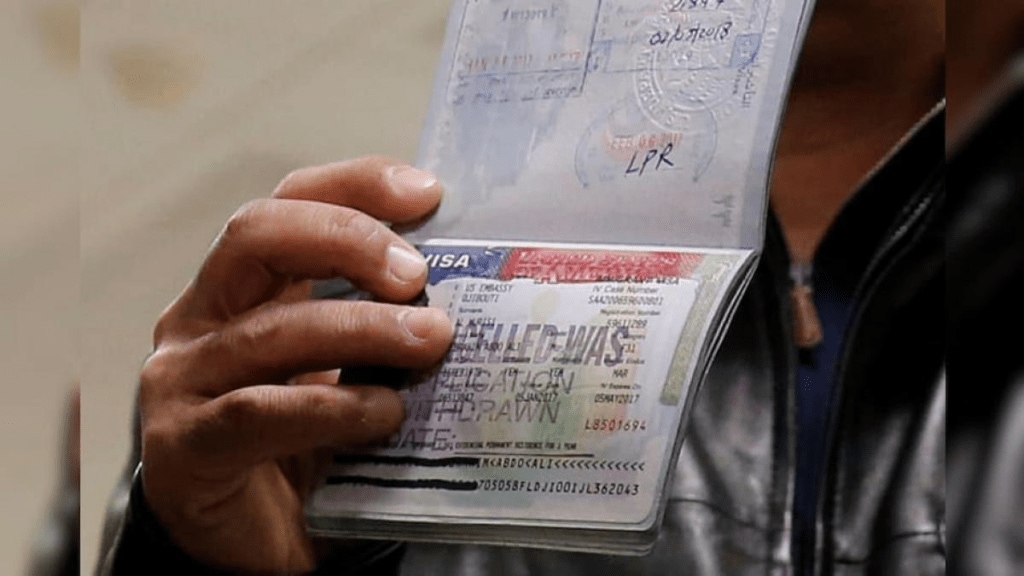
Numerous warning from immigration experts have been swirling in the air in light of the swift policy changes and revisions as part of Donald Trump’s crackdown. Non-immigrant visa holders, especially H-1B workers, have never been more under scrutiny than now.
Given the recently enhanced social media vetting process and the September proclamation that imposed an additional $100,000 fee on the new H-1B petitions, now is not a good time for non-immigrants to leave the US if they are looking forward to return soon.
Several immigration attorneys, and now even top companies in the US, have sounded the alarm against non-immigrants leaving America for visa stamping. With all the changes happening in the arena right now, visa interviews are getting heavily delayed, or even cancelled in some cases. As a result, visa holders are bigger hurdles in their path.
In a new interview with IANS, a top Indian-American immigration attorney reiterated what several other have already pointed out in the recent week. Changes imposed by the Trump administration are particularly hitting visa categories like H-1B, F-1 and J-1 visas. US consulates are postponing scheduled interviews to make way for enhanced background vetting, which is leaving quite a lot of visa holders stranded in their home countries after they came to get their documents renewed.
Avoid international travel: Indian-origin immigration attorney’s warning
In an interview IANS, Aparna Dave emphasised that visa holders should not travel back to the home countries unless it can’t be avoided. “It’s best to stay put in the United States,” she told the news outlet.
According to a new “Home Country Only” visa interview rule effective September 6, 2025, the US State Department ended “third-country visa stamping.” And so, non-immigrant visa applicants are now required to schedule their visa interview appointments at the US embassy or consulate in their country of origin.
In case, an applicant’s country doesn’t offer embassy services, the State Department designated alternative consulates for their visa appointments.
“The rule has come into effect that you either go to get a visa in the country of your residency… or you have to go to your country of citizenship,” the immigration attorney reminded everyone in the IANS interview. She further highlighted that applicants who originally relied on Canada or Mexico for their appointment may end up facing a lot of hindrances.
Most importantly, Dave said since only visa holders who leave the US and then seek re-entry into the country require a visa stamp, it’s better that these individuals avoid international travel altogether.
“Visa is an entry to the United States,” she reminded concerned individuals in the interview. “Even if your visa has expired, you can remain in the country based on that I-94.” The only obvious catch here is that the same applies only if the status has been properly extended.
Indian-American immigration expert weighs in on social media vetting for visa applications
On top of that, digital vetting for H-1B and H-4 visa applicants was expanded by the US State Department earlier this month. Effective December 15, applicants of both visa category were instructed to set all their social media profiles to “public” so that their online activity and presence can be reviewed by the authorities. The Trump administration cited national security as a priority while pushing for extensive social media vetting.
Student visa types F and M, and the J classification for exchange visitors had already been hit with this rule months ago.
“What the government has said is that they have the right to check people’s social media,” she told IANS. “Everybody’s social media is going to be checked.”
Ultimately, such extensive checks have fuelled the delayed timelines. Aparna Dave again foregrounded the same, saying that quite a few interview originally scheduled for December and January have now been postponed. With consulates needing more time “to vet all applicants,” Dave advised visa applicants against posting sensitive rhetoric pertaining to religious and political discourse online.
She noted that even if applicants pass their visa applicants, they shouldn’t consider their path to be all happy sailing ahead. Dave said in the IANS internet that even a Customs and Border Protection (CBP) officer has the right to check a visa applicant’s phone and social media at the port of entry.
Therefore, secondary screenings can also add to delays, thereby impacting foreign nationals’ employment or other legal nonimmigrant status in the US.
Keep a low profile online: Immigration attorney
Although US embassies and other immigration authorities have been repeatedly churning out reminders about social media vetting on X, a lot of visa holders and applicants are still in the dark about what it really means. Since the enhanced checks have just started, there’s not been much information on what truly classifies as a red flag one one’s social media profiles like X, Instagram and more.
Sending out a message of caution, Dave advised people to maintain a low profile. “Refrain from posting anything on social media, which is political, religious… it’s sometimes just not worth it.”
These changes especially impact Indians seeking to travel abroad for employment opportunities, as they still remain the biggest group aspiring for H-1B visas.
According to data from the US Citizenship and Immigration Services (USCIS), India remains at the top of table for H-1B petitions. In FY 2024, 283,397 Indian citizens got the ‘specialty occupations’ visas, accounting for 71% of all H-1B approvals.
Second on that table was China, with 46,680 H-1Bs, which makes for 11.7% of total approvals. Even if just one rank apart, the significant gap between India and China’s H-1B rate was still undeniably huge.