



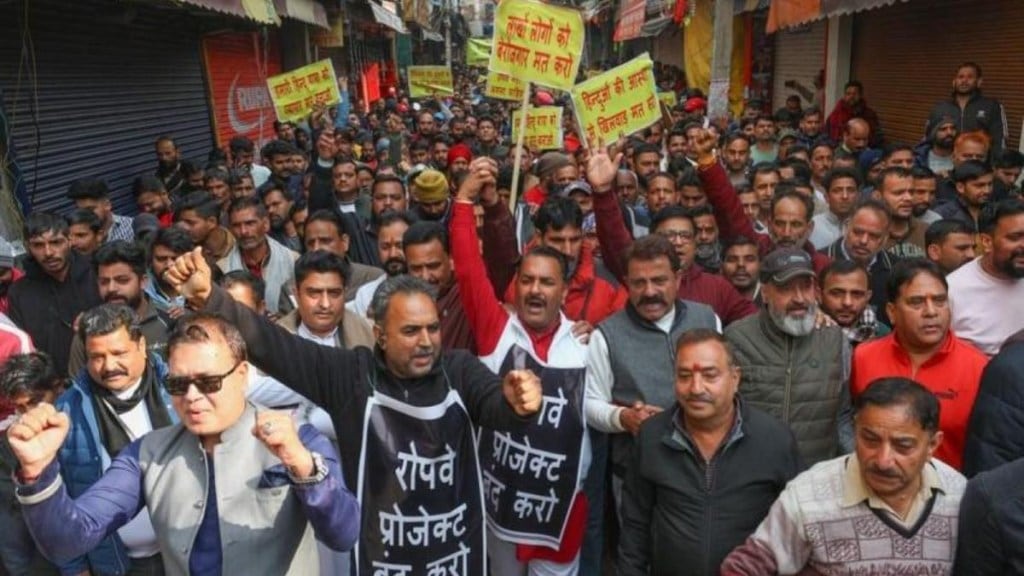
Traders in Jammu’s Katra town on December 18 observed a complete shutdown to protest the Shri Mata Vaishno Devi Shrine Board’s decision to introduce a ropeway project aimed at easing the pilgrimage to the sacred shrine. The protest, organised by the Shri Mata Vaishnodevi Sangarsh Samiti, highlighted fears of livelihood loss for thousands of families dependent on the traditional trek route.
The protest witnessed participation from various groups, including shopkeepers, hoteliers, pony operators, porters and transporters, all of whom rely on the steady influx of pilgrims to sustain their businesses. “The ropeway project threatens the livelihood of over 60,000 families. Everyone has taken to the streets to demand its cancellation,” said Bhupinder Singh Jamwal, president of the Vaishno Devi Trek Mazdoor Union.
The shutdown has been temporarily suspended until December 23, allowing the shrine board time to reconsider its decision. However, the Sangarsh Samiti has warned that agitation will resume if their demands are not met.
What is the Katra-Sanjichhat Ropeway Project?
The proposed ropeway project, set to cost Rs 300 crore, will connect Tarakote, near Katra, to Sanjichhat, just 2.5 kilometers from the Vaishno Devi shrine. Operating under a Public-Private Partnership (PPP) model, the ropeway aims to reduce the current six to seven-hour trek to less than an hour, with the ropeway journey itself lasting a mere six minutes.
Expected to be operational by December 2026, the project will have the capacity to transport 1,000 people per hour. This initiative is part of the shrine board’s efforts to accommodate the increasing number of pilgrims, which surpassed one crore visitors this year.
Why are people protesting?
Protesters argue that the ropeway will disrupt the traditional pilgrimage route, adversely affecting businesses and jobs that rely on foot traffic. Local stakeholders, including the Katra Vyapar Mandal, warn that small commercial establishments along the trek will face steep declines in income.
Former Jammu and Kashmir Chief Minister Mehbooba Mufti has voiced her support for the protesters, stating, “The livelihood of shopkeepers, laborers, and others is intricately linked to the pilgrimage. The government should treat this as a religious place, not a tourism spot.”
Shrine board officials, however, emphasise the project’s potential benefits. They argue that the ropeway will make the pilgrimage more accessible to senior citizens and those with medical conditions, while also enhancing the spiritual and scenic experience of visitors with panoramic views of the Trikuta Hills.
Additionally, the board believes that increased ease of access could boost the number of pilgrims, ultimately generating new business and employment opportunities for locals. It has pledged to address stakeholder concerns and ensure the project benefits all parties involved.