



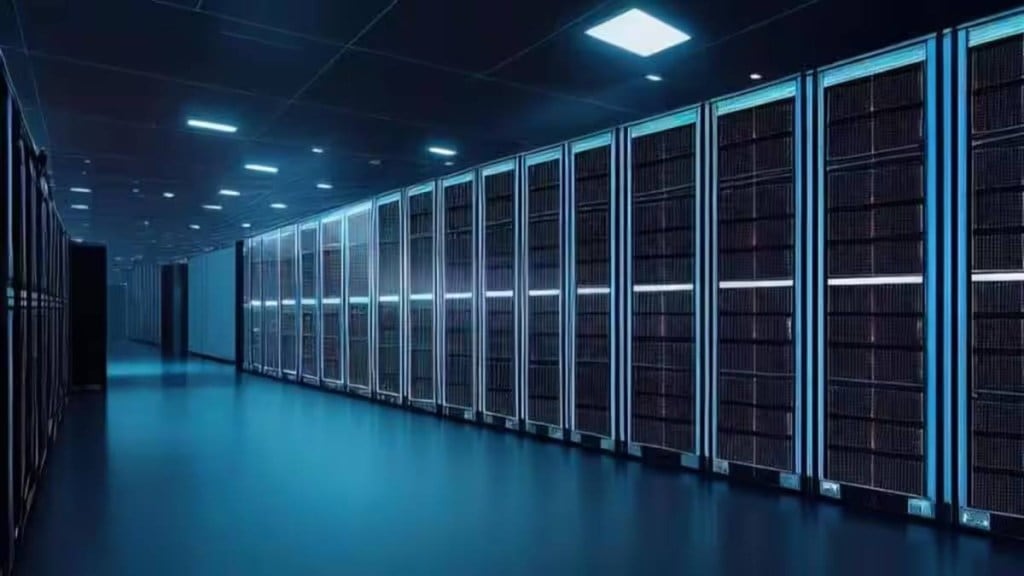
India’s Data Centre (DC) capacity is expected to record the highest capacity addition of approximately 850 MW during the 2024-2026 period, higher than major APAC countries, said a report by CBRE South Asia. According to a CBRE report, titled ‘Asia Pacific Data Center Trends Q1 2024’, India tops major APAC countries with the highest data center capacity of around 950 MW in the Asia-Pacific region (excluding China), overtaking major countries like Australia, Hong Kong SAR, Japan, Singapore, and Korea.
After India, Japan recorded the second-highest Data centers (DC) capacity with 892 MW, followed by Australia at 773 MW, Singapore at 718 MW, Hong Kong at 613 MW and Korea at 531 MW.
The DC industry in India has witnessed the capacity doubling since the start of the pandemic. In 2023, per the report, there was an addition of 255 MW of new supply compared to 200 MW in 2022, resulting in a total stock of approximately 1,030 MW by the end of the year. This, it added, is expected to continue in 2024 with planned supply of over 330 MW across various cities. This will increase the stock by 30 per cent annually to reach around 1370 MW. The total DC stock in 2023 was around 16 mn. sqft in India.
With significant investments from global operators, real estate developers, and private equity funds, data centers continue to rank among the top three preferred alternative assets for investors in the APAC region, including India. Global investors retain a strong interest in the Indian data centre market, with many groups eyeing partnerships and joint ventures with local operators. Per the CBRE report, M&A activity among operators is likely to pick up in the coming years due to the growing number of players. India secured investment commitments of more than USD 40 billion from both global and domestic investors between 2018-2023. This significant influx of capital underscores the sector’s potential for high returns.
The top states that dominated the cumulative investment commitments include Maharashtra, Uttar Pradesh, West Bengal, and Tamil Nadu. “India is also attracting global hyperscalers who view it as a prime market for expansion, with many of them opting for their customised build-to-suit (BTS) facilities. In 2023, more than 85 per cent of USD 27 billion committed is being targeted towards the development of hyperscale facilities,” it stated.
Strong DC supply pipeline
Mumbai remains the dominant market with over 50 per cent share in total stock in India as of 2023. Reliable power supply, broadband connectivity, and availability of skilled manpower further contribute to Mumbai’s appeal as a sought-after destination. Chennai, with an 18 per cent share, follows as the second most popular market due to its strategic location on the east coast, facilitating strong connectivity to East Asia.
More than 60 per cent of the upcoming supply would be concentrated in Mumbai and Chennai, while Delhi-NCR, Bangalore, and Hyderabad are jointly expected to account for over 30 per cent share. Emerging markets such as Kochi, Jaipur, Ahmedabad, Lucknow, Patna, and Vishakhapatnam are experiencing growth, driven by their strategic locations and improved infrastructure, including enhanced power supply along with fibre and cable connectivity upgrades.
Anshuman Magazine, Chairman & CEO – India, South-East Asia, Middle East & Africa, CBRE, said, “India, with its favourable market conditions, is attracting multinational corporations (MNCs) seeking to expand their digital services and relocate from other Asian markets due to supply constraints. Sustained demand is expected from BFSI firms, technology corporates, and cloud service providers as they explore alternative solutions such as colocation and hyperscale facilities. Furthermore, engineering & manufacturing firms, along with technology companies, are likely to establish their own DCs specifically dedicated to R&D labs.”
“India has been actively promoting the DC segment through dedicated policies aimed at attracting DC operators and investors. These policies include provisions for uninterrupted electricity supply, access to renewable energy, fuel subsidies, essential infrastructure support for small and medium-sized enterprises (SMEs), providers of servers and racks, financial incentives, and subsidies for manufacturing DC stacks within the state jurisdictions. These incentives are instrumental in unlocking a multitude of investment opportunities across the country,” he added.