



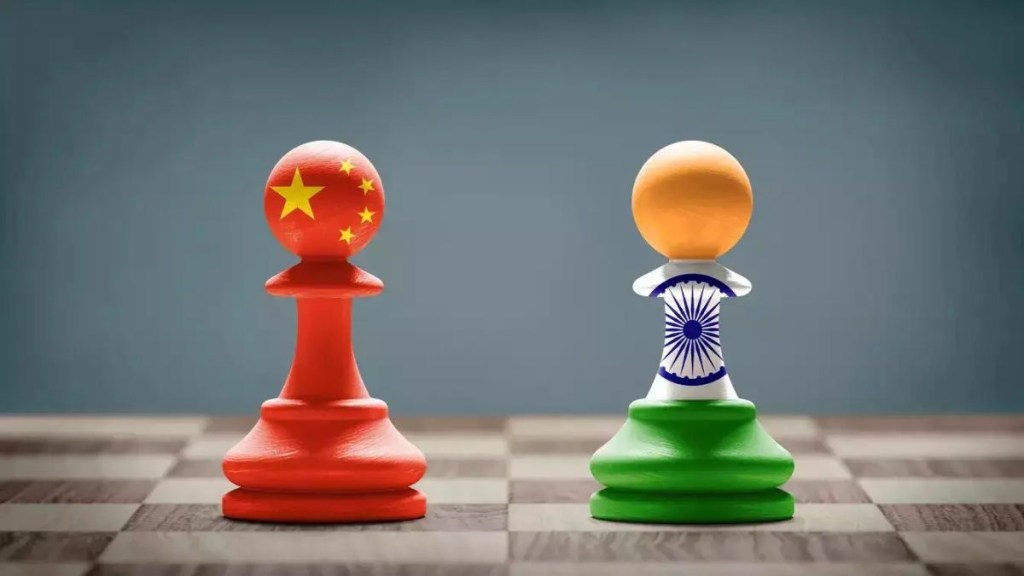
China has moved the World Trade Organization (WTO) against India on the “subsidies” the latter provides for electric vehicles (EVs) and batteries, saying that these incentives give Indian industries an unfair competitive advantage and harm China’s local interests.
In a communication to the multilateral body, Beijing has sought consultation with India on its subsidies for EVs and batteries, a transcript of a media interaction posted on the website of China’s ministry of commerce said.
“China will take resolute measures to effectively safeguard the legitimate rights and interests of its domestic industries,” the ministry said.
“China has noted that for some time, a number of India’s economic and trade measures have been suspected of violating regulations, which have attracted widespread concern among WTO members. We urge India to abide by its relevant WTO commitments and immediately correct its erroneous practices,” it added.
China’s move, though customary in the sphere of multilateral trade disputes, comes at a time the two countries are perceived to have normalised their relations to a large extent after the long stand-off following border skirmishes.
India has multiple programmes aimed at developing a globally competitive EV ecosystem in the country. Two key production-linked incentive (PLI) schemes support manufacturing: one for advanced chemistry cells (ACC) and another for the auto and auto components sector. Additionally, the PM Electric Drive Revolution in Innovative Vehicle Enhancement Scheme (PM E-Drive) offers demand incentives for EV buyers, while the dedicated PM e-Bus Sewa scheme focuses on electrifying public transport.
The request for consultations is the first step in the dispute resolution mechanism under the WTO. This gives the parties to the dispute an opportunity to discuss the matter and find a satisfactory solution without resorting to litigation. Only after mandatory consultations have failed to produce a satisfactory solution within 60 days, the complainant can request adjudication by a panel.
The last stage in the dispute settlement mechanism of the appellate body, which is non-functional. In normal circumstances, it takes months to arrive at a conclusion of any dispute. As the appellate body is non-functional at WTO since December 2019, almost all disputes end in a limbo.
India will also have 60 days to respond to the Chinese request. China in its notification to the WTO has said India’s subsidies violate multiple obligations at the WTO, including national treatment and import substitution subsidies, which are expressly prohibited.
The Rs 10,900 crore PM E-Drive scheme promotes EV adoption by offering demand-side incentives for electric two-wheelers, three-wheelers, buses, trucks, and ambulances. It also supports the development of charging infrastructure and encourages domestic value addition across the EV supply chain.
The PLI ACC scheme, with a budget of Rs 18,100 crore, supports domestic manufacturing of advanced battery cells. Targeting a production capacity of 50 GWh, it offers incentives based on output and performance.
The PLI scheme for Auto and Auto Components, with an outlay of Rs 25,938 crore, incentivises the domestic production of electric vehicles and critical components such as motors, battery systems, and magnets.