



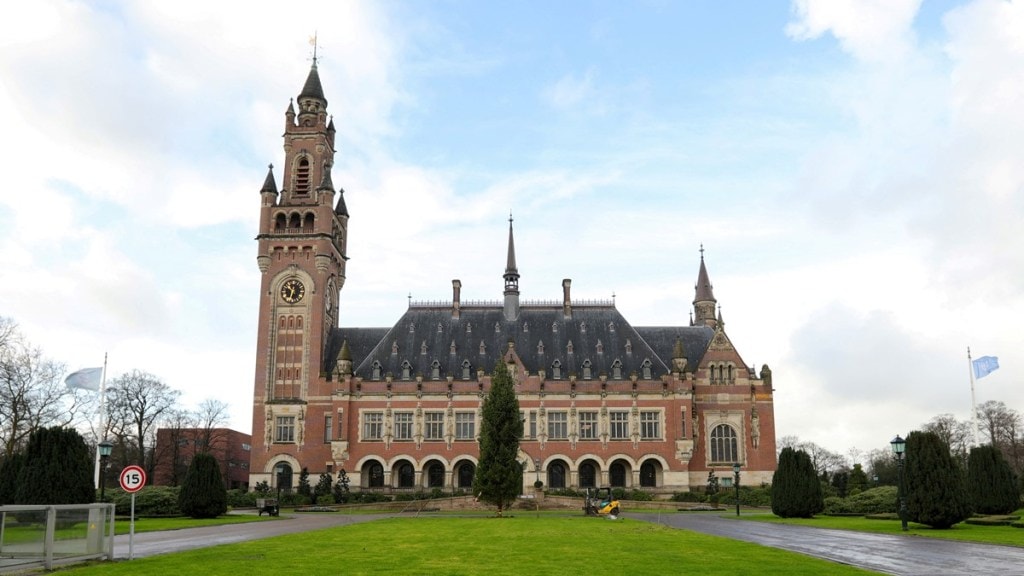
On Friday, the International Court of Justice (ICJ) issued a directive to Venezuela, urging them to avoid changing the situation in a disputed area with Guyana. This recent ruling is a significant development in the ongoing border disagreement, with the court emphasizing the need to prevent actions altering the existing situation. The complex dynamics of the broader dispute and the sensitivity surrounding the contested territory could have potential implications for regional stability.
In a recent court ruling, Judge Joan Donoghue underlined Guyana’s current administration and control of the disputed territory, urging Venezuela to refrain from altering this situation. Guyana’s President Irfaan Ali expressed satisfaction with the ruling, emphasizing Venezuela’s prohibition from annexing or trespassing upon Guyanese territory. Venezuelan Vice President Delcy Rodriguez considered it a victory for her country, stating that the upcoming referendum would proceed, aiming for a negotiated solution.
Despite Venezuela’s superior military strength, Guyana’s alliances, including the United States, could pose challenges. The consultative nature of the referendum, requiring a simple majority for approval, involves questions about incorporating the region and forming a state named Guyana Essequibo. This territorial issue is closely watched, as it may have broader implications for the geopolitical landscape in the region.
However, sharing his views with Financial Express Online, former Ambassador R Viswanathan says: “President of Venezuela Nicolás Maduro, starting war in Latin America is not just incorrect but a complete distortion. It is an old dispute inherited from colonial times. World Court orders are only for the weak and meek countries. The US, China, Russia, Israel, France and the UK do not care about the world court and disregard them brazenly.”
Is it possible that President Maduro could have started this?
No, says the former ambassador. In his opinion, “Given the weak and vulnerable position of Venezuela, Maduro will not venture into any war in which he will be defeated.”
What about the Referendum?
“Referendum is just a show. He does not need the verdict of the referendum to pursue Venezuela’s claim. To call Maduro a megalomaniac is also incorrect.”
Why?
“He is just fighting for his survival and the other members of the regime. He cannot afford the luxury of megalomania, like Chavez had,” states Ambassador Viswanathan.
World Court Ruling
In a recent court ruling, Judge Joan Donoghue underlined that Guyana currently administers and controls the disputed territory, urging Venezuela to refrain from altering this situation.
Guyana’s President Irfaan Ali expressed satisfaction with the ruling, emphasizing Venezuela’s prohibition from annexing or trespassing upon Guyanese territory. Venezuelan Vice President Delcy Rodriguez considered it a victory for her country.
The 160,000-square-kilometer territory, primarily dense jungle, has caused anxiety in Guyana, with the government urging calm among citizens. Venezuela reasserted its claim due to the discovery of offshore resources, sparking a dispute over the maritime border.
Venezuelan President Nicolas Maduro actively supports the referendum, seen by analysts as a test of government backing before the 2024 presidential elections.
Despite Venezuela’s superior military strength, Guyana’s alliances, including the United States, could pose challenges. The consultative nature of the referendum, requiring a simple majority for approval, involves questions about incorporating the region and forming a state named Guyana Essequibo. This territorial issue is closely watched, as it may have broader implications for the geopolitical landscape in the region.
According to Ambassador Vishwanathan, “The US is looking for the next episode of their serial wars after Vietnam, Central America, Iraq, Afghanistan, Syria, and Ukraine. Maduro is not going to give the opportunity. In any case, Venezuela has the world’s largest oil reserves, so they don’t need the oil from the disputed area for income.”