



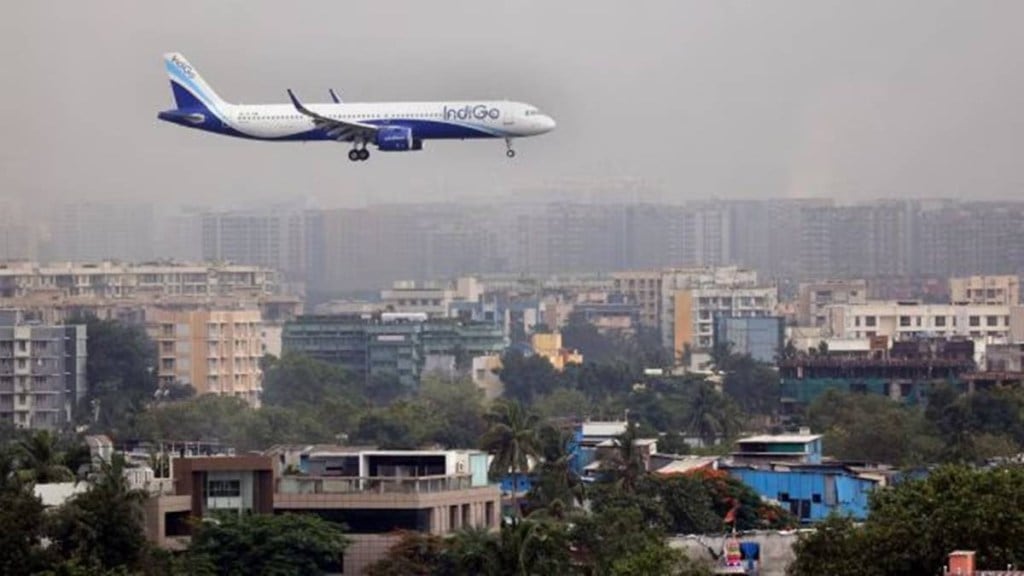
IndiGo was once the easiest airline brand story in India: on-time, affordable, no drama. Not glamorous, not aspirational — just dependable. In aviation, that is gold. But a series of flight cancellations and the management’s callous approach has threatened to upend the story. “For an airline which controls 60% market share of the Indian skies, reputation is not a soft asset. It is the business,” says a brand expert.
As the disruptions intensified, the airline’s technology and processes, normally cited as its biggest strengths, proved to be strangely absent from the response. Many of the necessary interventions needed basic software triggers and little human intervention. Automatic notifications for cancellations and delays, pre-set fare caps during crises, and app-triggered vouchers for meals or transport could all have been deployed instantly. Instead, passengers woke up to skyrocketing last-minute fares, slept on terminal floors without information, and waited days for baggage that had never been offloaded.
Reputation under pressure
The problem has snowballed as in the age of social media, one cancellation doesn’t travel alone. It arrives with screenshots, reels, angry tweets and media amplification. What once remained inside airport terminals now erupts in public. For a brand built almost entirely on reliability, repeated cancellations carry a double cost: A direct loss of passenger confidence, and a slower, more dangerous loss of reputation equity. So IndiGo’s problem is no longer just grounding aircraft — it’s grounding expectation.
“They had two years to prepare. This is not an unforeseen natural event, it’s a planning failure,” says image guru Dilip Cherian. “The company should have done an audit of its pilot strength the moment the notification came out.”“Markets recognise company error long before companies admit it,” he says. Shares of the company have nosedived.
The absence of empowered ground staff fuelled frustration further. Even if pilots were unavailable, IndiGo still had thousands of cabin crew members and airport employees who could have assisted with queues, distributed water, coordinated alternative options or communicated with stranded travellers. “Why did airport workers walk away from their posts?” asks Mark D. Martin, CEO of Martin Consulting. “Even if pilots were unavailable, cabin crew weren’t bound by FDTL. They could have been on the floor helping people, but no one was empowered.”
Martin says the crisis was amplified by company culture as much as lack of planning. “Every airline complied with the regulation. IndiGo didn’t, and now it’s going to cost them ten times what they were trying to save,” he says. “No one is going to leave a cushy job to join an airline that miscalculates crew planning on this scale. They’ve lost credibility.”
IndiGo operates in an age where one frustrated passenger with a smartphone can undo years of advertising. Every delay becomes a reel. Every overbooking becomes outrage. Every poor interaction becomes a story. So communication failures deepened the damage. There were no airport-level crisis war rooms, no coordinated updates, and no clarity on how and when operations would stabilise. IndiGo issued no comprehensive statement for days, leaving frontline staff to absorb rising public anger without direction. “They didn’t proactively communicate to passengers, didn’t explain the plan, didn’t acknowledge the scale of the problem,” says investor and brand strategist Lloyd Mathias.
When the we-are-sorry ads finally appeared, they were seen as detached. Martin argues the tone misread the context entirely. “Passengers don’t want polished English ads when they’ve spent 18 hours on a terminal floor. This wasn’t fog, this was IndiGo’s own making,” he says.
Brand under test
The question now is whether IndiGo’s brand can absorb the shock. Experts agree that the impact will not be fleeting. IndiGo will resume operations well before its image recovers. “It will always be referred to as the airline that cancelled a thousand flights in a day. That image is difficult to wash away,” says Cherian.
So what can the airline do? Salvaging a brand after large-scale disruption demands visibility, humility and urgency — not just operational fixes. Customers deserve clear timelines, reasons and alternatives — not silence or templated apologies. Say more. Say sooner. Say honestly.
Brand gurus say IndiGo should start taking efforts to humanise the airline more. People don’t scream at machines — they scream when they feel ignored. Empowered ground staff, empathetic call centres and visible leadership communication must replace corporate defensiveness.
Mathias believes some form of make-good is inevitable, but insists the airline must explain what went wrong and how it will prevent recurrence. Martin is more blunt: “Integrity and trust are the core of any brand. IndiGo has lost both. Passengers will think twice before flying with them again, and many won’t.” Hemant Misra, founder and managing director of MagicCircle Communications mentions three things that IndiGo must do: transparent communication, concrete actions and clear timeline (see box).
IndiGo isn’t fighting delayed planes; it’s fighting disappointed hopes. And the only way to win that battle isn’t with bigger fleets or louder advertising — but with repaired trust, radical communication and service humility. The cancellation crisis is IndiGo’s most serious brand test yet. Whether it becomes a footnote — or a fracture — depends on how honestly and urgently the airline now responds.