



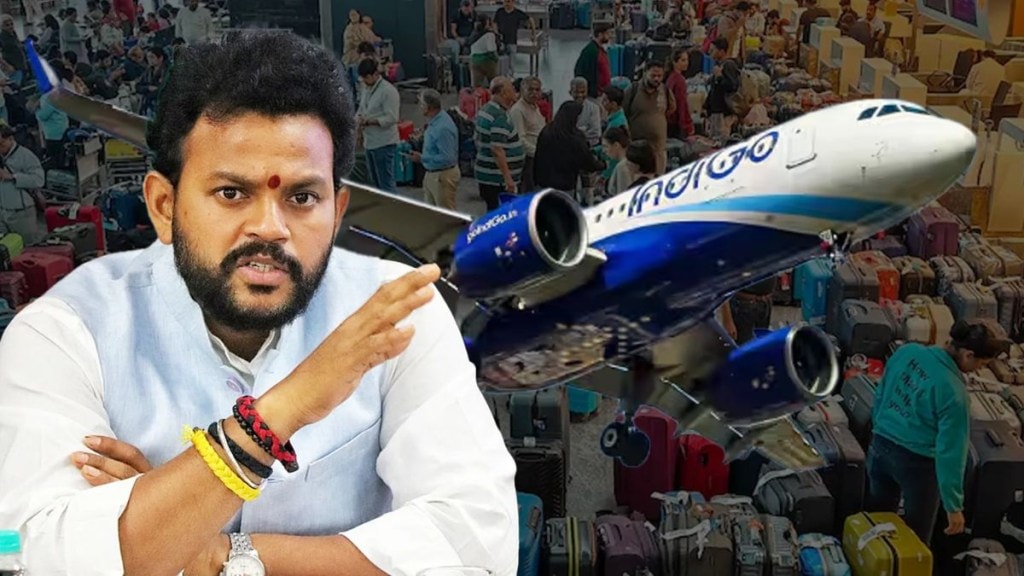
The IndiGo flight disruptions were not caused by the new Flight Duty Time Limitations (FDTL) norms, but by the airline’s own internal rostering and operational lapses, Civil Aviation Minister K. Rammohan Naidu told the Rajya Sabha on Monday.
The minister stressed that the revised FDTL rules had been functioning smoothly for a full month before the December 3 crisis and that IndiGo alone was responsible for managing crew scheduling and day-to-day operations.
What did Naidu say?
Naidu said the government has launched a full-scale inquiry into the incident, which led to a total of 5,86,705 PNR cancellations. He also promised strict action to set an example for the entire aviation industry.
“We are not taking this situation easily. We are conducting an inquiry and will take very strict action. We will set an example for all airlines that if there is any miscompliance, noncompliance, or non-adherence by any person, entity, organisation, or operator functioning in civil aviation, we will take very strict action,” he said, adding that the ministry intervened immediately once the situation unfolded at airports.
Minister on FTDL guidelines
The minister clarified that the new FDTL guidelines, implemented after extensive stakeholder consultations, were not the source of the problem. He pointed out that IndiGo had met the ministry on December 1 seeking clarifications on the norms but did not flag any difficulty at the time.
“Operations were smooth for one month. This disruption was due to internal complications that IndiGo should have managed,” he said.
Naidu also underscored the need for expanding India’s aviation capacity as passenger numbers continue to surge. India, he said, needs at least five major airlines to meet future demand, and the government is actively encouraging new entrants while strengthening regulatory and safety frameworks.
With nearly five lakh passengers flying daily, Naidu said the sector is undergoing rapid transformation and the government’s priority remains safety, compliance, and protection of passenger rights, even as the industry continues to grow at record pace.
“With the Cape Town Convention legislation, expansion under UDAN, and the rise of emerging carriers like Fly91, Star Air, and IndiaOne Air, India is creating an ecosystem that supports new airlines. This is the best time to start an airline in India,” he said.
The minister reiterated that passenger rights remain paramount, and the government will continue monitoring fare caps, operational compliance, and safety standards to ensure travellers are not inconvenienced or exploited.