


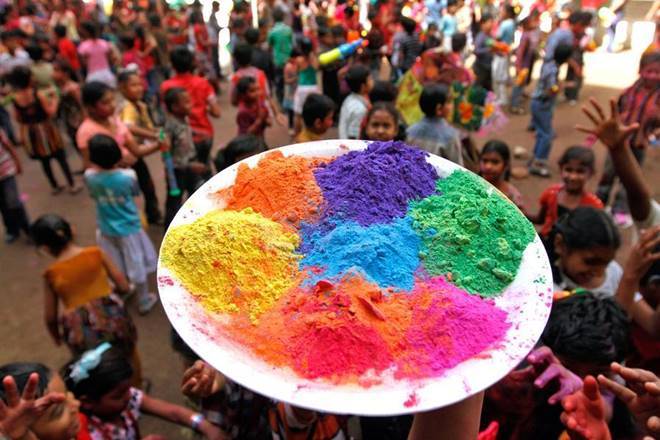

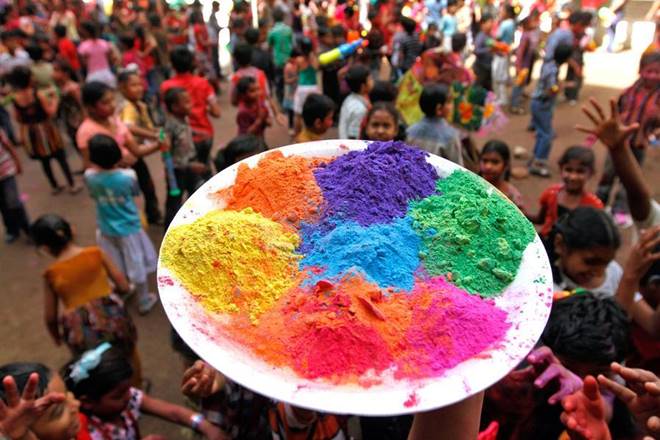
Happy Holi 2018: Holi, the festival of colours is being celebrated today (March 2, 2018). Holi marks the onset of spring, is a celebration of the vibrancy of the season and commemorates healthy harvests. The festival is celebrated across the nation with pomp, fervour and gaiety. Holi celebrates the victory of good over evil, the culmination of winter and brings people together signifying end of disputes and mending of estranged relations. Holi is observed on the full moon day of Phagun (12th) in the Hindu calendar that generally falls in late February or early March. Here is the Holika Dahan Importance, mythological recognition and history.
Happy Holi 2018; Holika Dahan Importance:
Holika Dahan literally means burning Holika. People gather a huge pile of wood in the centre which is surrounded by beads, garlands and little toys made of cow dung. At the top of this pile, they place figures of Prahlada and Holika made of cow dung. Once the Dahan starts, the idol of Prahlad is carefully taken out while the idol of Holika keeps burning, thus marking the symbolic recreation of the Hindu mythology. The burning signifies the good driving away the evil. Holika represents the negative energy that gets burnt against the strong will of humans denoted by Prahlad.
Happy Holi 2018: Mythological Recognition:
Prahlad, King Hiranyakashipu’s son was a devotee of Lord Vishnu and remained loyal to him despite his father’s disagreements. Hiranyakashipu devised several methods to inflict pain on Prahlad but none of the sufferings deterred him from praying Lord Vishnu and remain a devotee to him. Holika, Prahlad’s aunt and Hiranyakashipu’s sister tricked Prahlad into sitting inside a burning pyre knowing she had the gift that fire could not touch her. She instead knew that the fire would kill Prahlad. But as fate would have it, Prahlad began chanting the name of Lord Vishnu. Lord Vishnu realising the devotion and faith of his devotee rescued him and the pyre burnt Holika down, Lord Vishnu then appeared in the form of Narasimha before Prahlad placed him on his lap and killed the demon King with his lion claws. The legend helps us to understand the power of devotion and faith.
Happy Holi 2018: History
Annals of history point us to the fact that the tale has been mentioned in numerous scriptures, such as in works like Jaimini’s Purvamimamsa-Sutras and Kathaka-Grhya-Sutras and in ancient texts like the Narad Purana and Bhavishyad Purana. The festival of “holikotsav” was also described in the 7th century work, Ratnavali, by King Harsha.The Bengali “Dolyatra” marks the final celebration of a Bengali year. The burning of Holika since have symbolised as a sign of the triumph of good over evil.