Vivo has been consistently remodelling its smartphones in an attempt to attain the ambitious, purely bezel-less smartphone. It has, in the past, introduced a shift in the hardware, such as relocating the front camera to a motorised slider that remains hidden underneath the chassis on the Vivo Nex (Review) last year. But Nex was positioned at a premium-ish price, which is why it could not seep into the mainstream where Vivo’s other smartphones are usually sold. With Vivo V15 Pro, the company is trying to do the same – making the sliding camera available – but in a phone that costs less than Nex.
With V15 Pro, the sliding camera is better, packing a mighty 32-megapixel sensor, which Vivo touts as much as to say it’s a first on a smartphone. Vivo V15 Pro has triple cameras at the back to silence the rival companies that are on the lookout for quibbles. The design language is in line with the previous models on V15 Pro but the display now stretches out to almost eat up the bezels. But it asks the price of Rs 23,990 for you to get all these features. Should you spend that money? We spent quite a time with Vivo V15 Pro and here’s what we think.
Vivo V15 Pro Design, Display, and Hardware
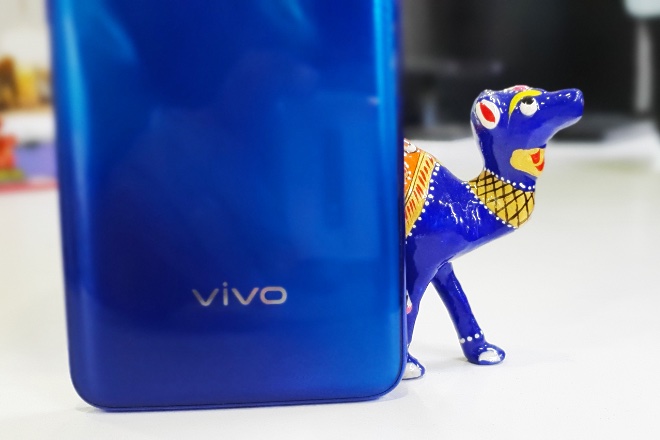
The Vivo V15 Pro isn’t any different from the prequels in terms of the decoration done to the faux glass back. It’s shiny and reflects light in a pattern that Vivo calls the ‘Spectrum Ripple Design’. It’s not iridescent but you get the feeling when you hold the rear surface of the device against the light. But it gets smudgy too soon. There is a metal chassis around the phone’s edges with rounded corners so it feels convenient when held but the grip tends to loosen sometimes.
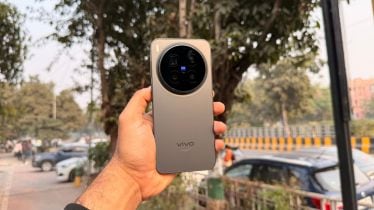
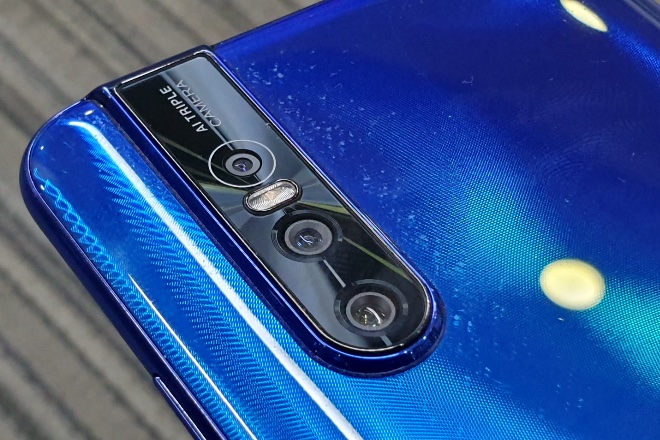
At the bottom is the Vivo branding but the top has a protruding camera island that houses three shooters along with an LED flash. The camera mount is protected by a glass cover that throws 180-degree reflections as well. We like how the device feels premium in hands. We got the Topaz Blue colour model but there is another Red Ruby variant you can buy.
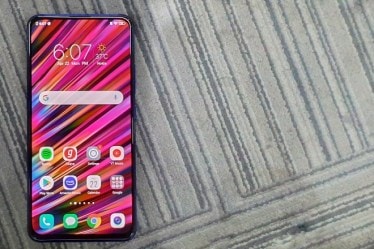
Displays on smartphones have come a long way and so has the material used to manufacture them. V15 Pro has a 6.39-inch AMOLED Ultra FullView Display that does not have any perforations at all. There is no notch or punch-hole on the display, making it easy on the eyes to enjoy videos without obstructions. We are not saying the cutouts on display hinder the content but it’s a welcome change, as well as the comeback of conventional displays except for their tallness. It is sharp, produces vibrant colours, and goes optimally dim at minimum brightness. The videos look clear where the blacks are deep, so you will not have any complaints in this department.

The aspect ratio of the display is 19.5:9, which is supported by YouTube and local video files but Netflix/ Amazon Prime Video will play in a constrained area from the top. Even if you zoom, the entire display is not covered. Phones with displays higher than the 19.5:9 aspect ratio have been there for quite some time but OTT platforms are yet to work around making the videos that fit the screen entirely. But this is just a teaser to the problems with streaming apps. Vivo V15 Pro is not Widevine L1 certified, which is disappointing on its part. Even a Rs 15,000 phone today has Widevine L1 to allow OTT apps stream true HD videos.
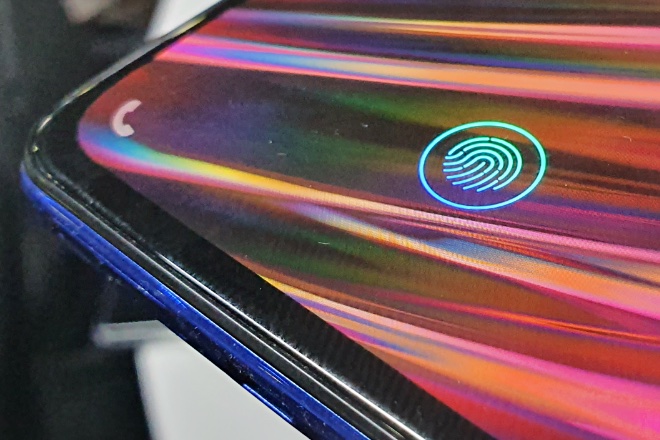
The fingerprint sensor integrated into the display is faster than its previous counterparts, however, we still felt it could faster when we started using the V15 Pro. Within a week, there were more than three software updates to the device, one of them fixed the slight delay. It’s still an optical fingerprint sensor that relies on the light to scan the prints. Samsung kicked off its own range of fingerprint sensor in a display by going for the ultrasonic ones – Vivo might catch up sooner than later but the cost of the phone will definitely go high.
There is a Smart Button that is pre-assigned to Google Assistant with specific functions within. But you can change what you can do with the Smart Button in the phone settings. The microSD card tray is also on the left. The right side has the power button and volume rockers, which feel tactile when pressed. On the bottom, the V15 Pro has the SIM tray, MicroUSB port, speaker grille, and the primary microphone. The secondary microphone is situated on the top edge of the phone, accompanied by the 3.5mm headphone jack and the pop-up camera slider resting inside the phone. The shape and size of the module are odd but go with the design. The earpiece speaker sits at the boundary of the screen when it meets the metal rim at the top.
The Vivo V15 Pro is powered by an octa-core Qualcomm Snapdragon 675 processor with 6GB of RAM and 128GB of inbuilt storage that you can expand using a microSD card. The phone supports dual 4G VoLTE SIM cards in nano size. It has Wi-Fi, Bluetooth, GPS, and other standard connectivity options. Overall, the phone is a looker and feels sturdy.


Vivo V15 Pro Camera
There are three cameras on the Vivo V15 Pro – a 48-megapixel sensor, an 8-megapixel wide-angle camera, and a 5-megapixel depth camera. The trend of cameras with over 40-megapixel began with the Honor View 20 but it’s a premium flagship. While we see these cameras climbing down to the mid-range segment (Redmi Note 7 Pro), the quality is what really matters.
The 48-megapixel sensor needs to be manually chosen in the camera settings while the aspect ratio of photos is defaulted to 4:3. The photos we took outdoors in bright light with the sensor are well-detailed but zooming into them makes the photos show watered-down elements. For low-light photography, the 48-megapixel sensor is just above the average. The photos taken in the nighttime are grainy and lose a major amount of details. There is HDR to use in such situations but the resulting photos often end up oversaturated. The cameras are powered by Artificial Intelligence, so the camera figures out the objects in the scene and adjusts its settings accordingly.
Surprisingly, the photos taken without enabling the 48-megapixel setting looked better than otherwise. The difference between the two kinds is the method of pixel binning – the one without 48-megapixel enabled uses 12-megapixel resolution from four pixels and combines them into one so that more light and exposure to the view can be collected. The other one just uses one pixel of 48-megapixel resolution to capture as many elements as it can under a static exposure.
The ultra-wide lens with the 8-megapixel sensor captures a lot of elements in the frame, which we liked. It’s good for landscapes and to include everyone in a group photo. The photos are decent but the level of detailing is not as much as the ones taken from the 48-megapixel sensor, of course. The photos also have a little aberration at the edges and there is no tool to straighten them out, unfortunately.
Coming to the portraits, the 5-megapixel sensor does a good job when it’s a person in the frame. The blurred background is clearly distinguished from the subject in focus, however, it looks fabricated. If you focus on things in the Portrait mode, the edges are not clearly determined, resulting in a botched-up bokeh photo.
The 32-megapixel camera available on the front for selfies is quite impressive. The photos have a good amount of colour with the loss of naturality. Vivo phones have been the preferred choice of consumers if they frenzy over selfies and this one won’t disappoint them. The AI Beauty mode is available for shape correction to an outlandish level but you can turn it off. Even with the mode turned off, the selfies have smoothened skin tone with the blemishes totally hidden. But overall, you will like the front cameras for its capability to shoot good-quality photographs.
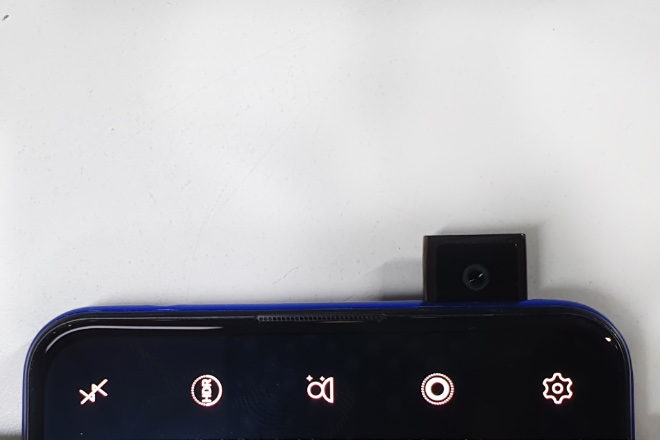
The videos can be recorded at up to 4K resolution but sadly, there is no stabilisation available to make the jitters go away. You can record 60fps videos as well at up to 4K resolution. The videos are pretty clear and get the job done.
Here are the camera samples:






Vivo V15 Pro Performance
For a smartphone that costs Rs 23,990, the Vivo V15 Pro comes with an underwhelming choice for the processor. The Qualcomm Snapdragon 675 SoC drawing the power from eight cores inside runs the V15 Pro. Although a more capable Snapdragon 710 processor is available, Vivo still chose to go with Snapdragon 675 that is inching towards outdatedness slowly. But nitpicking aside, V15 Pro delivers on the challenges that we threw at it on a regular basis.
Multitasking on V15 Pro is buttery smooth – we never saw the phone stuttering or going black while opening apps. Its capacity to hold apps, thanks to 6GB RAM packed inside, in the background is decent as well. Although we did notice a slight lag when browsing heavy websites on Chrome browser. Heavy apps such as Facebook run smoothly as well.
Gaming on V15 Pro is a bit of a mixed bag. We did not really notice any jitters while playing memory-intensive games such as PUBG Mobile and Asphalt 9: Legends. But, that being said, the boot time of the games is high. PUBG Mobile takes longer than usual to open the welcome screen under normal CPU usage, much less when we hogged its RAM with at least five apps in the background. Most games, however, run optimally without causing the device to heat up to an uncomfortable level.
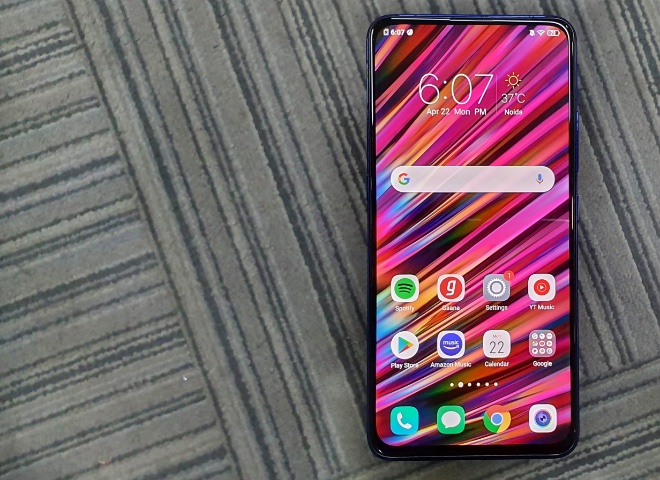

Vivo’s custom skin Funtouch OS is practically the same as before, so there is not much to be said other than criticising a few elements that make Vivo phones feel at least two years older. We are bugged by the fact that Vivo has been doing a stupendous job giving a facelift to the hardware components of its smartphones – at the expense of software. Funtouch OS is still half-baked, despite the efforts put by Vivo into making it look like iOS.
If we, for once, dismiss our concerns for Funtouch OS, we can see a brighter (and healthier) picture. In our time with V15 Pro, the Jovi smart assistant logged the activities to recommend things like taking rest, getting off work so that we get “quality” time at home. The Digital Wellbeing feature, which is not available on Vivo phones yet, still lacks features like this.
Vivo V15 Pro Battery
Vivo phones have quite a reputation when it comes to battery life and V15 Pro is the latest one to be admired. We found V15 Pro lasting nearly a day in our testing, which involved using social media apps (Facebook, WhatsApp, Instagram, Twitter, and Reddit) for nearly four hours, browsing the Internet for about two hours, photographing for as much as 1 hour, and playing those memory-hogging games for around an hour. At the end of the day, V15 Pro still has some juice left, which the device likes to be used in the low battery mode.
There is Dual Engine fast charging available on the V15 Pro but it’s not nearly as fast as its rival counterparts. The device takes a good 2 hours to fully charge via the bundled charger. But what we liked is that its fast-charging technology supports cable charging as well.
Verdict
Vivo V15 Pro marks the comeback of the pop-up camera mechanism that wandered off with the Nex. It introduces the idea of notch-less displays with a camera workaround to a bigger audience that is familiar with Vivo phones. At a price of Rs 23,990, it comes across as a good investment if you feel you will not budge over the underqualified processor and the lack of Widevine L1.
But for its photography, display, and look, it’s a bang for your buck.