Aviation security watchdog, Bureau of Civil Aviation Security (BCAS) has come up with a new plan for installing scanners which will be based on computer tomography technology at the airports. Using this technology, passengers won’t have to take out their electronic devices from their handbags while taking them through the scanner.
Traditionally, the scanners situated at the airport come with a two-dimensional view of the objects present in the bags.
Commenting on the same, Jaideep Prasad, Joint Director General of the Bureau of Civil Aviation Security (BCAS) said that the regulator has proposed the same which will provide the security personnel with a three-dimensional view of the objects present in the baggage.
By incorporating such scanners at the airport, the security check process will also be speeded up.
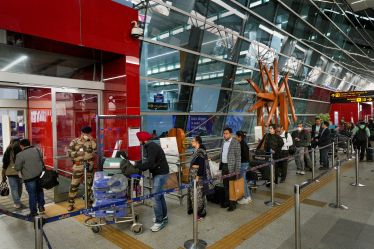
Prior to this, often there have been reports which showed how congested the airports are as passengers are forced to wait in long queues.
This news comes after earlier this month, the civil aviation ministry had told the Lok Sabha about strengthening the safety as well as the security at the airports.
According to the civil aviation ministry, some of the technologies which are there or will soon be there at the airport include Computer Tomography Explosive Detection Systems (CT-EDS) machines and Dual Generator X-BIS machines.
Further, Minister of State for Civil Aviation VK Singh told Lok Sabha recently that dictations have been issued for Minimum Technical specifications for Perimeter Intrusion Detection System (PIDS). This system has been installed in Delhi, Hyderabad and Bangalore airports.
He further noted that the installation of the full body scanner is planned in a phased manner keeping in mind hypersensitive and sensitive airports on a priority basis.
Whereas deployment of Radiological Detection Equipment (RDE) at airports too has been planned in a phased manner.