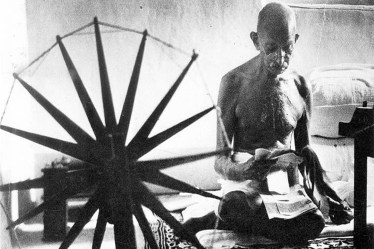
October 2 marks the birth anniversary of the father of the nation Mahatma Gandhi. Celebrated across the world to commemorate the memories and struggle of Gandhiji, the day is one of the few declared national holidays in the country. Gandhiji, whose full name was Mohandas Karamchand Gandhi was born on October 2, 1869 in Porbandar Gujarat. This year the world is celebrating Gandhiji’s 151st birth anniversary.
The day gives people an opportunity to recall and learn from the life experiences of Gandhiji and his stellar role in the freedom movement of the country. Shifting to South Africa as a young lawyer in 1893, Gandhiji had the first brush with social struggle as he advocated on behalf of lakhs of indentured labourers and businessmen of Indian origin against the oppressive apartheid regime in South Africa. After spending almost a decade petitioning the colonial government to grant socio-political rights and ending injustice meted out to the Indian origin people, Gandhiji resorted to mass movement and satyagraha finally securing victory in 1915 when the government agreed to all major demands put forward by Gandhiji.
Having honed his satyagrahi acumen for over 2 decades in South Africa, Gandhiji returned to India and at the insistence of his mentor Gopal Krishna Gokhale joined the Indian National Congress. The Non Cooperation Khilafat movement came as a golden opportunity for Gandhiji to cement the unity of Hindus and Muslims in the country. After the success of the Non Cooperation movement, Gandhiji subsequently launched the Civil Disobedience Movement, Quit India Movement in later years and finally secured independence for the country. Apart from his immense struggle and non violence, Gandhiji was also one of the very few nationalists who could understand the pulse of the nation and choose the opportune time and place to launch the struggle.
In addition to the various commemorative events held in government institutions, schools and colleges the general public also organises various events near the garlanded statue of Gandhiji. Famous bhajans and songs dear to Gandhiji are also sung at various temples in the country including Vaishnav Jan to and Ragupati Raghav Raja Ram.