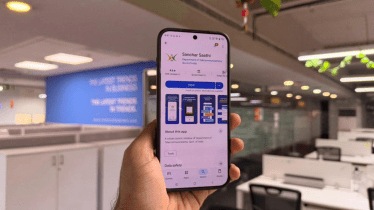
The recent debacle on the Sanchar Saathi app has raised questions about mass user privacy as well as state-backed surveillance. The smartphone, which emerged as a symbol of personal freedom and global connectivity, is swiftly becoming a battleground for digital sovereignty and state control. While most governments around the world rely on traditional legal requests to access device data of an individual, a handful of nations have moved to a more aggressive tactic – mandating the pre-installation of state-backed software directly onto mobile devices.
As far as India’s stand is concerned, the government has assured that users will be able to delete the app while setting up a new device. Manufacturers have been given a deadline of 90 days to comply, but based on what the industry insiders say, big names like Apple and Google are planning to resist the directive on the grounds of privacy breach. On the other hand, critics argue that it normalises the erosion of digital privacy and introduces a government-approved Trojan Horse into citizens’ most personal technology.
However, India isn’t first country to enforce such a directive. The practice exists on a wider spectrum, ranging from aggressive, non-removable surveillance layers in authoritarian states to compulsory installation of citizen-centric apps in democracies.
Let’s explore all such states where the government forces pre-installation of state-backed apps.
India
The most recent example comes from India, the world’s second-largest smartphone market. In November 2025, the Department of Telecommunications (DoT) issued a directive requiring major manufacturers, including Apple, Samsung, and Xiaomi, to pre-install the state-owned cybersecurity app, Sanchar Saathi , on all new and existing devices.
The government defends the app as a citizen-centric tool designed to combat telecom fraud by allowing users to block lost or stolen phones via IMEI and report fraudulent connections or scam calls. The app is also said to verify the authenticity of second-hand devices and prevent the circulation of illegal or cloned handsets.
The directive, however, was met with immediate, fierce opposition from privacy advocates and opposition parties, who dubbed it a ‘snooping app.’ The concern rests not with the stated function but with the precedent of mandatory state-level software requiring deep system-level permissions, such as access to call logs and device identifiers that could, in theory, enable state surveillance.
The controversy flared up when reports stated that the app was initially intended to be non-removable, forcing Union Communications Minister Jyotiraditya Scindia to issue a public clarification that users are, in fact, free to uninstall the app. Despite this assurance, global tech giants like Apple have reportedly resisted the order, citing conflicts with their global privacy policies and iOS platform security.
Russia
Russia implemented its own “Law on Pre-installation” on April 1, 2021, with a clear goal of promoting national digital development and decreasing dependence on foreign tech. Unlike India’s focus on a single app, the Russian law mandates the pre-installation of a wide-ranging list of government-approved domestic apps across various categories, including:
- Search engines and web browsers (e.g., Yandex)
- Social networks and messengers (e.g., VKontakte, Odnoklassniki, MAX messenger)
- Government services (Gosuslugi)
- Payment systems (MirPay)
The law applies not just to phones and tablets, but also to computers and Smart TVs. The directive is key to Russia’s strategy to build a “sovereign internet,” where the domestic digital infrastructure is prioritised and controlled. Global companies, including Apple, have been forced to comply by modifying their initial device setup processes to offer the mandatory list of Russian apps to users.
North Korea
North Korea represents the most extreme end of the spectrum, where mandatory software is essentially a form of system-wide digital dictatorship.
Total system control: North Korean smartphones are effectively agents of state control. They run highly customised, censored versions of Android that monitor user activity from the operating system level.
Non-removable surveillance: Pre-installed surveillance programs, such as one known as “Red Flag,* constantly audit the device, checking every file and app for an approved government cryptographic signature. Foreign or unauthorised content is automatically flagged or deleted.
Isolation from the internet: These devices are blocked from the global internet and only connect to the state-controlled intranet, the Kwangmyong, ensuring access only to government-approved content and services.
Hidden monitoring: The system is known to secretly log user actions and automatically capture and store screenshots without the user’s knowledge, reinforcing the constant presence of state monitoring.