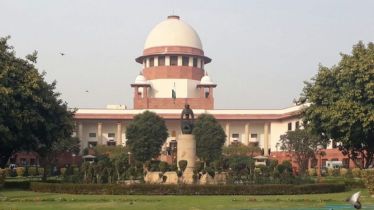
In a first suit against OpenAI by an Indian publisher over copyright infringement, the Delhi High Court on Tuesday issued summons to the ChatGPT owner. This comes after news agency ANI sued OpenAI for using its original content to train its large language models (LLMs).
In its suit, ANI also said that ChatGPT is giving false attribution to the publisher in response to a prompt on certain topics. The case of hallucination by AI models like ChatGPT can lead to spread of fake news and affects its reputation, according to ANI.
The news agency has sought a tentative damage of Rs 2 crore and wants the court to pass a decree of permanent and mandatory injunction restraining OpenAI or any person acting on their behalf from storing, publishing, reproducing or in any manner using ANI’s works.
According to Bar and Bench, the Court would also appoint an amicus curiae in the case considering that the issue is related to the copyright and use of publicly available content by AI models like ChatGPT.
Globally, many news publications including the New York Times have sued OpenAI and other such generative AI platforms for violating copyright and using their content to train LLMs.
Appearing for OpenAI, senior advocate Amit Sibal, on Tuesday argued that ANI’s suit was the first case against ChatGPT in India. During the hearing, Sibal said there have been 13 lawsuits against OpenAI in the USA, two in Canada and one in Germany since 2022 but no court outside India has found copyright infringement in such cases.
OpenAI also said the ANI’s official website has been blocked by it. The same ensures that its content, which is available on the portal, is not used by ChatGPT.
Sibal said there is no monopoly on facts and copyright does not protect facts, it protects expression. Besides, OpenAI doesn’t access anything illegally.
“I (OpenAI) have been operating since 2022. I’m not located in India, my servers are located abroad, I do not reproduce any material in India, training also doesn’t happen in India,” Sibal was quoted as saying by The Indian Express, during the hearing. Sibal pointed out that ANI has no cause of action or reason to approach a court in the country.
“We take great care in our products and design process to support news organizations. We are actively engaged in constructive partnerships and conversations with many news organizations around the world, including India, to explore opportunities, listen to feedback, and work collaboratively,” a spokesperson of OpenAI said.
“Along with our news partners, we see immense potential for AI tools like ChatGPT, including through search, to deepen publishers’ relationships with readers and enhance the news experience. More broadly, we build our AI models using publicly available data, in a manner protected by fair use and related principles, and supported by long-standing and widely accepted legal precedents,” the spokesperson added.
Last week, electronics and IT minister Ashwini Vaishnaw also flagged concerns with regard to intellectual property violations by generative AI platforms. Vaishnaw said the same is affecting the creative world where their work is being used to train AI models without any compensation or acknowledgement.
“AI models today can generate creative content based on vast datasets they are trained on. But what happens to the rights and recognition of the original creators who contributed to that data? Are they being compensated or acknowledged for their work?” Vaishnaw said, adding that this is not just an economic issue, it is an ethical issue too.
The Court posted the matter for further consideration on January 28.