




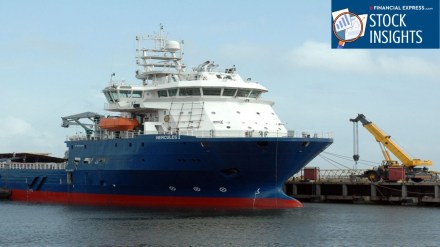
In another policy shift aimed at making India self-reliant, the government aims to build a robust maintenance, repair, and overhaul (MRO) ecosystem for India’s shipping sector. This move aims to reduce dependence on foreign ship repair and maintenance infrastructure, speed up ship turnaround times, and maintain greater economic value in India’s maritime supply chain.
The proposed MRO push coincides with major policy changes in the aviation sector, including the recent inauguration of a new global-scale MRO facility for aircraft engines. It is the world’s largest engine MRO facility owned by French aerospace and defense giant Safran. Similarly, since every ship for the Indian Navy and Indian Coast Guard is now built in Indian shipyards, it is crucial to have a dedicated MRO ecosystem.
Additionally, the under-construction ships are on track to achieve almost 100% indigenous content by the end of this decade. This also means the supply chain is entirely in India, minimizing any scope of supply chain disruptions. MRO is the only missing link in the domestic shipbuilding value chain, which is critical to fill.
This shift is also supported by several policies, including the Maritime India Vision 2030 and Maritime Amrit Kal Vision, the Defence Production and Export Promotion Policy, and the Defence Procurement Manual 2025. Similarly, amid the growing global arms race, three shipbuilding companies are expected to benefit from this upcoming opportunity.
Let’s take a look…
#1 Mazagon Dock: The Colombo Acquisition & Helicopter Pivot
Mazagon Dock is actively involved in MRO and refit activities in its core defence shipbuilding business and through commercial diversification efforts. The company specializes in the repair and refurbishment of warships and submarines at its facilities in Mumbai and Nhava.
Expanding Dry Docks and Repair Capacity
The Shipbuilding Division’s facilities include three dry docks, three wet basins, and numerous slipways required for repair operations. Furthermore, the Submarine Division has a dedicated submarine dry dock used for complex submarine maintenance, repair, and construction work.
Mazagon has also undertaken infrastructure expansion plans, including developing the Nhava Yad and the newly acquired MbPA land. This is specifically designed to facilitate the construction of large-sized vessels and submarines, including major refit and repairs. The total investment is around ₹10 billion, and the work is expected to take another 2–3 years.
Strengthening the Ship Repair Portfolio
Additionally, Mazagon has acquired Colombo Dockyard, further strengthening its ship repair business, as ship repair accounts for almost half of its revenue. Mazagon plans to increase this new company’s revenue from the current ₹10 billion to ₹15 billion next year, mostly from ship repairs for international clients.
New Bids Signal a Larger MRO Push
Mazagon is also undertaking modernisation projects, including the construction of a new floating dry dock with a capacity of 12,000 tonnes. Mazagon has also signed a Memorandum of Understanding with Oman’s Asyad Drydock Company to collaborate on the newbuild/repair of commercial and defense platforms.
The company is also registered to participate in tenders related to repair orders from the U.S. Navy. Within the order executed, Mazagon repaired and refitted one Coast Guard vessel and five commercial vessels in FY25. It has also expanded its MRO portfolio beyond maritime vessels.
To this end, it received an MRO order for MI-17 helicopters from the Nepal Army, in addition to a similar order it had previously received. The company also provided and provides maintenance support for the Malaysian Navy’s Scorpene submarines.
Mazagon has also placed bids for several new projects, including four repair & refit projects for the Indian Coast Guard. This includes two offshore patrol vessels and two fast patrol vessels. It considers expanding ship repair and refit operations as a key strategic initiative to generate new revenue streams.

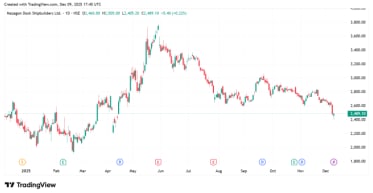
#2 GRSE: Validated Growth (Revenue Up 6x in 3 Years)
Garden Reach Shipbuilders (GRSE) operates a dedicated ship repair vertical serving naval and commercial fleets, including MRO services. The company offers dry docking, refit management, and mechanical, electrical, hydraulic, and piping works, along with failure analysis and technical studies. It estimates the global ship repair market to be worth ₹150 billion in the next five years.
A Growing Refits Business Built Around Naval and Coast Guard Demand
To capitalize on this, GRSE focuses on refitting and repairing ships for the Indian Navy and Indian Coast Guard. It has aggressively pursued high-value refits for the Indian Navy, securing an order book of about ₹1.7 billion in FY25. The revenue from this division has grown substantially, rising from about ₹190 million in FY22 to ₹1.1 billion in FY25.
The company aims to further strengthen and expand its refit and repair business verticals. To this end, it actively targets annual maintenance contracts and refit orders for ships from the Indian Navy, Indian Coast Guard, and various state governments. GRSE also provides in-service support to maintain fleet availability in the Indian Ocean Region.
Strengthening Capacity Through New Dry-Dock Additions in Kolkata
GRSE expanded its capacity for ship repair by acquiring a strategic lease of three dry-docks from Syama Prasad Mookerjee Port, Kolkata, over three years ago. Now, the management plans to take over one more Dry Dock from Syama Prasad Mookerjee Port, Kolkata, to further boost the repair segment.
Expanding International Footprints Through Export-Led Repair Projects
As of 30 September 2025, GRSE’s order book includes two ship repair projects. One specific project is an export project for the Government of Mauritius. Previously, GRSE refitted two self-built ships for the governments of the Seychelles and Mauritius.
GRSE also refits/repairs a variety of other commercial vessels. GRSE has serviced fleets in countries such as Sri Lanka, the Maldives, Mauritius, and Seychelles.
In addition to ship repair, the company’s other engineering divisions contribute to the larger MRO ecosystem by manufacturing and supporting specialized equipment. This includes advanced deck machinery essential for ship operations, such as anchoring and towing, and often includes maintenance support for the Indian Navy and Coast Guard.

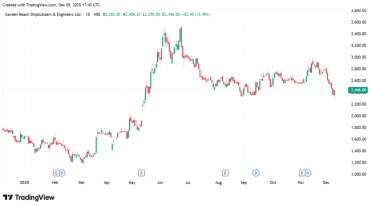
#3 Cochin Shipyard: The Market Leader with ₹15Bn Visibility
For Cochin Shipyard, ship repair is a continuous market in which the company constantly engages with large shipowners to stay in touch to fulfill their requirements. This period usually ranges from 3 months to 1.5 years. The International Ship Repair Facility (ISRF) is one of its major capital projects, completed and now operational.
A New Repair Engine Emerging at ISRF
The ISRF includes a ship lift and six workstations. The ISRF’s total capacity is 82 ships per year. Currently, 14 ships are in various stages of repair at the facility. This facility is expected to generate incremental revenues of about ₹2.5 billion over the first 18 to 24 months, eventually exceeding ₹6 billion at peak capacity.
Large Dry Dock Adds Scale to the Repair Business
In addition, Cochin’s new 310-meter dry dock is now operational. It was built mainly for shipbuilding, but the yard has already started using it for repairs, with a dredger expected to arrive shortly for refit work. The ship repair order book currently stands at around ₹15 billion, while it is also expected to report revenue of ₹15 billion in FY26.
This revenue would be lower than FY25, when Cochin reported ship repair revenue of ₹18.7 billion. This was attributed to the simultaneous completion of repair orders for two aircraft carriers (IACs), Vikrant and Vikramaditya, which Cochin stated was a one-off. As a result, ship repair margins are also expected to be lower than last year’s levels.
Strategic Alliances Deepen Cochin’s Global Repair Reach
Cochin is also leveraging its newly established facilities through a strategic alliance focused primarily on ship repair. An MoU was signed with Drydocks World UAE, a renowned ship repair and specialist shipbuilding organization in the Middle East. This MoU plans to explore the creation of a ship repair cluster in Kochi and Vadinar.
It has also signed a Master of Ship Repair Agreement with Maersk to provide ship repair and manpower. Cochin intends to complete repairs to a Maersk vessel at its facility. Cochin also has a Master Ship Repair Agreement (MSRA) with the US Navy, and discussions are underway regarding potential ship repair work.

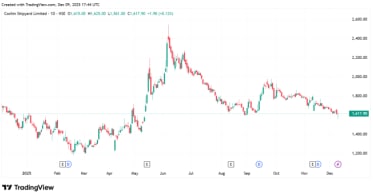
Valuations Eased but Still at a Premium
From a valuation perspective, all three companies, Mazagon, GRSE, and Cochin, are trading at more than double their 5-year median price-to-earnings multiples. Relative to the industry P/E, GRSE offers a margin of safety, trading at a discount. Mazagon is broadly in line with peers, while Cochin continues to command a premium over both the industry and median multiples. Nevertheless, their valuations have eased in recent months.
Valuation Comparison (X)
| Company | Existing P/E | 5-Year Median | Industry P/E |
| Mazagon Dock | 43.0 | 21.7 | 43.0 |
| Garden Reach | 45.4 | 27.5 | 61.5 |
| Cochin Shipyard | 56.2 | 24.9 | 43.0 |
The market now seems focused on these companies’ near-term order books, making consistent execution the critical driver from here. Over the long term, ship repair is shaping up to be the next visibility-led theme across defence shipyards, even as shipbuilding growth begins to stabilise. With MRO demand rising and new facilities coming onstream, all three companies have a clear runway ahead. From here, the story rests more on deeper expansion and execution.
Disclaimer:
Note: Throughout this article, we have relied on data from http://www.Screener.in and the company’s investor presentation. Only in cases where the data were not available have we used an alternate, widely used, and accepted source of information.
The purpose of this article is only to share interesting charts, data points, and thought-provoking opinions. It is NOT a recommendation. If you wish to consider an investment, you are strongly advised to consult your advisor. This article is strictly for educational purposes only.
About the Author: Madhvendra has been deeply immersed in the equity markets for over seven years, combining his passion for investing with his expertise in financial writing. With a knack for simplifying complex concepts, he enjoys sharing his honest perspectives on startups, listed Indian companies, and macroeconomic trends.
A dedicated reader and storyteller, Madhvendra thrives on uncovering insights that inspire his audience to deepen their understanding of the financial world.
Disclosure: The writer and his dependents do not hold the stocks discussed in this article.
The website managers, its employee(s), and contributors/writers/authors of articles have or may have an outstanding buy or sell position or holding in the securities, options on securities or other related investments of issuers and/or companies discussed therein. The articles’ content and data interpretation are solely the personal views of the contributors/ writers/authors. Investors must make their own investment decisions based on their specific objectives, resources, and only after consulting such independent advisors as may be necessary.


