Water is becoming a critical resource, similar to gold. This is because water scarcity is not just another crisis that will end, but one that will amplify.
Industrial Tailwinds: Unpacking Silicon Production and Data Center Demands
The situation is even more serious in India, which, despite having 18% of the world’s population, has only 4% of the world’s available fresh water as per the World Bank. This problem is expected to become more serious not only in India but worldwide as semiconductor manufacturing, data centers, and cooling products grow. Semiconductors alone need huge volumes of ultra-pure water.
The ₹1.7 Lakh Crore Water Sector Opportunity
To address the depletion, strong infrastructure investments are unlocking an annual opportunity of ₹1 lakh crore in the sector, per Share India Securities. While the global water treatment market is expected to grow at 7.5% CAGR, the Indian water and wastewater market is projected to grow at a faster 11.6% CAGR to US $18 billion (₹1.7 lakh crore) by FY29.
The depletion of the water level is one of the key drivers. Global Water Bankruptcy, states that we have depleted our water income (rainfall, rivers, and snowmelt) and long-term water savings (natural reservoirs) to a point where restoring them to historical conditions is unlikely or prohibitively costly.
Therefore, as the gap between water demand and supply widens, the need for treatment, recycling, and desalination solutions is growing rapidly. This places these water management companies at the centre of a long-term industry opportunity.
#1 VA Tech Wabag
VA Tech Wabag is a water technology firm with a presence in more than 25 countries. Wabag’s entire business model revolves around water management and purification. Wabag is the third-largest private water operator worldwide and a supplier of desalination plants.
It focuses on desalination, wastewater treatment, recycling and reuse, industrial effluent treatment, and ultra-pure water. Wabag has built water infrastructure globally. Its asset-light business model operates on gross fixed assets of just ₹66 crore, generating revenues of around ₹4,000 crore.
Inside VA Tech Wabag’s ₹17,235 Cr Order Book Runway
Wabag’s order book has grown to a record high of ₹17,235 crore as of 31 March 2026. This backlog provides revenue visibility of over 4X FY26 revenue. EPC (Engineering, Procurement, and Construction) accounted for 62% of the order, and O&M (Operations and Maintenance) accounted for 38%.
Municipalities accounted for 85% of orders, and Industrial (15%). Management highlighted that this growing O&M segment provides recurring, predictable, and margin-accretive annuity income. Now, international projects account for 42% of the closing order backlog, while India accounts for 58%.
The Hydrogen Pivot: De-Risking Municipal Assets via Clean Tech Integration
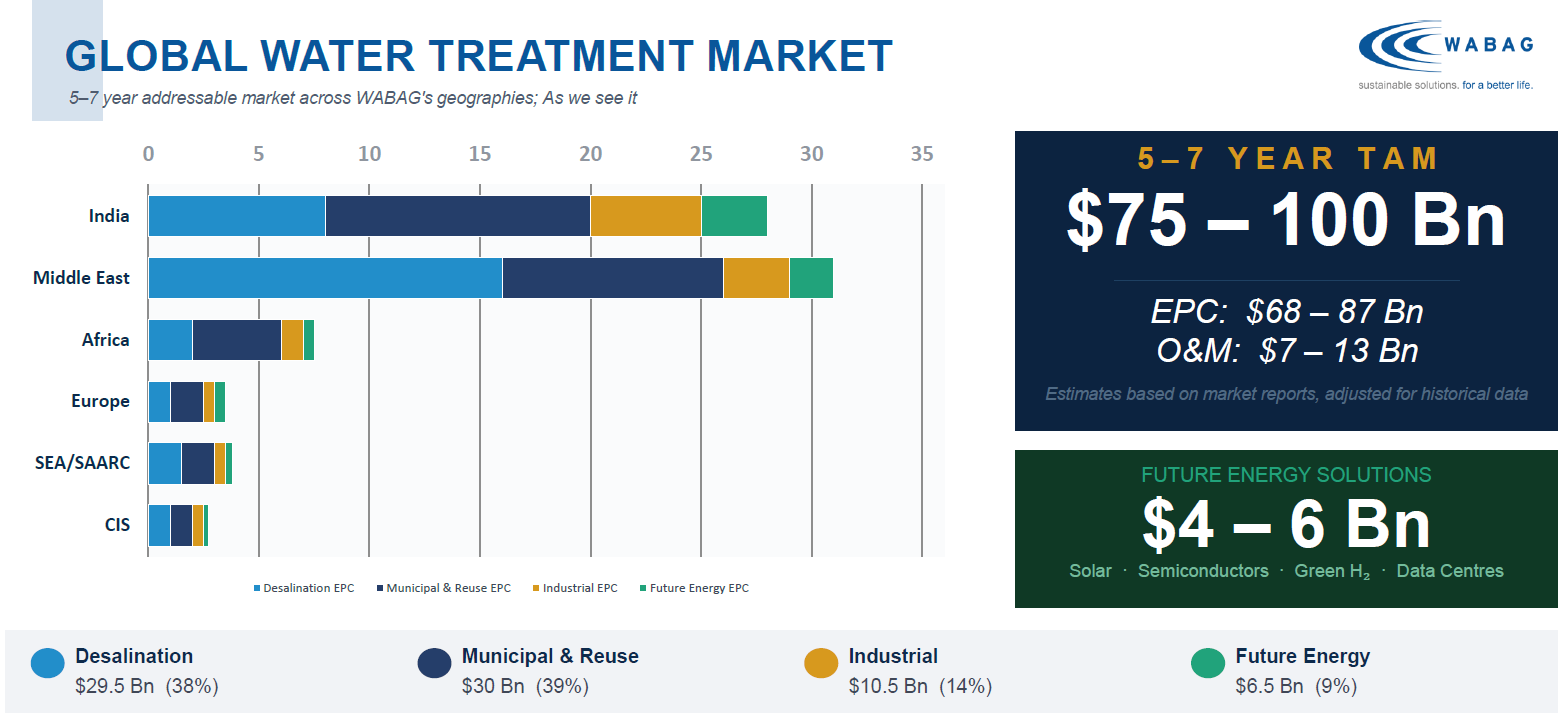
Management expects this geographical distribution to average out to a 50:50 mix over time. The Middle East and Africa region has been identified as a key growth engine. Saudi Arabia’s Vision 2030 and investments ahead of the 2034 FIFA World Cup are expected to drive demand. The Middle East offers a $40-50 billion pipeline.
In India, a sovereign policy tailwind like Jal Jeevan Mission is an incremental tailwind. Wabag is positioning itself heavily to cater to emerging green energy solutions and sustainability sectors beyond municipalities. It estimates an addressable market of $4-6 billion over the next 5-7 years.

To this end, the company is providing Ultra-Pure Water, effluent treatment, and Zero Liquid Discharge solutions for the solar manufacturing and semiconductor sectors. It has secured a breakthrough order for the RenewSys Solar Cell manufacturing plant. It also won an order to provide desalination solutions for Indosol Solar.
It is also actively pursuing partnerships with Green Hydrogen developers. Wabag expects strong growth in the sector over the next four years as product costs fall and hydrogen is rapidly converted to ammonia for fertilizer production.
Additionally, the company recently signed a contract to build a first-of-its-kind bio-CNG plant. This single facility will produce enough green energy to supply cooking gas to approximately 3,500 homes or fuel 400 vehicles each day. Wabag intends to expand this to 100 CBG plants.
The 20% Revenue and 15% Margin Target
Wabag’s management laid out a positive outlook (spanning 3-5 years). It expects to achieve a revenue CAGR of 15-20%. Margins are projected to remain at 13-15%, despite fluctuations in commodity prices. The high-margin O&M segment is targeted to contribute 20% of revenues.
Wabag reported strong growth in FY26. Revenue increased 19.7% year-on-year to ₹3,944 crore, supported by order book execution. EBITDA (earnings before interest, taxes, depreciation, and amortization) margins expanded by 20 bps to 13.3%.
Net Profit grew by 25.5% to ₹371 crore, outpacing revenue growth. Wabag generated net cash for the sixth consecutive year, with ₹950 crore cash in FY26, up 35% from FY25 levels. Its free cash flow was ₹296.4 crore. Wabag is using this cash to de-risk its balance sheet by paying down debt. Wabag also announced a final dividend of ₹5 per share for FY26.

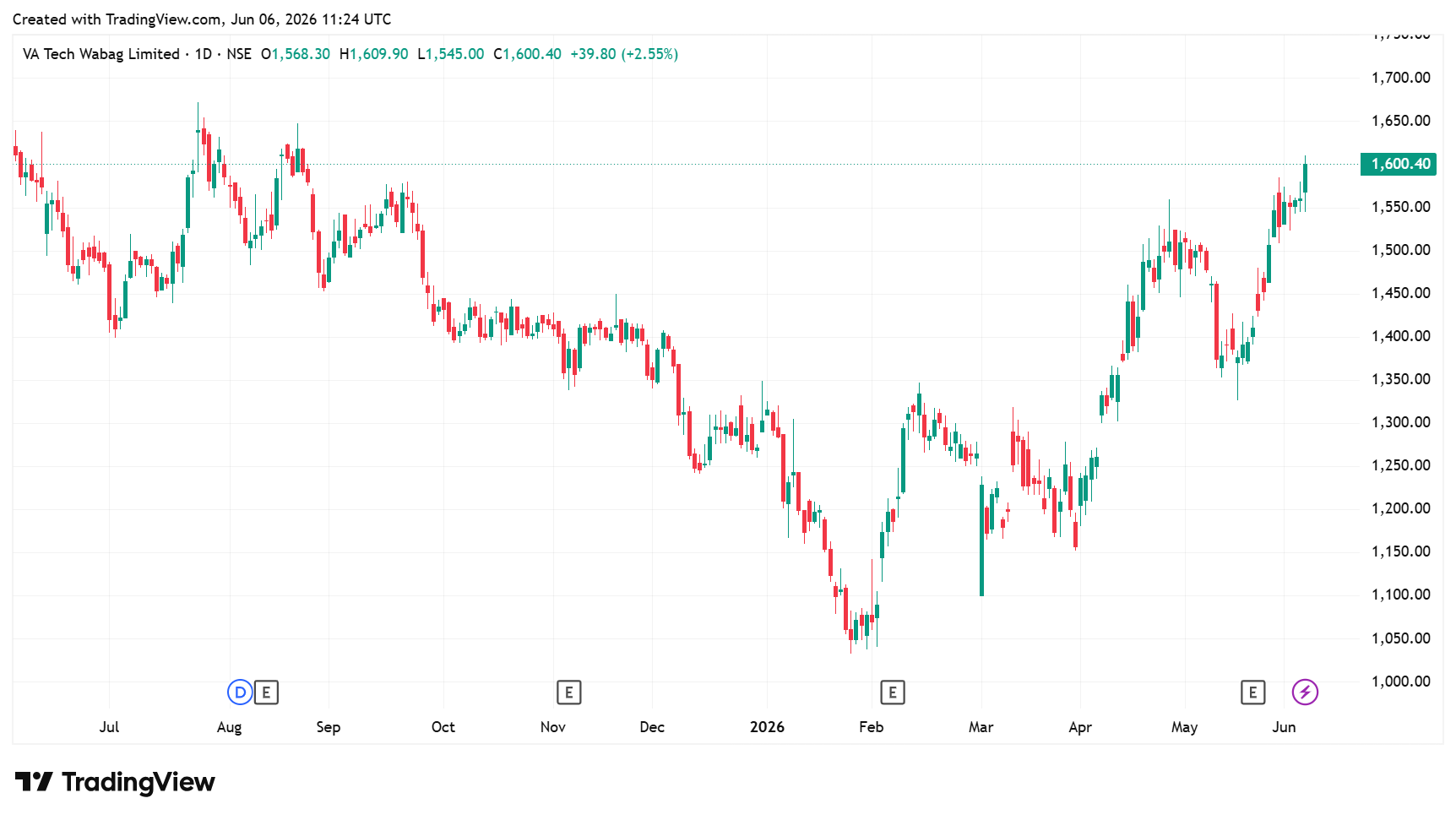
#2 ION Exchange
Ion Exchange is among the leaders in water and wastewater treatment and environmental solutions. It operates under the “Refreshing the Planet” vision across more than 67 countries. The company gets 74% of revenue from the domestic market in FY26.
Engineering vs Chemicals: Where Ion Exchange Makes Its Money
It categorizes its business into three segments: Engineering (58% of FY26 revenue), Chemicals (29%), and Consumer Products (13%). The engineering segment provides water and wastewater treatment, including recycling and zero-liquid-discharge plants, tailored to diverse industries such as solar, semiconductor, textile, and data centers.
Industrial Client Footprint: Powering Heavy Utility Systems from Panipat to Reliance
The company also manufactures ion exchange resins, membranes, and specialty chemicals. It is utilized in customized chemical treatment programs specifically for water and wastewater applications. They are a market leader in water softeners.
That said, the industrial sector is the core driver for the company’s Engineering and Chemicals segments. Clients in this space include Reliance Industries and Nayara Energy. A recent milestone includes the successful commissioning of a water treatment plant at IOCL Panipat Refinery.
This is the largest industrial water treatment package awarded in India. Ion also provides water recycling systems to steel and mining giants, including JSW, ArcelorMittal, Nippon Steel, Emirates Steel, and Saudi Arabian Mining. It also has a presence in power and energy, healthcare, and real estate sectors.
Assessing a ₹2,643-Crore Order Book Against a ₹9,509-Crore Bid Pipeline
The engineering order book stood at ₹2,643 crore as of 31 March 2026, giving revenue visibility for less than a year. The company secured two domestic solar contracts worth ₹205 crore for ultra-pure water and zero-liquid-discharge systems. Order pipeline of approximately ₹9,509 crore.
Contract Structuring: Monetizing Long-Term Streams via Overseas DBOOT Frameworks
Furthermore, Ion is securing long-term revenue streams through large international contracts. It won a 20-year DBOOT (Design, Build, Own, Operate, Transfer) contract from Petroleum Development Oman. This project will generate steady O&M revenue beginning in FY27, providing long-term top-line stability.
Supply Chain De-Risking: Scaling the Export-Oriented Roha Plant and Saudi Assets
A central growth driver for the Chemicals segment is the newly commissioned, export-oriented manufacturing facility at Roha. The company aims to achieve a 25% capacity utilization rate for the Roha plant in its first full year of operation in FY27.
Notably, the resins manufactured at this facility have received certification from the Water Quality Association.
This certification is a key step to penetrate highly regulated international markets, specifically the US drinking water segment. Management notes that they have “not even scratched the surface” of the international market’s potential. That Roha plant will cater to the demands of existing and new global OEM customers.
To push its product business and de-risk its supply chain, Ion is expanding its local presence overseas. The company has commenced commercial production at a new manufacturing plant in Saudi Arabia. This will allow it to cater locally to Middle Eastern customers and bypass some of the ongoing logistical disruptions in West Asia.
Reconciling the 28.5% EBITDA Drop with Input Cost Shocks
From a financial perspective, operating income increased 6.5% year-over-year to ₹2,914.8 crore in FY26. Operating EBITDA fell 28.5% to ₹210.2 crore, with a margin of 7.21%. Net profit fell 31.3% to ₹143.2 crore. The company faced adverse profitability impacts due to rising input costs, disruptions caused by the West Asia crisis, and an ongoing legacy engineering project.
#3 Jash Engineering
Jash Engineering manufactures equipment for water, wastewater, desalination, and stormwater infrastructure. The company’s primary product categories and offerings include water control gates, screening equipment, hydropower and pumping equipment, and valves.
India accounted for 44.5% of revenue, followed by the US (35.5%), and Europe and Africa (8%). The company had offset the short-term US tariff headwinds. That said, management is highly optimistic about the future of water recycling in India.
Jash expects that by 2029, 80% of newly supplied water will be converted into wastewater requiring treatment. Thus, the company anticipates a big potential market for its water equipment. Notably, water control gates accounted for 62% of revenue in FY26.
Industrial Executions: From Mumbai’s Sluice Gates to Tillari Canal Hydro Projects
Jash is already deeply involved in executing critical wastewater infrastructure and treatment projects around the globe. The company supplied numerous sluice gates and knife gate valves for the 337 MLD Ghatkopar Sewage Treatment Plant.
Global Footprint: Mitigating Labor Shortages and Navigating UK Consolidation.
This is designed to improve marine water quality and support urban wastewater infrastructure. Other recent projects include the BMC Mumbai Project, the Al Haer Independent Sewage Treatment Plant (Saudi Arabia), and the Bangkhen Water Treatment Plant (Thailand).
Further, the Hydropower & Pumping, Process Equipment, and others segment contributed 8% of revenue. To this end, Jash recently commissioned two 235 kW (Kilo Watt) Archimedean screw turbines at the Tillari Left Bank Canal in Maharashtra. These turbines enable the direct generation of clean energy from canal water.
Global Capacity Pacing: Overcoming Rodney Hunt’s Labor Shortages via Houston Expansion
On the hydroelectric side, Jash (through subsidiary Rodney Hunt) delivered four high-capacity, large stainless-steel roller gates for the Blanchard Hydroelectric Station in Minnesota (US).
Also, to support Rodney Hunt’s target of reaching $75 million in revenue over the next five years, Jash is building a new plant in Houston.
This expansion is crucial because the current Massachusetts facility is facing labor shortages, which have delayed execution. Further, in April 2026, Jash’s UK subsidiary, Waterfront Fluid Controls, acquired Penstocks.
This acquisition gives it a pan-UK presence, with manufacturing and servicing bases in both Scotland and the Midlands.
The company plans to merge these two entities to capitalize on the UK’s upcoming Ofwat AMP (Asset Management Plan) cycle. Through this synergy, management expects growth to pick up starting in H2FY27. It plans to double UK revenue from approximately £6 million to £12 million (₹125-135 crore) over the next 3-4 years.
Tapping Saudi Arabia’s Vision Demand and Heavy Industrial Integration
Like Wabag, Jash is also preparing to capitalise on the demand for water infrastructure in Saudi Arabia’s Vision. Jash has established a local subsidiary and is currently acquiring land for a manufacturing plant.
Management notes that post-war rebuilding and economic growth in the Middle East will create significant capacity demands.
In the domestic market, Jash recently acquired WesTech (now Jash Process Equipment) to diversify and expand its presence in the heavy industrial process equipment sector. This entity will serve demanding sectors such as paper and pulp, metals, minerals, and alumina.
Jash plans to integrate WesTech’s manufacturing into its own existing Indian facilities. This is expected to reduce costs and improve profitability over the next 1-2 years.
Will Jash Engineering’s Record ₹899-Crore Backlog Fix Compressed Margins?
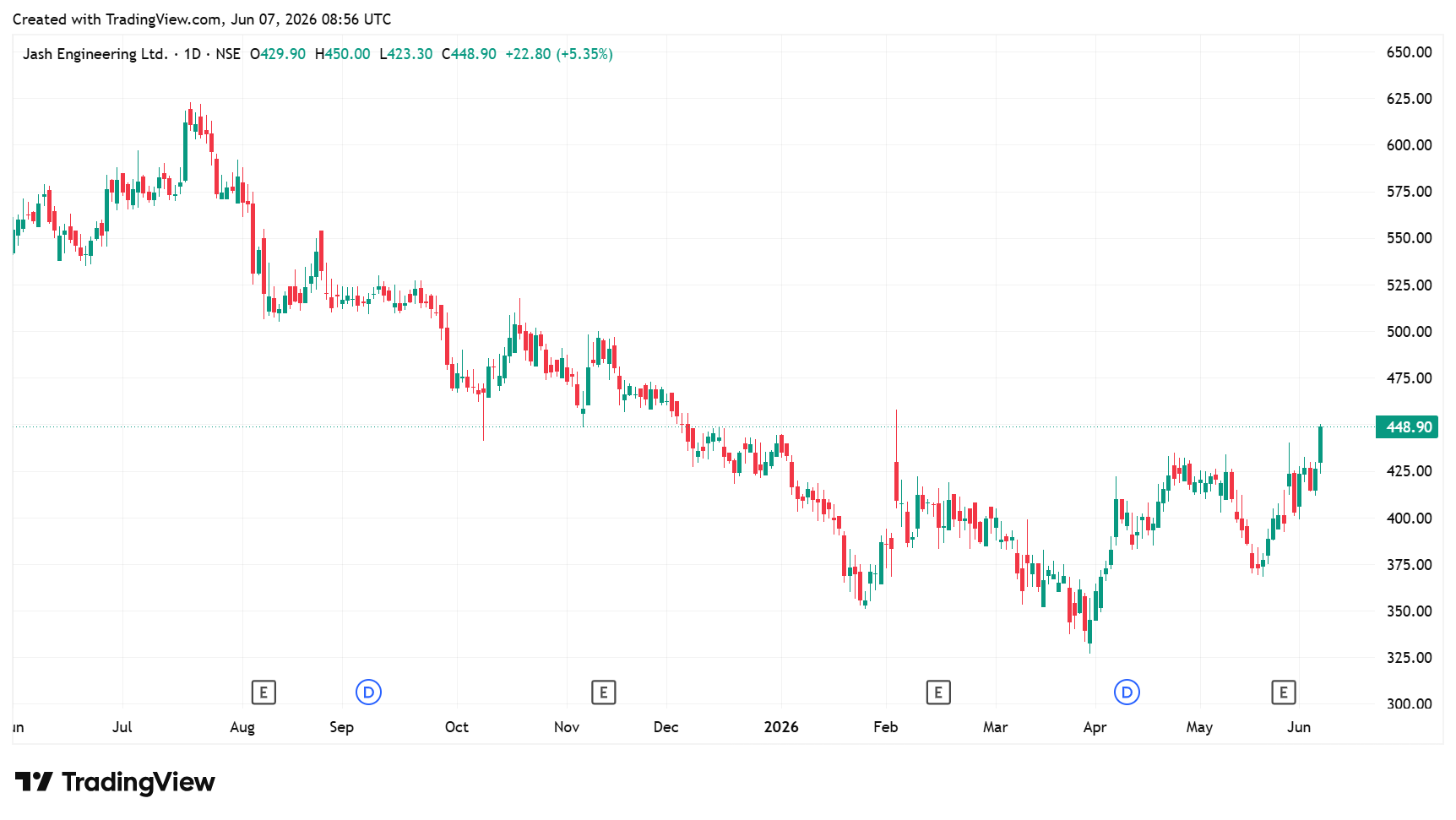
Jash reported a muted performance in FY26. Total income increased 1% year-on-year to ₹756.7 crore, mainly due to US tariffs. EBITDA dropped 11% to ₹122.7 crore, with margins compressing to 16.2%. As a result, net profit declined by 13% to ₹75.5 crore.
Jash is targeting a total income of ₹875 crore in FY27. This will be driven by the highest-ever order book of ₹899 crores (as of 1 May 2026). Over the long-term (by FY31), Jash aims to double its revenue to ₹1,500 crore from the FY26 base.
Macro Realities: Evaluating the True Capital Elasticity of Wastewater Players
Overall, Wabag leads the return on capital employed (ROCE) chart while Jash boasts the highest return on equity (ROE) among the three companies. In terms of valuation, all three companies are trading at a premium to both the industry and the historical median.
| Peer Comparison (X) | |||||
Particulars | Price-to-Earning Multiple | Return Ratios | |||
| Company | 5-Year Median | Industry Median | RoE (%) | RoCE (%) | |
| VA Tech Wabag | 26.7 | 17.4 | 17.1 | 15.9 | 21.3 |
| Ion Exchange | 33.3 | 28.9 | 12.1 | 14.1 | |
| Jash Engineering | 37.2 | 32.3 | 29.9 | 16.0 | 17.7 |
| Source: Screener.in (As of 6th June 2026) | |||||
Water scarcity is no longer cyclical; it is structural. As industrial demand accelerates, treatment and recycling will move to the centre of capital allocation. Wabag, Jash, and ION Exchange are positioned to benefit, but current valuations already price in optimism. Execution, order inflow, and margin discipline will determine returns.
Until then, keep these stocks in your watchlist.
Disclaimer:
Note: Throughout this article, we have relied on data from http://www.Screener.in and the company’s investor presentation. Only in cases where the data was unavailable have we used an alternative, widely used, and accepted source of information.
The purpose of this article is only to share interesting charts, data points, and thought-provoking opinions. It is NOT a recommendation. If you wish to consider an investment, you are strongly advised to consult your advisor. This article is strictly for educational purposes only.
About the Author: Madhvendra has been deeply immersed in the equity markets for over seven years, combining his passion for investing with his expertise in financial writing. With a knack for simplifying complex concepts, he enjoys sharing his honest perspectives on startups, listed Indian companies, and macroeconomic trends.
A dedicated reader and storyteller, Madhvendra thrives on uncovering insights that inspire his audience to deepen their understanding of the financial world.
Disclosure: The writer and his dependents do not hold the stocks discussed in this article.
The website managers, its employee(s), and contributors/writers/authors of articles have or may have an outstanding buy or sell position or holding in the securities, options on securities or other related investments of issuers and/or companies discussed therein. The articles’ content and data interpretation are solely the personal views of the contributors/ writers/authors. Investors must make their own investment decisions based on their specific objectives, resources, and only after consulting such independent advisors as may be necessary.