




If there is one wish I would like to make for the year 2023,it would be shared peace and prosperity for all. All efforts to propel economic growth are for prosperity of the people. But GDP growth rates, the absolute size of GDP, and even per capita income, do not capture fully the prosperity of the masses. Increasing inequalities are a reality in India and most of the developing nations. Economist Simon Kuznets told us decades ago that it is going to happen when growth accelerates, economies open, before it stabilises and even reduces later as those left behind start catching up. But, how do they catch up with the front runners? It can happen only when one invests heavily in their skills, education, access to finance (capital/technology), and innovative models of development that dovetail inclusiveness with plans for faster growth.
Also read: New-age tech and the dairy industry
In 2022, India has registered the highest growth rate amongst all G20 countries, and it is likely to do so even in 2023. That’s a matter of pride for India. And within India, when we talk about growth and wealth creation, one name stands out: Gautam Adani, the newsmaker of the year for 2022, as per India Today’s cover story. His interview with Raj Chengappa reveals that his rise started with the liberalisation of economic policies during Rajiv Gandhi’s time, got a momentum with the 1991 reforms, but the year 2022 has seen the most explosive growth when his net worth shot up to about $125.8 billion (as per the Forbes List on December 28, 2022), making him the richest man in Asia and the third-richest in the world.
Many critics say this is all due to his proximity with the prime minister Narendra Modi. But then why is the chief minister of Rajasthan hosting him to invest about Rs 65,000 crore in setting up mega solar power plant of 10,000 MW, expanding cement capacity in the state, and upgrading the Jaipur airport? Similarly, why has the Tamil Nadu government supported him in setting up one of the largest solar power plant (648MW) at Kamuthi? Even the West Bengal government has been wooing him for investing and upgrading its ports. The reality is that most of the top business houses work with all governments so long as it makes economic sense to them. Be it Adani, Reliance, Tata Sons, Wipro, etc, they all create wealth and millions of well-paid jobs. That’s their contribution to society. But they also give back to society through their CSR activities and as well as through family foundations and trusts.
Only a few years ago, Azim Premji had pledged to give away about half of his wealth to the society through the Azim Premji Foundation. He topped the EdelGive Hurun India Philanthropy List of 2020. How many people are aware that Gautam Adani’s Foundation is committing Rs 60,000 crore to give back to society through promoting better health, education, and skill formation. This, said Gautam Adani, was the best gift on his 60th birthday.
While all this is commendable, I feel there also could be an alternative model tried for shared prosperity. And that is making the less privileged ones partners in their journey of wealth creation. Let me elaborate. Since Adani is committing 60,000 crore through the Adani Foundation to give back to society, here is a small idea that can make millions prosperous, if he takes this up as a priority.
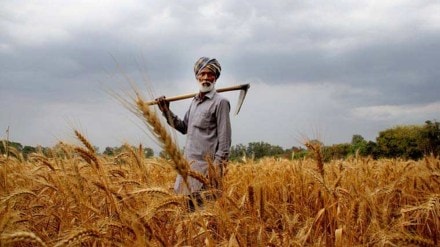
The largest share of the working population in the country is engaged in agriculture (about 46%). Their education levels are low, and average holding size is small (1.08 hectare). The average household income for this group hovers below Rs 20,000 per month at current prices. Of course, many of the marginal farmers earn even lower. This is not enough to create a sustainable demand base for a manufacturing revolution in India. Large scale education or skilling for these people may be a long drawn process. So, here is an idea that can augment their incomes substantially, yet quickly.
Adani aims to be the largest player in green energy, especially solar. Solar farms today need lot of land that is degraded. But land is scarce in India, and I am not sure how far this model can be scaled up. The alternative is to have solar as a third crop on farmers’ fields. The designing of solar panels and structures has to be done in such a manner that allows enough sunlight to come through for photosynthesis of crops below. The farmers can keep growing two crops below these ‘solar trees’ that are about four metres high. The investment in solar panels will be done largely by entrepreneurs (say, Adani Green Energy Ltd), with some equity participation by the farmers (say, 10-15%).
Farmers will carry out maintenance of the solar trees on regular basis. Power will be generated throughout the year and can be fed to the grid at a pre-determined price. The farmer will get a rental for his land plus a share in the profits from the power generation.
This idea is being tried in number of countries, including India. Our research in this area led to setting up of a pilot in Ujwa KVK in Najafgarh area of Delhi, with the help of the former lieutenant governor, Anil Baijal. Just two kilometres from this pilot, an entrepreneur, Surinder Ahuja (CEO, SUNMASTER) has put up this idea on 4 acres, and he is offering Rs 1.25 lakh per acre/year to farmers for using their land for solar-plus-agriculture activities. This doubles farmer’s income within six months!
The idea behind this example is whether Adani can scale it up a million times higher and create a revolution with farmers generating solar power along with food crops. Only then farmer can become “anna daata and urja daata” (giver of food as well as energy). This will be the real shared prosperity model.
The writer is distinguished professor, ICRIER
Views are personal


