
Promoters typically have the deepest understanding of their company’s operations, growth outlook, competitive positioning, and long-term strategy. While they may buy shares for several reasons, a meaningful increase in promoter holding often attracts investor attention because it shows management’s confidence in the company’s prospects.
Such purchases become even more significant when they occur ahead of key business developments or expected growth catalysts. During the first quarter of FY27, promoters of three companies raised their stakes significantly through open market purchases.
Rather than being isolated transactions, these purchases have come at a time when each company is approaching important business milestones, with multiple growth drivers expected to support earnings and business performance over the coming years.
Let’s take a closer look at these three companies (market cap more than ₹1,000 crore) in which promoters bought the most shares during Q1FY27. This purchase comes with clear earnings and growth trigger. Incidentally, all three are smallcaps stocks.
#1 Jaro Institute of Technology: Margin Pressures vs. Enterprise Upskilling Expansion
Jaro Institute (market cap: ₹1,059 crore) is a key player in India’s online higher education and professional upskilling sector. It connects working professionals to top-tier academic institutions like IIMs, IITS, and global universities. The business is asset-light and Business-to-Business-to-Consumer.
The partner institutions retain complete control over developing the curriculum, delivering the lectures, conducting assessments, and awarding the final degree or certification. Jaro, on the other hand, manages operational and commercial burden by managing end-to-end services.
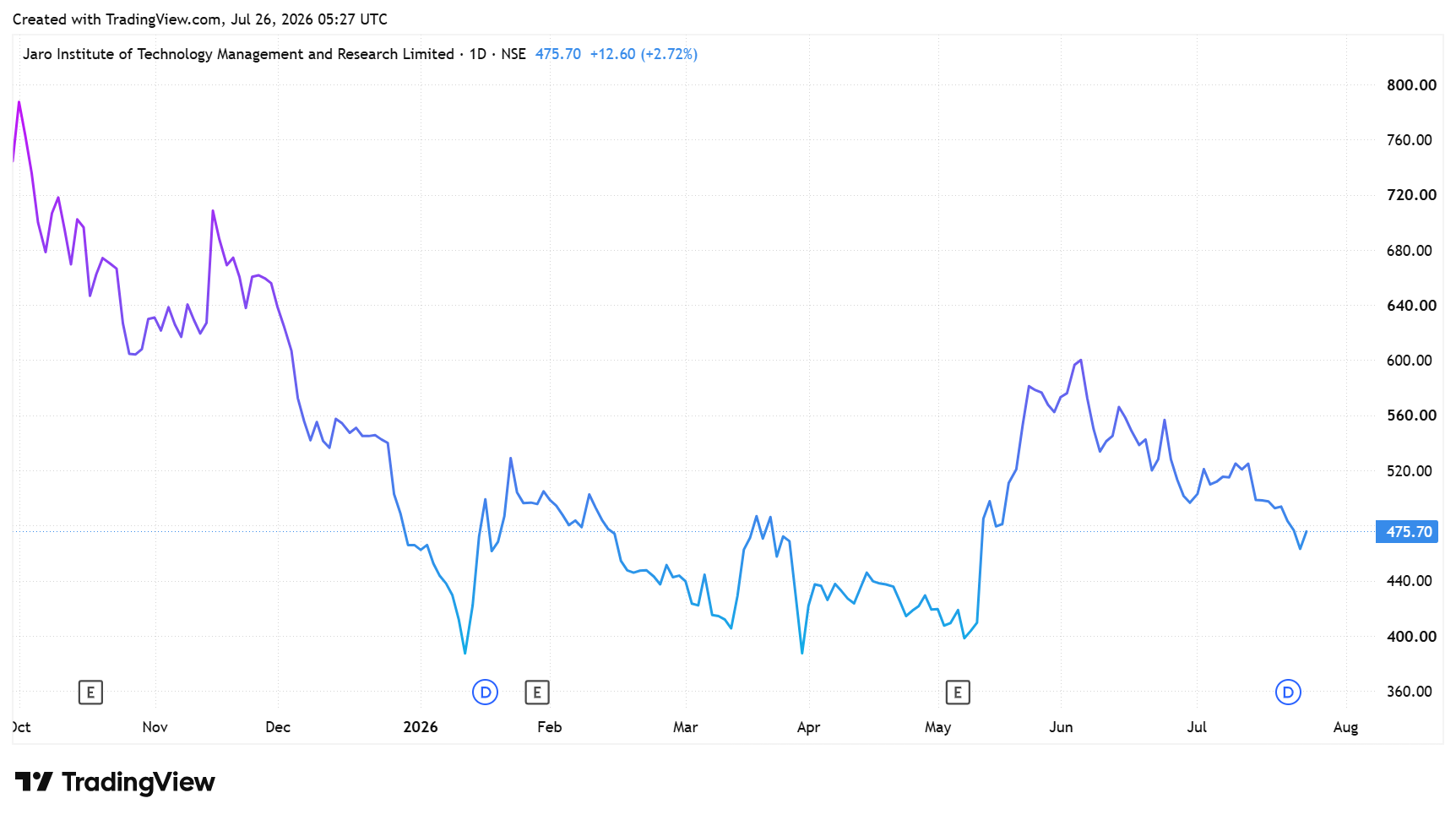
Promoters Accumulate 4.15% Stake Ahead of FY27 Upskilling Push.
Post-listing, Jaro promoters started buying for the first time after its share price had fallen from ₹890 to as low as around ₹400 by Q4FY26. Weak margins and stagnant profitability drove the price lower. Since then, promoters have increased their stake by 4.15% to 61.43%. This accumulation coincides with several upcoming growth catalysts.
Financial Performance: Revenue Up 8.6% as Margins Face Pressure
Jaro reported 8.6% revenue growth to ₹273.9 crore in FY26. EBITDA (Earnings Before Interest, Tax, Depreciation and Amortisation) stayed flat at ₹83.2 crore while margins fell 400 bps to 29%. As a result, net profit grew by just 2.4% to ₹52.9 crore. Several growth triggers may have led to the promoter buying.
Growth Catalysts: Commerce Vertical & Enterprise Upskilling
A major near-term growth catalyst is Jaro’s exclusive online partnership with J.K. Shah Classes, a reputed institution. While J.K. Shah will continue to run its traditional physical classrooms, Jaro will handle the online coaching and tuition components.
This marks a strategic entry into the commerce segment, unlocking a Total Addressable Market of approximately 42 lakh potential learners across India. This is expected to drive substantial volume growth starting in April 2026.
In parallel, Jaro is scaling its B2B enterprise learning vertical. It has successfully launched structured learning programs within corporate environments. It has onboarded 14+ enterprise clients, including major organizations like HCLTech, PNB MetLife, and Sutherland. This creates a steady, scalable revenue stream from enterprise workforce upskilling.
Distribution & Physical Footprint: Telecom Integration and Tier-2 Expansion
Further, Jaro has collaborated with Reliance Industries to integrate its offerings with JioFiber, JioAirFiber, and JioSet-top boxes. This partnership could provide a strong distribution trigger, enabling Jaro to provide learning access directly through smart TVs and expand its reach to millions of homes in metro, tier-2, and tier-3 markets.
Jaro is expanding its physical presence into Tier-2 and Tier-3 cities. The company recently added new centers in Kolkata and Indore, bringing its total physical footprint to 42 offices and studios. This regional expansion is key to capturing a broader demographic of lifelong learners. Overall, Jaro is expected to benefit from rising preference for online higher education.
Management has provided clear growth guidance of 20-25% for the near term. Management expects operating margins to return to historical levels of approximately 30% for EBITDA. Average Revenue Per User, which has doubled over the last four years to ₹85,000, will continue to increase.

#2 Euro Pratik Sales: B2C Acquisition Drive Targets ₹195 Crore Revenue Boost
Euro Pratik Sales (market cap: ₹3,083 crore) is among India’s leading sellers and marketers of surface decorative products and interior solutions. The company boasts a 15.9% market share in the organized decorative wall panels industry in India.
It provides eco-friendly and ready-to-use alternatives to traditional wall decor products like wallpaper, wood, and paint. It has a vast portfolio spanning over 30 product categories and more than 3,000 designs. The company supplies to a network of 198 distributors.
Decorative Wall Panels contribute 57.3% of revenue, Decorative Laminates (31.4%), and Allied Interior Solutions (11.3%). The company markets its products primarily through two flagship premium brands: Euro Pratik and Gloirio. These brands target the upper-middle, premium, and luxury segments.
Euro Pratik follows an asset-light business model. Euro Pratik focuses on sourcing and design. Production is outsourced to a network of over 36 contract manufacturers in India, South Korea, China, the United States, and parts of Europe. The company introduces over 1,000 new designs every year.
Financial Performance: Revenue Rises 17.4% Despite Margin Compression
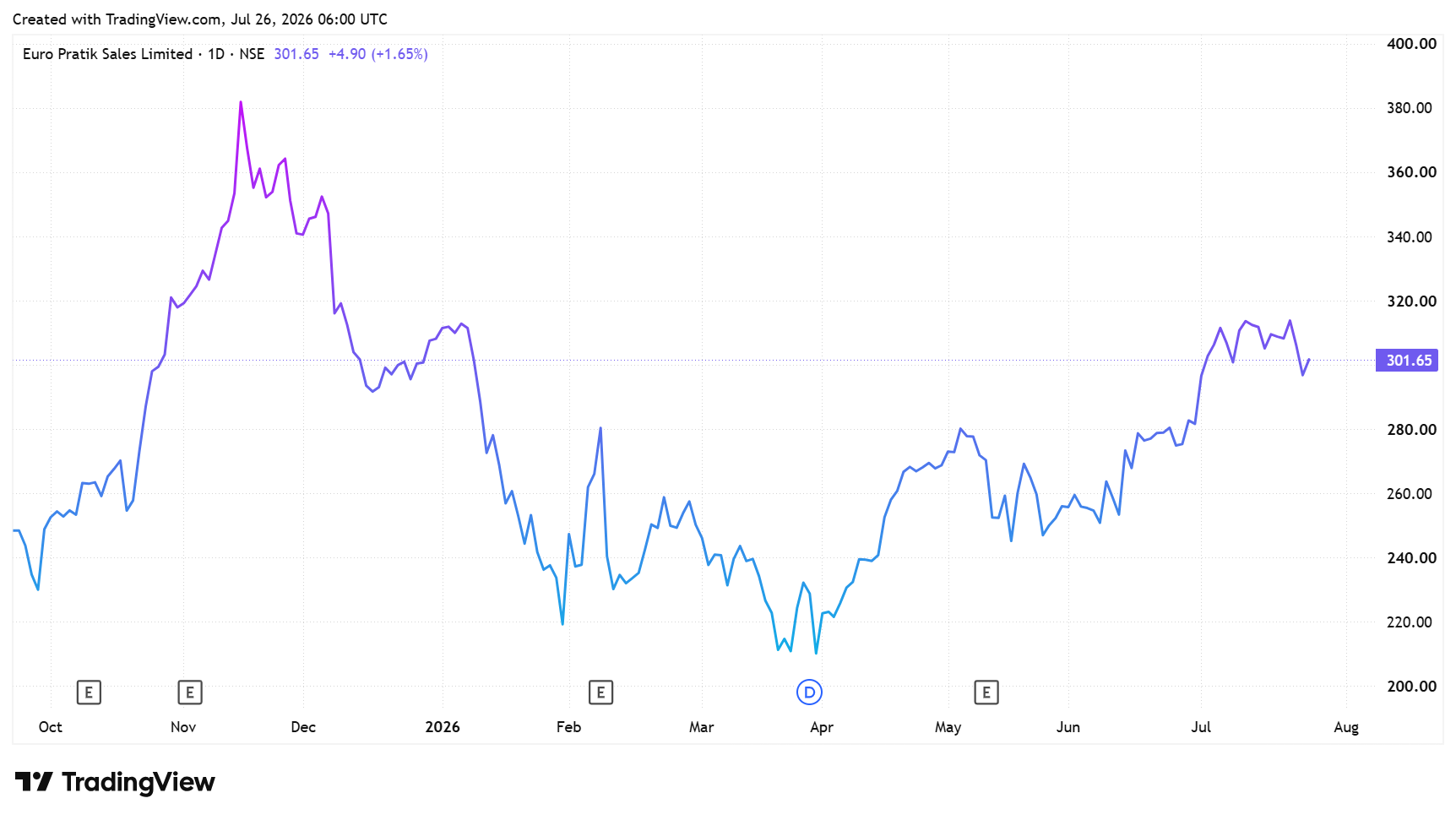
Euro Pratik performed well in FY26. Total revenue grew 17.4% to ₹343 crore. EBITDA increased 12.4% to ₹121.2 crore; however, margins declined 160 bps to 35.3%. As a result, net profit grew by just 1.9% to ₹77.2 crore. Consequently, from a high of around ₹380 in November, the share price fell to around ₹208 by March 2026.
Promoters Buy 3.82% Stake as Dual M&A Deals Target ₹195 Cr Revenue.
A market correction also contributed to the decline. As the share price fell below the listing price, promoters started buying. They bought a 0.4% stake during the March quarter and increased it by another 3.42% in Q1FY27, taking the stake to 73.91% at the end of Q1FY27.
Strategic M&A: B2C Expansion via URO Veneer and Chawla Brothers
A major trigger for Euro Pratik’s growth is its aggressive push into the B2C retail space through strategic acquisitions. This allows the company to engage with end-users and capture higher value-chain margins directly. To this end, in December 2025, Euro Pratik acquired a 51% stake in URO Veneer World, a well-known interior décor brand in South India.
This acquisition will provide it with direct access to over 3,500 interior designers and 2,800 contractors. This will allow Euro Pratik to leverage URO Veneer’s existing platform to sell its organic product line, which is expected to increase sales significantly. URO Veneer World is expected to contribute approximately ₹115 crore to revenue in FY27 and ₹20 crore to net profit.
In March 2026, the company acquired a 51% stake in Chawla Brothers, solidifying its presence in the northern markets, specifically Punjab, Haryana, Jammu & Kashmir, and Himachal Pradesh. This acquisition allows Euro Pratik to replace competitive offerings with its own products within this network. This entity is projected to generate about ₹80 crore in revenue in FY27.
Industry Growth: Wall Panel & Laminate Market Projections
Looking ahead, management expects Euro Pratik to outpace the broader industry’s growth rate comfortably. The organised decorative wall panel industry and laminate segment are projected to grow at 18% and 12% CAGR, respectively, during FY24 and FY29.
#3 Paisalo Digital: AI Integration and Multi-Year AUM Expansion Plan
Paisalo Digital (market cap: ₹6,382 crore) is a Non-Banking Financing Company serving the underserved populations, including MSMEs. The portfolio is divided between SME and MSME loans, which account for 71% of the Assets Under Management (AUM), and Small Income Generation loans, which make up the remaining 29%.
To further diversify its portfolio, Paisalo has expanded into specialized financing segments by partnering with institutional dealers. These purpose-led six financing options include loans for 3-wheelers and small commercial vehicles, alternative fuel solutions, and 2-wheelers. Paisalo employs a dual strategy that combines physical touchpoints and Banking-as-a-Service.
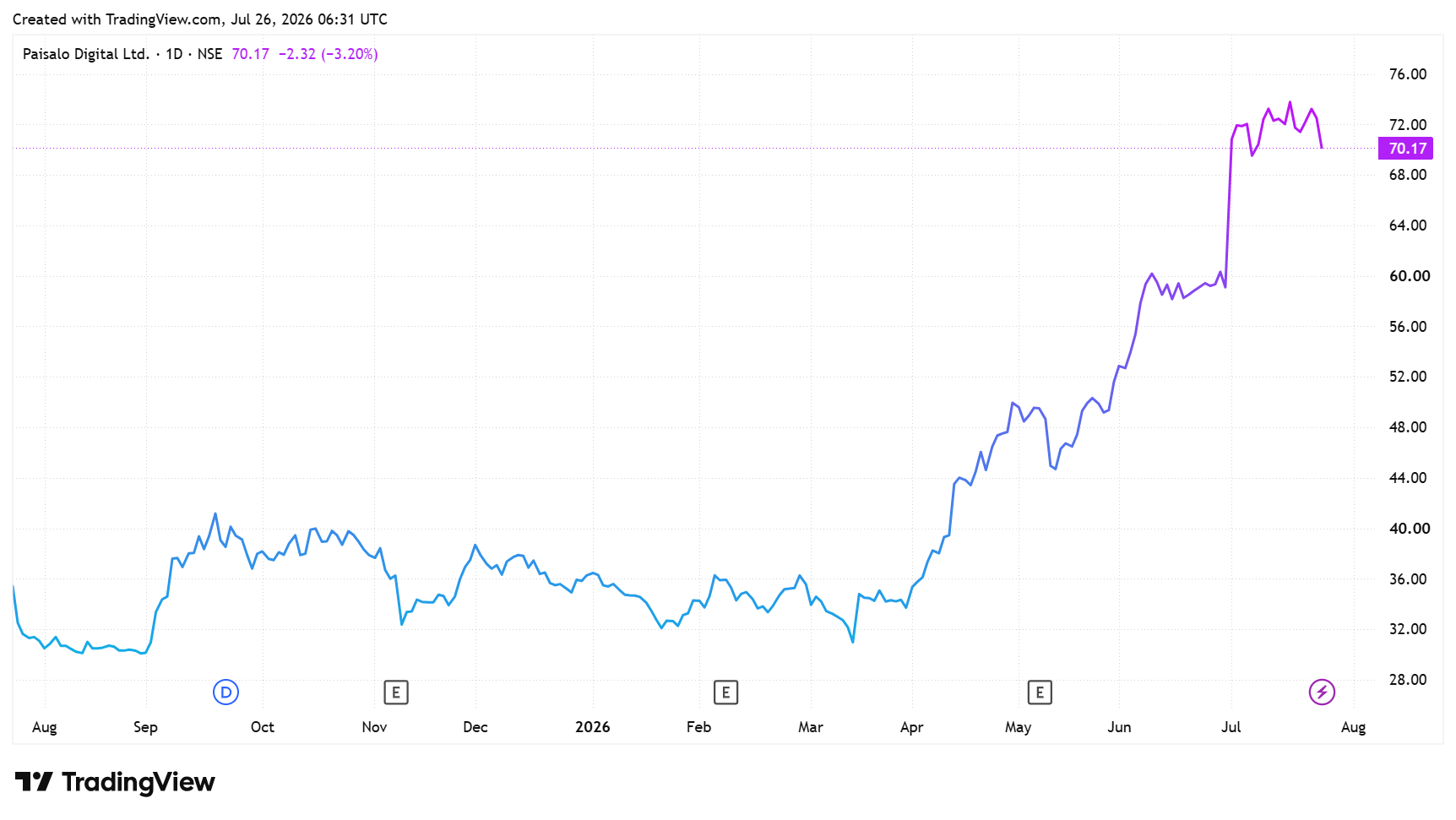
Promoters Increased Stake to 46.7% Amid 100%+ Rally.
Paisalo share price crashed 70% from March 2024 to ₹30 by March 2026. This triggered buying by promoters, who increased their stake by 4.96% to 46.71% in the June quarter. Notably, the share price has also doubled (up 133%) from the low. The buying came amid an ambitious outlook.
The ‘2x’ Expansion Strategy: Targeting ₹12,200 Crore AUM by FY29
Management aims to double its AUM, total income (₹943.7 crore in FY26), and net profit over the next three fiscal years. This translates to scaling the FY26 AUM of ₹6,100.9 crore (up 17% year-on-year) and net profit of ₹237.2 crore (+19% YoY) by FY29. The company expects a conservative Net Interest Margin of 6.5% in FY27, down from 6.8% in FY26.
Asset Quality & Lending Metrics: Low LTVs Support Full Recovery
The company also aims to preserve strong asset quality. It entered FY27 with Gross NPA (0.76%), Net NPA (0.61%), and a collection efficiency of 98.5%. Management notes that because they generally lend at a 50-60% Loan-to-Value ratio on secured cases, the company typically recovers the full principal plus interest even if an account defaults.
A key growth engine for Paisalo is the rapid expansion of its loan product suite. By the end of Q4FY26, it had successfully finalized approximately 18-20 institutional and dealer partnerships across six purpose segments. It plans to expand these relationships in FY27. The aggressive outlook doesn’t include the expected volume from bank co-lending partnerships.
Operational Efficiency: AI Integration Drives 3% Headcount Reduction
Paisalo is also adopting Artificial Intelligence, which could drive operating leverage and cost efficiency. For example, despite 17% AUM growth and the addition of 427 new touchpoints in FY26, the company’s total headcount actually declined by 3%. This is because AI-powered systems are taking on the operational load.
Scaling last-mile reach is also a critical pillar for Paisalo. The company is consolidating its strong market positions in states like Delhi, Haryana, and Rajasthan. At the same time, it is aggressively accelerating penetration in high-potential markets like Uttar Pradesh and Maharashtra. Paisalo is also aggressively working to optimize its cost of capital to reduce borrowing costs.
The table below summarises the key metrics.
| Particulars | Jaro Institute | Euro Pratik | Paisalo Digital |
| Stake as of March 2026 (%) | 57.28 | 70.49 | 41.75 |
| Stake as of June 2026 (%) | 61.43 | 73.91 | 46.71 |
| Stake Increase | 4.15% | 3.42% | 4.96% |
| Revenue (₹ crore) | 273.9 | 343.0 | 943.7 |
| Net Profit (₹ crore) | 52.9 | 77.2 | 237.2 |
| Outlook | 20-25% Growth | Outpacing Industry Growth, ₹195 crore projected Revenue Boost from Acquisition in FY27 | 2X Total Income, AUM, and Net Profit |
| Source: FY26 Annual Report, Investor Presentation and Management Commentary | |||
The table shows that promoters bought meaningful stakes in all three companies during Q1FY27. Their buying coincides with the upcoming earnings trigger.
Financial Comparison: P/E Valuations vs Return Ratios (ROE & ROCE)
Jaro Institute stands out for its strong Return on Capital Employed (ROCE) and Return on Equity (ROE). Euro Pratik’s return ratios are also among the best in the furniture and home furnishing industry, while Paisalo Digital commands a relatively lower return ratio. The NBFC Return on Asset is 3.8%.
In terms of valuation, Jaro trades at a premium to the industry median, while Euro Pratik is at a premium. Paisalo Digital trades at a premium to both the industry and the historical median. Current Price-to-Book (3.6x) is also higher than the 3-year median of 2.6x.
Particulars | Price-to-Earnings Multiple (X) | Return Ratios | |||
| Company | 3Y Median | Industry | ROE (%) | ROCE (%) | |
| Jaro Institute | 24.1 | NA | 60.4 | 16.5 | 22.1 |
| Euro Pratik | 37.2 | NA | 29.6 | 30.5 | 38.4 |
| Paisalo Digital | 26.8 | 22.6 | 20.9 | 14.3 | 12.3 |
| Source: Screener.in (As of 24 July 2026) | |||||
While promoter buying alone should not be viewed as a definitive indicator of future performance, it often reflects management’s conviction in the company’s long-term prospects. In the case of Jaro Institute, Euro Pratik, and Paisalo Digital, the increase in promoter holding has coincided with a phase marked by identifiable business triggers and growth initiatives.
The coming quarters will reveal how effectively these companies execute on their stated plans and whether the anticipated growth translates into financial performance.
Keep these companies in your watchlist to analyse how they capture the industry tailwind.
Disclaimer:
Note: Throughout this article, we have relied on data from http://www.Screener.in and the company’s investor presentation. Only in cases where the data were unavailable have we used an alternative, widely accepted source of information.
The purpose of this article is only to share interesting charts, data points, and thought-provoking opinions. It is NOT a recommendation. If you wish to consider an investment, you are strongly advised to consult your advisor. This article is strictly for educational purposes only.
About the Author: Madhvendra has been deeply immersed in the equity markets for over seven years, combining his passion for investing with his expertise in financial writing. With a knack for simplifying complex concepts, he enjoys sharing his honest perspectives on startups, listed Indian companies, and macroeconomic trends.
A dedicated reader and storyteller, Madhvendra thrives on uncovering insights that inspire his audience to deepen their understanding of the financial world.
Disclosure: The writer and his dependents do not hold the stocks discussed in this article.
The website managers, their employees (s), and contributors/writers/authors of articles have or may have an outstanding buy or sell position or holding in the securities, options on securities, or other related investments of issuers and/or companies discussed therein. The articles’ content and data interpretation are solely the personal views of the contributors/ writers/authors. Investors must make their own investment decisions based on their specific objectives, resources, and only after consulting such independent advisors as may be necessary.