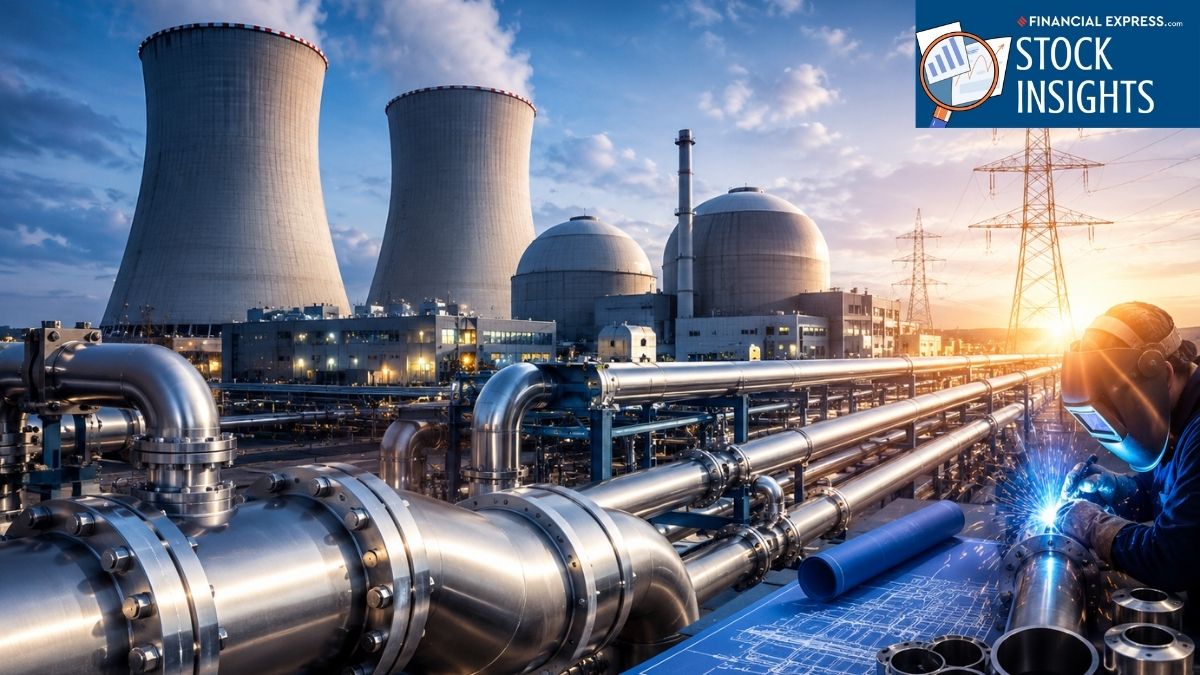
India’s nuclear power story is entering a new phase. After decades of gradual expansion, the country has set an ambitious target of increasing its installed nuclear power capacity from 8.8 gigwatt (GW) today to 100 GW by 2047. This is an over 11-fold jump that would make nuclear energy a key pillar of India’s clean energy transition.
The government has also opened the sector to greater private participation, a move expected to accelerate capacity addition and strengthen the domestic manufacturing ecosystem. The investment pipeline is already taking shape.
In Maharashtra alone, companies including Reliance Industries, NTPC, Adani Power, and Lalitpur Power Generation have signed proposals worth around ₹6.5 lakh crore to develop nearly 25.4 GW of nuclear capacity. At the same time, established equipment manufacturers are expanding production facilities in anticipation of rising demand.
Notably, building nuclear capacity will require far more than reactors. It will also drive demand for specialized pipes, tubes, and engineered piping systems that form the core of every nuclear power plant. In this article, we examine three listed companies that are well-positioned to benefit from this structural opportunity.
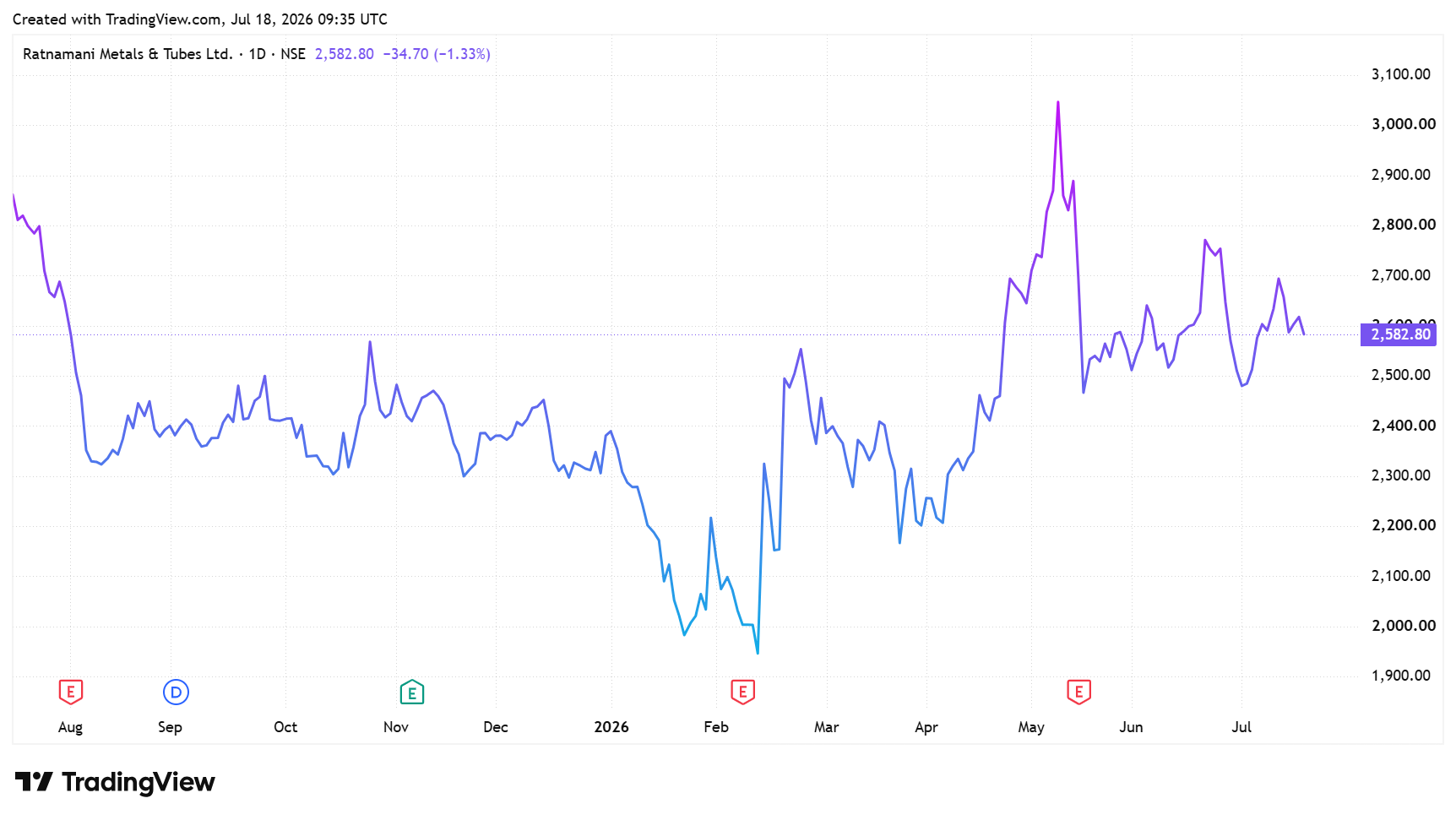
#1 Ratnamani Metals: Niche Approval Status Drives Massive Spool Scaling
Ratnamani Metals & Tubes manufactures and supplies highly specialized critical piping and spooling parts. It is a trusted supplier of seamless tubes and pipes for nuclear applications. The company has specific approvals from the Nuclear Power Corporation of India Limited (NPCIL) to supply Critical Instrumentation Seamless Tubes used in the primary piping of nuclear reactors.
Why the NPCIL Primary Piping Monopolies Insulate Current Order Volumes
The subsidiary, Ratnamani Finow Spooling Solutions (RFSS), manages most nuclear operations. RFSS is a joint venture between Ratnamani and Technoenergy, Switzerland (the holding entity of FINOW GmbH, Germany). Technoenergy brings over a century of expertise in manufacturing nuclear spools.
RFSS specializes in manufacturing high-integrity pipe spools, hangers, and auxiliary support systems specifically for nuclear and thermal power plants. Notably, RFSS has established a strong market position in the nuclear sector. Currently, RFSS is the only nuclear-approved facility from India for NPCIL.
The ₹550 crore Order Book
Beyond India, it has approvals to supply pipe spools for international nuclear projects in Egypt, Turkey, and Hungary. Importantly, the products supplied by Ratnamani are expected to benefit from sustained demand, driven by the ongoing construction of new nuclear infrastructure.
A single 1-gigawatt (GW) greenfield nuclear power plant requires 4,000 to 5,000 tons of pipe spools. Thus, the goal of achieving 100 GW of nuclear capacity by 2047 presents a multi-year sustainable demand outlook. To capitalise on this demand, RFSS already has an active order of about ₹550 crore.
The company anticipates that ₹480-500 crore of this backlog will be executed in FY27. It expects the spool business to deliver a revenue growth of 20-25%. Beyond this order book, Ratnamani is bidding for global and domestic contracts. The company is currently bidding on nuclear projects globally, with a pipeline estimated at between US$400 million and US$500 million.
Assessing the US$500 Million Multi-Year Export Runway
To handle these larger volumes and complex project scopes, it is expanding its spool manufacturing production capacity from 1,200 metric tonnes (MT) to 4,000 MT annually. This new facility is expected to begin contributing to revenues in the second half of FY27. Moreover, RFSS’s revenue growth implies strong business momentum.
RFSS reported a revenue of ₹390 crore in FY26, up over 7.1x from ₹55 crore in FY25. Consequently, the margin currently stands within the 30-35% band, mainly due to operational efficiencies as the plant’s capacity utilization has increased. This, however, is peak margin, and RFSS expects the margin to stabilise between 20-25% going forward for the pipe spool business.

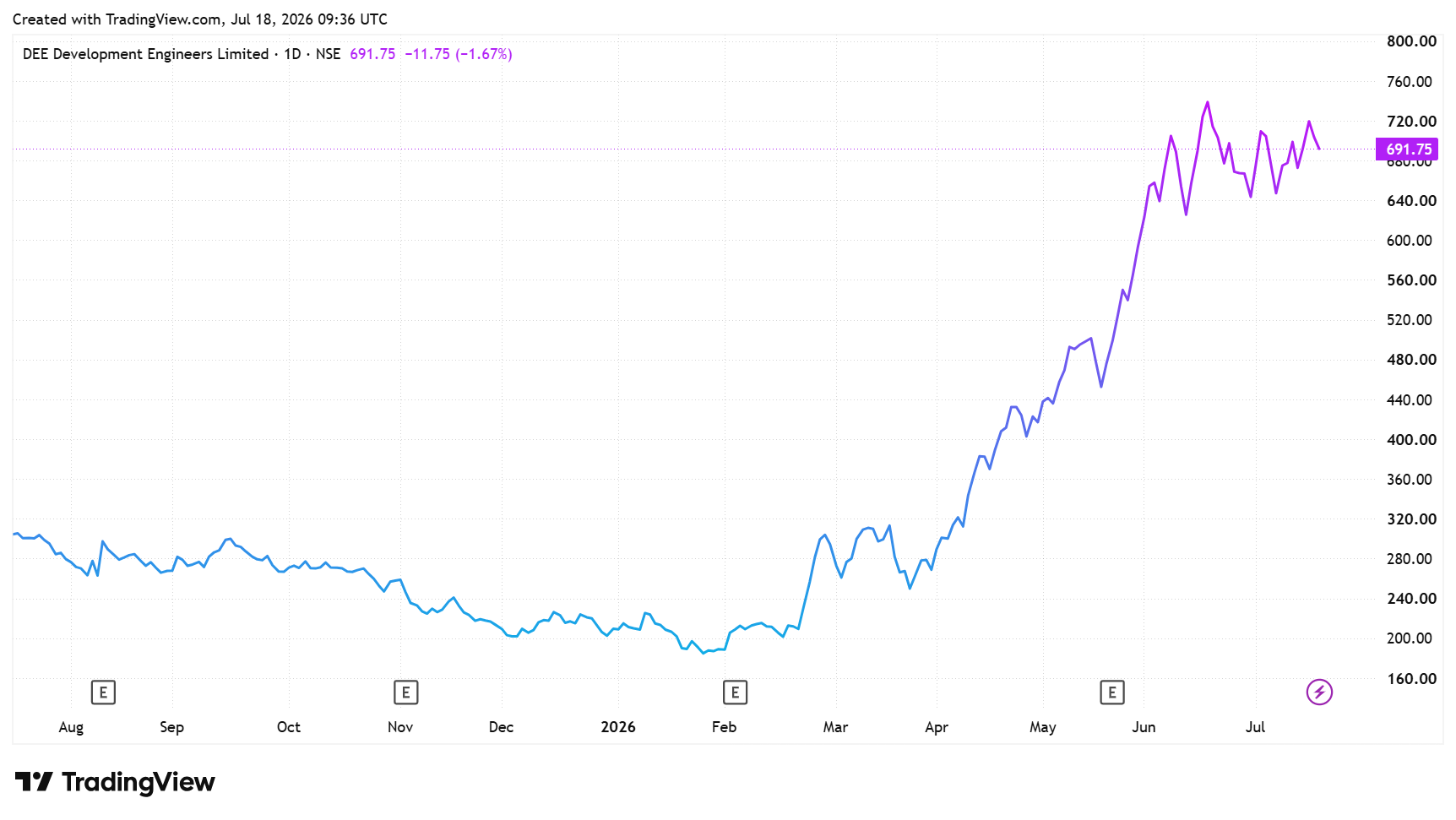
#2 DEE Development: Diversifying Order Books via High-Pressure Process Piping
DEE Development Engineers is among the leaders in the engineering sector in providing specialized, high-pressure process piping solutions to critical industries, including the nuclear power sector. DEE end-to-end capabilities span engineering, procurement, and manufacturing. As of 9 July 2026, the company’s order book stood at ₹2,428.2 crore.
Can Pilot Plants Mitigate Niche Nuclear Gestation Cycles?
In FY25, DEE launched a business vertical for the design, engineering, and manufacturing of Pilot Plants. These high-specification systems are built to meet the research, development, and process-simulation needs of clients in niche sectors, including the nuclear sector. This move diversified DEE’s revenue base.
DEE’s increased focus on nuclear energy aligns with a global revival in capex across the power sector. Management has highlighted that the nuclear segment offers a strong long-term opportunity. This will be driven by projections that domestic nuclear power capacity will surge from approximately 8 GW currently to 100 GW by FY47.
Therefore, the company anticipates that rising capex across the nuclear industry will provide a favorable environment for continued growth. To effectively capture this growth, DEE is actively evaluating its manufacturing footprint. The management views nuclear power as an emerging business and considers it key to reach the revenue target of ₹2,500 crore by 2030.
Why the Anjar Plant Expansion Controls the 2030 Growth Vision
Outside of nuclear energy, this segment primarily serves the oil and gas, thermal power, chemical, petrochemical, desalination, and cement industries. The company holds the largest installed capacity of process piping in India. Further, the heavy fabrication segment supports renewable energy and broader infrastructure sectors.
For DEE, a key trigger will be the commissioning and ramp-up of the Anjar pipe fabrication plant in Gujarat. This expands the process piping capacity from 6,000 MTPA to 30,000 MTPA. This plant will serve the oil and gas sector. Another trigger could be the commercialisation of India’s first high-wall-thickness seamless pipe manufacturing plant, with a capacity of 7,000 MTPA.
The HRSG De-Risking Strategy
Moreover, it is capitalizing on the global demand for Heat Recovery Steam Generators (HRSG). DEE has signed a reservation agreement with a leading EPC company (Nutter Eriksen), reserving 60% of the company’s total HRSG pipe spool manufacturing capacity. This exclusive agreement projects a minimum annual job value of US$ 15.3 million.
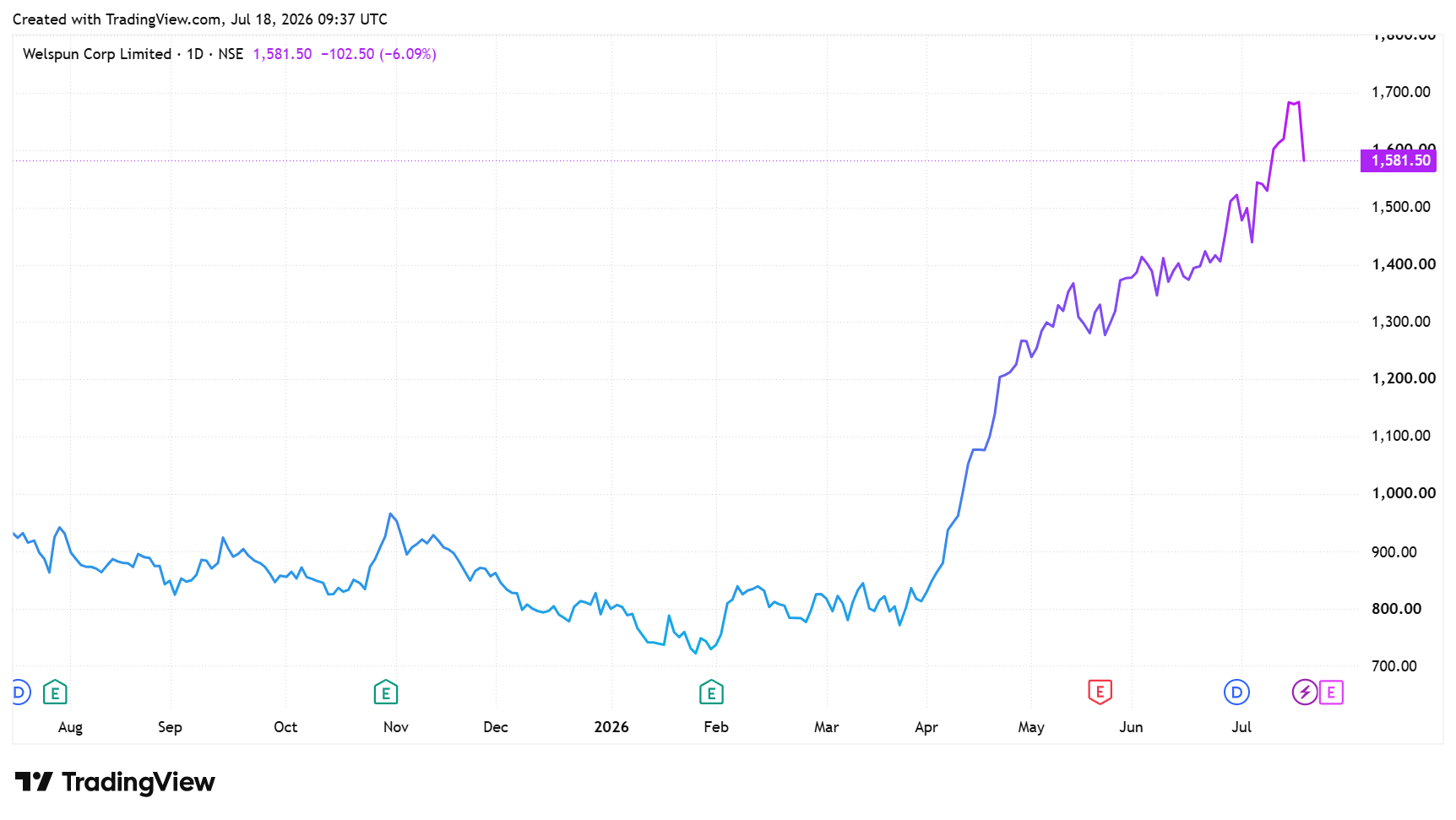
#3 Welspun Corp: Leveraging Specialty Alloys for High-Specification Reactor Contracts
Welspun Corp (WCL) has a growing exposure in the nuclear sector, primarily driven by its Stainless Steel Bars, Pipes & Tubes business division. Its subsidiary Welspun Specialty Solutions (WSSL) oversees this business division.
The Nickel Alloy 800H Moat: Securing High-Specification Nuclear Reactor Monopolies
WSSL manufactures high-performance, precision-engineered products that meet the highly stringent global standards required by critical industries. The company manufactures steam generator tubes and critical reactor components. A significant area of expertise and application for the company is the production and use of Nickel Alloy 800H.
Welspun also secured an order for 800H nickel alloy from NPCIL in FY26. This success has helped strengthen the company’s presence in the strategic, high-specification sector. The company views the nuclear energy vertical as a highly strategic opportunity and hopes to benefit from the 2047 nuclear power target.
US Infrastructure Boom vs Domestic Jal Jeevan Outlays
In addition to nuclear power, WCL is the world’s largest manufacturer of welded line pipe. This segment produces LSAW, HSAW, and HFIW/HFW pipes. These pipes are used in oil and gas transmission, hydrogen transportation pipelines, and carbon capture networks. The expansion of oil & gas pipelines in the US and Saudi Arabia is a major growth driver for WCL’s business.
Managing Long DI Pipe Payment Cycles Against FY27 Revenue Projections
Further, the expansion of water infrastructure is another key growth driver. WCL expects double-digit growth in its consumer-facing Sintex tank and plastic pipe businesses. Moreover, as the ₹67,000 crore Jal Jeevan Mission funds are received by the state governments, WCL expects strong demand and a longer payment cycle for DI pipes and water infrastructure in H2FY27.
The company reported a revenue of ₹16,770 crore and EBITDA of ₹2,371 crore in FY26. It now expects to report revenue of ₹20,000 crore and EBITDA of ₹2,850 crore in FY27. WCL’s order book of ₹25,350 crore provides a strong outlook for the year. The order book is mainly driven by demand in the US and India.
Final Verdict on Valuations
Welspun Corp stands out for its strong Return on Capital Employed (ROCE) and Return on Equity (ROE), followed by Ratnamani Metal and Dee Development. Valuation-wise, all three companies are trading at a premium to both the industry median price-to-earnings (P/E) multiple and their historical 3-year median valuation. Although DEE’s track record is limited.
Particulars | Price-to-Earnings Multiple (X) | Return Ratios | |||
| Company | 3Y Median | Industry | ROE (%) | ROCE (%) | |
| Dee Development | 60.7 | NA | 33.0 | 9.3 | 10.9 |
| Ratnamani Metal | 37.0 | 35.5 | 23.1 | 12.6 | 17.9 |
| Welpsun Corp | 25.9 | 15.3 | 23.1 | 22.9 | 19.4 |
| Source: Screener.in (As of 17 July 2026) | |||||
To conclude, India’s plan to expand nuclear capacity to 100 GW by 2047 is creating a long-term opportunity across the nuclear supply chain. Among the three, Ratnamani offers the most direct exposure through nuclear-approved pipe spools.
DEE is scaling its process piping capacity to capture future project demand, while WCL provides strategic exposure through its specialty alloys and steam generator tubes. The pace of nuclear project execution and order inflows will remain the key factors to watch. These are also slow, long-execution projects, and revenue margins could be volatile.
That said, these companies could be worth keeping on your watchlist.
Disclaimer:
Note: Throughout this article, we have relied on data from http://www.Screener.in and the company’s investor presentation. Only in cases where the data were unavailable have we used an alternative, widely accepted source of information.
The purpose of this article is only to share interesting charts, data points, and thought-provoking opinions. It is NOT a recommendation. If you wish to consider an investment, you are strongly advised to consult your advisor. This article is strictly for educational purposes only.
About the Author: Madhvendra has been deeply immersed in the equity markets for over seven years, combining his passion for investing with his expertise in financial writing. With a knack for simplifying complex concepts, he enjoys sharing his honest perspectives on startups, listed Indian companies, and macroeconomic trends.
A dedicated reader and storyteller, Madhvendra thrives on uncovering insights that inspire his audience to deepen their understanding of the financial world.
Disclosure: The writer and his dependents do not hold the stocks discussed in this article.
The website managers, its employee(s), and contributors/writers/authors of articles have or may have an outstanding buy or sell position or holding in the securities, options on securities, or other related investments of issuers and/or companies discussed therein. The articles’ content and data interpretation are solely the personal views of the contributors/ writers/authors. Investors must make their own investment decisions based on their specific objectives, resources, and only after consulting such independent advisors as may be necessary.