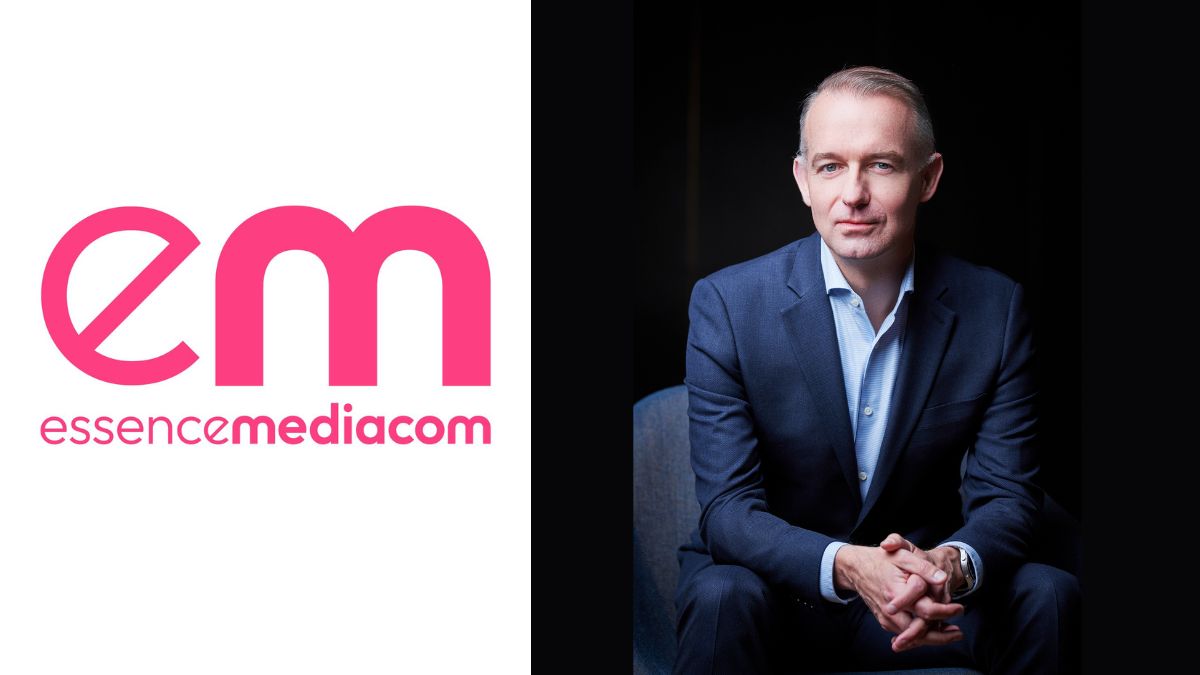
At a time when the advertising and media industry is going through a high tide with advertisers being prudent about spending, WPP Network’s move to merge Mediacom and Essence to form EssenceMediacom is believed to provide an edge. The newly formed agency has been created to merge traditional ideas with the power of data and digital and today houses 2,500 Essentials (staffers) across the world. In a conversation with BrandWagon Online, Rupert McPetrie, CEO – APAC, EssenceMediacom talks about the advantage the network has over its competitors besides the trend at this year’s Cannes Lions. (Edited Excerpts)
With advertisers’ tightening their purse strings, how is APAC placed?
So, when I look at the region now, I think there are a number of things which are reflective of what’s going on in the rest of the world. So, those global headwinds obviously exist to a degree. As you can see, there are factors such as cost of living, raw materials, inflation, supply chain, among others. There are obviously a few local market specifics across the region. Markets such as China give us some optimism as it returns to a more normal sort of economic cycle. So, I think we feel quite optimistic that China will come back steadily. Also, we’re seeing a steady return to growth rather than a very rapid return to growth. I think this has two implications. One obvious use is the domestic side in China, as with the opening of borders travel has begun and this is expected to have a positive impact. This will also certainly have some impact on the advertising and marketing businesses. You know, particularly in regions such as Southeast Asia, Australasia, and so on. So, I think when I look at the macro for APAC, we’re kind of cautiously optimistic. I think we’re mindful of the headwinds, but we do see some opportunities, particularly in China.
What is your viewpoint on India?
When I look at India, it’s all relative. So last year was very strong for the advertising and media sectors in India, in terms of certainly being the standout scale performers in the region. My sense is that in 2023, India will still be a standout performer in the area although the rate of growth may not be the same as what it was in 2022. When we look at the first half of 2023, there is a level of caution I think, particularly in some sectors. For instance, the venture capitalist-backed sectors are not as strong in terms of growth when compared with last year. But in terms of the mid to long term, we feel quite optimistic about India, given the market development, besides a nice balance of global brands plus local brands or businesses and an increasing population that is attracted by branded goods. So overall, I think we feel pretty confident about India.
With the coming together of Essence and Mediacom to form EssenceMediacom, is it supposed to be one of the largest agencies within the WPP Network. What is the advantage you have internally also when compared with other ad networks?
The merger of EssenceMediacom I think does give us something quite unique. It was about how we take the classic media agency strength of Mediacom, which is about brand building classic sort of strategic planning and buying and activation, and take that capability, and merge it with the real strength of Essence around data analytics, tools, technology, consulting, and digital. So, we took nine months to develop the new agency. We achieved this by working across 11 different work streams to create something very future-facing – to solve what clients are looking for, for the future and not just for today. So, I think that what makes us different is the intent and the desire to create something new. It’s not just been an addition but it’s been the usage of capabilities, particularly the talent that we have to create a genuinely new proposition. And I think it does give us an advantage because we’re built for a purpose. We’re not just trying to change up a little bit. We’re trying to move something to the next level, as we’re creating something genuinely new.
Honestly, the blend of talent we have now in the organisation, that’s 2500 Essentials, as we call them, in terms of talent is quite unique because we’ve got that mix to solve any client challenge, social content, commerce, business-to-business (B2B), a former classic branding, consulting, we’ve got that all in one place.
At a time when technology may take over many menial jobs, when you say future-ready, should we be concerned or do you have a different definition?
I think our take on technology is that we see technology as a real enabler. In business, technology creates some uncertainty, particularly regarding certain roles and certain tasks. But if you imagine the type of business that we want to be, which is to be a one-stop shop to cover the broad spectrum of client solutions, our job is to ensure that we’ve got talent that has the capability to add really meaningful value to clients. With this, we can have that line of sight between marketing and leisure activities, and their business outcomes. When it is the more administrative and bureaucratic parts of the business, those are the areas where we probably can deploy more technology solutions. This will further allow us to train our staff in the upstream higher-value business focus areas for which clients will want to pay us, and want us to solve. So, of course, technology creates uncertainty as all these headlines of course around the world, you know, the impact on employment and the impact on roles, but we see this as a transformative thing. Just imagine the potential of the 2500 Essentials that we have, and if we train and equip them to take up the roles which matter for clients that would make a business impactful for clients. I think that’s an incredible strategy. We’ve actually, very recently, launched EM chat (EssenceMediacom chat), which is embedded into ChatGPT. It’s a closed system, and we’re just rolling it out in Beta for some of our Essentials in the region now so we can test and learn from it. It’s not an imposed technology solution. It’s an exploration in terms of what’s possible.
What is the conversation at Cannes Lions this year between advertisers and agencies?
It has been a great year not only because we have got lots of platforms and partners and vendors, but there are a lot of clients here which I think is really important as this is also a place to think about what’s next. And I think some of the themes that we’ve seen have been quite interesting, actually, because there’s been a very practical side this year to some of the themes which have emerged. For instance, one of the themes ‘purpose’ is often talked about but sometimes this theme is used for the purpose of it, rather than to bring a genuine change or genuine impact, be it societal or business. I think, this year, we’ve seen a much more practical approach to campaigns which are based on ‘purpose’ as a theme. We are very proud of one of our brilliant EssenceMediacom works on eBay. I think we’ve also seen a whole range of practical applications of new technology among more traditional brands or established brands. For example, our work for Coca-Cola owned Sprite in China is a great example of the use of artificial intelligence. Another trend has been the use of humour across categories and markets which stands out. This is the first year, post-pandemic, where there’s a real feeling of humour as a driver for engagement. Hence, some of the campaigns are very vibrant.
So, given we are sitting in a very practical world, will clients look at more RoI-driven campaigns or more creatively RoI-driven campaigns?
When there are headwinds of pressure, inevitably, the focus is on return on investment (RoI). And to a degree you know, we saw this during the pandemic where there’s a lot of lower funnel work happening at the expense of the upper funnel. I think a lot of clients now are looking at a very balanced view of RoI versus creativity. I think there’s been a bit of a reaction to that sort of pure focus on lower-funnel RoI and efficiencies on the performance side. Of course, that’s still important. And of course, under pressure, we need to have a clear line of sight on every dollar spent versus dollar generated from a revenue and performance point of view. But I think the way to do that now, because we’re coming out of the pandemic, is a much more balanced approach to campaigns. So, is the short answer ROI or creativity? I think creativity is driving ROI.
Follow us on Twitter, Instagram, LinkedIn, Facebook