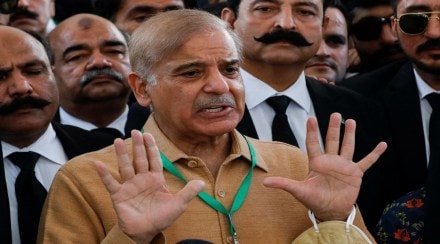
Regime change is in the air in India’s neighbourhood amidst political and economic instability in countries like Pakistan and Sri Lanka. The government headed by Pakistan’s Prime Minister Imran Khan has resigned following the loss of a trust vote in Parliament. This is a victory for the Pakistan Democratic Movement, comprising 11 ideologically diverse opposition parties that got together in September 2020, which has nominated Shehbaz Sharif of the Pakistan Muslim League-Nawaz (PML-N) to succeed Khan as their joint candidate for PM.
Despite the new political leadership, the country will continue to be buffeted by winds of political instability. This is not only because the outgoing PM and his party, Pakistan Tehreek-e-Insaf, is launching a so-called freedom struggle against the incoming administration. More importantly, this is because the all-powerful army wields the real power in the system and its favoured and chosen heads of government end up reading from a different script time after time, as happened in the case of Khan and may happen to the new PM Sharif as well. The existence of an almost hidden ‘dyarchy’ imparts a fundamental instability to Pakistan’s polity according to India’s former envoy to Pakistan, TCA Raghavan.
No doubt, the top priority of the Sharif-led regime will be to address the festering economic problems of the country. Although Pakistan’s economy is on the mend and likely to register growth of 4% in 2021-22 (July to June) —after contracting for the first time since the 1950s couple of years ago – focused attention is necessary to tackle the raging double-digit food inflation, rising joblessness among the youth and stressed balance of payments situation that led it to the doors of the International Monetary Fund for a bailout.
Last December, the former chairman of the Federal Board of Revenue made an astounding statement that Pakistan was bankrupt and was not in a state of a going concern. The foreign debt was $115 billion and the current account deficit was $5-8 billion. Paying that huge debt is a major challenge for the incoming administration at a time access to international financing is difficult as the country may still be on the grey-list till June of the global terror watchdog, the Financial Action Task Force, for not doing enough to stamp out financing of terrorism in the country.
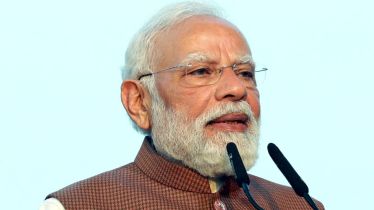
What does all this imply for India-Pakistan relations? Regime changes, per se, do not improve or worsen bilateral economic relations that have been in the deep freeze since the Pulwama terror attack in February 2019. Having hit a rock-bottom, the way forward perhaps is only upwards if the Sharif administration signals serious intent to improve relations. India must positively respond if new and unexpected opportunities open up to restart dialogue and engagement. After all, the elder brother of the new PM, Nawaz Sharif, as the three-times premier, made the most determined bid to improve bilateral economic relations. He attended the first swearing-in ceremony of PM Narendra Modi in 2014, who visited Lahore for his birthday in 2015. Such overtures were of course nullified by cross-border terrorism.
In his first remarks, the new PM candidate said that he wants peace with India which is not possible till the Kashmir dispute is resolved. Even his elder brother was hawkish on Kashmir perhaps reflecting the roots of the Sharif family in Anantnag who later settled in Jati Umra in Amritsar before crossing over to Lahore after Partition. The ground for cautious optimism that a thaw in bilateral relations may set in is that Pakistan’s army chief has indicated that all disputes with India should be settled peacefully through dialogue.